EDDIE0:04Welcome to Go to Market. In this podcast, we share tangible, actionable playbooks from the trenches working as go to market strategy and rev ops consultants for our clients here at Union Square. Consulting and candid conversations with revenue leaders in the market that have been there. Now let's get into it.
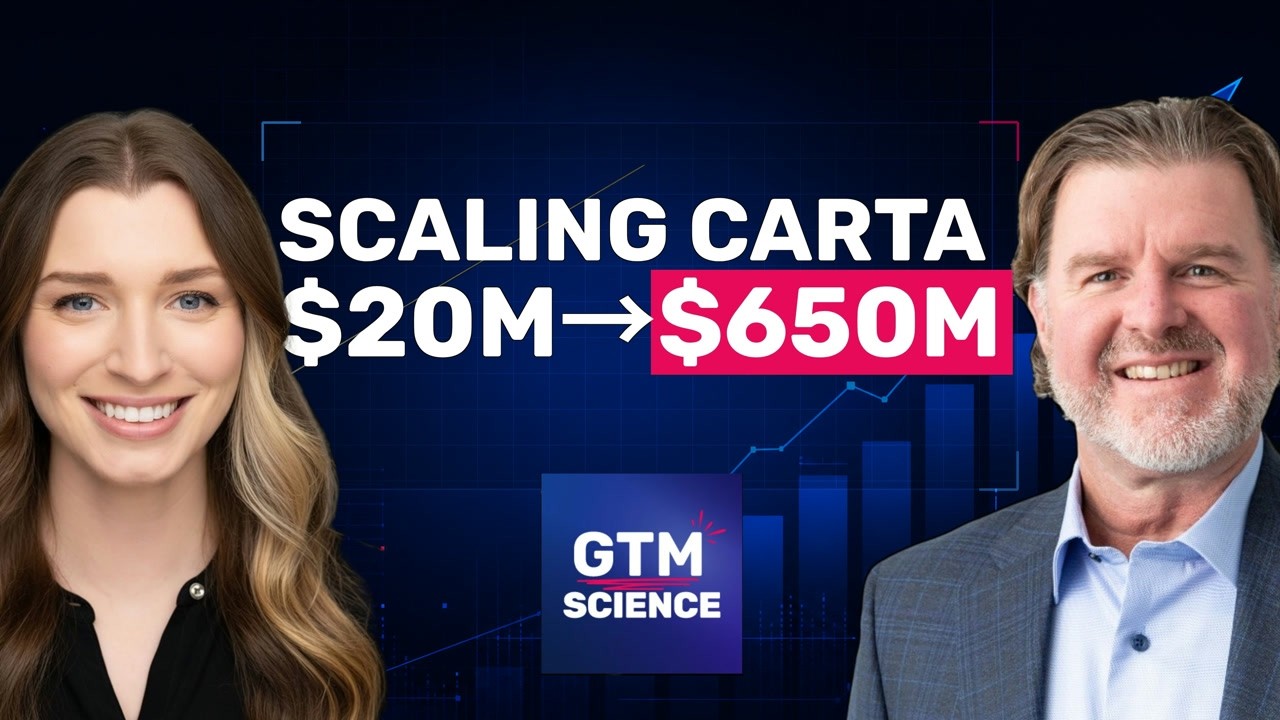
RACHAEL0:26Jeff has spent eight years at Carta, helping grow it from a $20 million company selling cap tables to founders into a $650 million private markets platform. Before. He ran commercial sales at DocuSign through its IPO and spent over a decade at Oracle. Today, we're getting into how Carta beat the limitations of a finite market in order to scale to the size that they have, not by squeezing more out of their core product, by building and buying entirely new business lines and opening up new types of customers along the way.
RACHAEL0:56Thank you so much for joining me, Jeff.
JEFF0:58Thank you so much for having me. Look forward to our conversation today.
RACHAEL1:01Yeah. So you joined Carta Background 2018, I believe that's correct. What did the what did the business look like then and what do you think the path forward. What did you think the path forward is going to be?
JEFF1:13Yeah. So it was late 2018. We were we looked very different then. We looked much more like a small, scrappy startup. We still had roughly 275 people, but really the focus was still around winning the remainder of the cap table market. And what we did, I think really well was took what was a services spreadsheet problem, which was cap tables and spreadsheets or managed by lawyers and put that into the cloud and software.
JEFF1:41And so it was about how do you do this in a new way with technology that was formerly done by lawyers. And so it was kind of like keep the relationship with the with the law firm community and then also continue to win the rest of the market. And fortunately for us, Henry, our CEO, was also simultaneously starting to work on solving a similar problem, a spreadsheet problem and an accounting problem for venture capital and private equity firms.
JEFF2:10And so we ended up building out the general ledger that became our our investors business now in front of. And so, you know, we did a really good job, I think, of winning the rest of the capital market. And we continue to it's a healthy, productive, efficient business. But we have now all these new revenue streams that we're building on top of that are all interconnected between, you know, founders, investors and asset allocators.
RACHAEL2:35And it's cool that you guys have kept so closely to your original core product. I hear so many companies who do this stuff, they build out multiple different products, and then somewhere down the line they just decide to like, scrap the original thing and like fully rebrand and fully go in the direction of one of their other products.
JEFF2:51Yeah. I mean, sometimes I guess that happens sort of out of desperation where if like your current product can't make it or doesn't have enough runway to be built into a much bigger business, I think one of the things that that we've done really well is take the core of the cap table business that, you know, back when when I joined, we had, I think, roughly 5 to 6000 companies on the platform.
JEFF3:12Now we have 50,000 companies on the platform, and every month there's 5 to 600 new companies that join us. And then we've also started to build additional products to help add value to those founders. So things like our total compensation tool where we used all the data, the comp and equity data that we have to add more value for founders that are trying to hire and attract talent, while also trying to protect the cap table and not have to give away too much but be competitive in the market.
JEFF3:39And then we've added tax advisory products, SHS products. So just the more you can do with the base of customers you had in cap tables. And then we started to do kind of like it's own company, but build out the fund administration, product or venture and private equity firm. So now you're working with founders and companies and then CFOs and firms and build out like not just fund admin but this by and build approach of adding additional products to the fund admin platform to make it even more valuable for CFOs.
JEFF4:10And the whole premise of what we're trying to do is build a platform that a CFO can operate the back office of for private capital, and everything from the tip of the spear. We've acquired a CRM. So as you're tracking deals or LPs, everything through all of your expense reporting, your general ledger, your fund formation tactic is a company we acquire that helps with fund forecasting and modeling.
JEFF4:38We do k ones for firms and and their their funds. We just acquired a law firm to help support with like basic compliance and risk services. So all these things that we can do to become hopefully a one stop shop for a venture firm to run the back office of their farm on.
RACHAEL4:56And what made you decide to build out these, all these different new products and expand kind of laterally, rather than just go deeper on what you already had in the beginning?
JEFF5:06Well, I think yeah, it started, you know, Henry is an incredible entrepreneur, so he's always thinking about vision and the next thing and what we can can continue to add to some of it is just you start to come to realization as like in the cap table business, as I said, like highly efficient business run extremely well. If it was a standalone company, very successful on its own, but myself or my team can't create more companies or create more rounds of funding for them.
JEFF5:34So you're almost limited to what the Tam is based off the number of companies that are being created and then having rounds of funding. So to continue to grow and become the larger company that we aspire to. You had to have these other revenue lines to, to go build into, and it just makes so much sense that why would we not build products for venture and private equity firms who also, like, have such a great stakeholder component to the portfolio companies that they invest in as well?
JEFF6:03And so why wouldn't we work with both of those communities to help build products, to make the entire experience better for them, and have it all on one integrated system that's talking to each other?
RACHAEL6:14Absolutely. It all dovetails perfectly together, I love
RACHAEL6:16And so you guys sell to a lot of different ISP's and buyer personas now, like way more than when you first started. What's been the hardest part of selling two different types of customers that you hadn't sold to before that your teams weren't familiar with?
JEFF6:30Yeah, I mean, it sounds, you know, extremely complicated, but it's kind of pretty simple as far as what the problem is. It's how do you enable people to understand all the products that we sell and have them be able to properly articulate well? First, find the problem set that a prospect might be having, and then properly articulate the value proposition that everything we offer now help solve any of those problems.
JEFF6:52And you're right, it's very different. The ISPs are different. So when you're selling a product to a founder that's very different than selling the Investors Fund Administration product to a CFO or a head of finance at a firm, we've we've made that even more complicated now because we're going to sell legal services to general counsel. So another ICP within the firms.
JEFF7:14But for us that's like the benefit of Karta is all these things that we could do to help make their lives easier and make them more efficient in running their firms or their companies. And that's what it's all about.
RACHAEL7:25And you've like you said, you've acquired a lot of companies as well in this expansion, which has been harder for you, expanding a new process, a new sales motion for new product or like absorbing somebody else's sales motion in product.
JEFF7:39Yeah. Good question. I hadn't really thought about that much, but I would say they're like equally challenging, just different. You know, you're you're trying to expand and grow with an existing product set into a finite Tam. So that comes with its own challenges of like, how do you continue in market share? Are there things that you can do from a demand gen and a top of funnel brand perspective to help build awareness?
JEFF8:03You know, we have the same challenge in like becoming a provider for venture and private equity firms, where a lot of what we did in the earlier years was educate a market on what we have to offer, because many people thought of us as just the cap table company and we're like, no, no, no. We're so much more than that.
JEFF8:20We have all these other products for for firms and for CFOs, not just the founder of a smaller venture backed startup. So that's the challenge on like, how do you expand within acquisitions come with their own different challenges because you're kind of working through the same ones that you have, but then you also want to make sure you've done everything possible to integrate the go to market teams, the product teams, the delivery teams to make sure that you've created a great experience and help sort of connect the dots on why this acquisition makes sense and what piece of the puzzle it fills in for the entire ERP suite that we offer.
RACHAEL8:58And even just from a branding perspective, I know it's go to market science, right? We talk about the science and the operation stuff, but I'm a marketer. I'm always interested in the marketing side and the branding side. It's hard when really well-established market knows you specifically for one thing, and you have like a big name out there for this one thing, and then you have to try and like, shift the perspective of the market in your audience to include you in this other category that you've now expanded into.
JEFF9:27Yeah, that's exactly right. And I think, you know, I'm grateful for our marketing team and how they've been able to to sort of expand our brand awareness out in the market. You know, we do sort of the the paid search spend on all things kind of cap table related. But the reality is selling administration to CFOs of venture firms and private equity firms was a newer market for us.
JEFF9:50And so, you know, we've recently done totally different marketing strategies than we had done on the cap table side, things like doing a complete takeover in Manhattan from an advertising standpoint and billboards and taxicab advertisements and in elevators and in the subways in New York, all in the area where private equity firms live inside of Manhattan. So you just take a totally different approach.
JEFF10:13We've also done over the last two years many more sort of what I call like the high touch events with with your sort of enterprise level customers, which are sort of exclusive events that we bring CFO to that are both customers and prospects. And hopefully we're sharing the story and having our own customers also share with the prospect what their experience is like and working with car to we've done, you know, suites at games and dinners and things like that where there's much more of this, like high touch relationship sale.
JEFF10:45And so it was a new muscle for us to learn and exercise at Carta from a marketing perspective. And I think we've done that, that really well, where the brand recognition is starting to become much, much more aware is us not just being a cap table company. There's so much more to offer. We'll have work to do on the law side now as well, because that's a tire, another new market that we're we're starting to move into and offer for, for customers.
RACHAEL11:10Finally, the side track is just for like a tiny, tiny second and ask, what has been your most favorite like guerrilla marketing campaign so far?
JEFF11:22You know, like, there's a couple of things I probably can't boil it to one, but like the, we did a big blitz this year and it was kind of multi-purpose. One was like a West Coast one. And so we did a big sponsorship with the Golden State Warriors, obviously in the Bay area, Silicon Valley, the presence of, you know, venture capital firms in this area.
JEFF11:43The audience at Warriors Games are us being able to bring and entertain customers and clients there. Use the Chase center facilities for different events is extremely helpful. We just did one two days ago that we called Carta Compass, where we brought customers and prospects together and gave them like an update on all things that we're releasing around AI and our new product sets.
JEFF12:10So sort of that like high touch thing on the West Coast. And then the Manhattan Project that I mentioned doing that more broadly in New York and generating awareness. Yeah, it was really good. And then we do some like some sort of cheeky advertising things that our marketing team is really good with, you know, like billboards and subway advertisement areas.
JEFF12:33And then there's some things where like, you know, on the cap table side, you know, we we were working with some customers where it was like a subset where we, we launched a program of like free to be. And so like come talk to us about like getting company started and get on Carta. That helped us launch our no pun intended, but our launch product, which is basically a free product for companies that have raised less than $1 million or have less than 25 stakeholders on the platform.
JEFF12:59And our premise there was like market this make it more broadly known so that early stage founders can get their cap table on Carta. By the way, when the cap table is really simple in early stage, before it gets complicated and messy with errors. So get them on early and then they convert to a paid plan with us as they continue to grow.
JEFF13:17And hopefully they're successful and grow on Carta as well.
RACHAEL13:20Awesome.
JEFF13:21So we're always thinking of these new sort of catchy marketing things to be able to do to, to continue to fill top a funnel.
RACHAEL13:29All right. Pulls back to the operational side, even though I'd love to talk so much more about the marketing side.
RACHAEL13:34All right. How did you figure out what next part, what the next product should even be like? Where does that come from?
JEFF13:40Yeah. So I think it comes a couple ways. Number one is, as I mentioned, Henry. Henry Ward, our CEO, he's, you know, brilliant, visionary mind. And he's constantly thinking of like the what is next and thinking big, right. Like we don't think about things as like, go, can this be a $10 million business? We think about this as like, can this be the next $100 million plus business?
JEFF14:02And then he's taught, I think, all of us that through how he operates. So it's finding the next thing that can be the next really big thing for Carta, and have multiple revenue streams that are multiple, hundreds of millions of dollars. And that's how you become billion dollar plus company. And so there's that mentality within I think a lot of what we do, to be honest, from a product roadmap standpoint on the venture and private equity side is listen and talk to customers and prospects and hear from them what works in their experience, whether they're with Carta right now or not.
JEFF14:36Like have a better understanding of what they need to help make their job easier. Make them run the firm more efficiently. We we talk about this all the time. We want to do two things for for CFOs of venture and private equity firms or GPS. Number one, create more time for them to do two things like go be able to find more great companies to invest in and find more great LPs to invest in their firm for them to have the funds to invest in.
JEFF15:03And so if we're helping with running the back office of the firm, that should allow them way more free time to go do the two most important things that they need to be doing versus back office accounting things. And so what we hear from them on the things that are challenges for them, we help build products around, or we've bought products around to help round out the entire
JEFF15:22And the best part about it is like, would you rather work with Carta in one platform and one suite, or work with like 7 or 8 different companies and manage 7 or 8 different vendors? We want to be the platform of choice.
RACHAEL15:35And this is really a topical and interesting for for us at USC right now, because we're trying to find ways that we can get on these, like one on one customer calls, where we can have these similar types of conversations to find out, like, how better can we help? But the people we work with, we work directly with like cross CFOs.
RACHAEL15:54It's hard to get those execs on a call like that because they're so, so busy. So like, how do you how do you manage to do that when it's when you're just like, hey, let's get on a call because I want to talk about, you know, the kind of business you might or the kind of product that you might want to get from us.
RACHAEL16:10I feel like it's hard to get a call like that, right?
JEFF16:13It definitely is. That's the challenge of sales, right? Like, how do you get someone to, like, be willing to give up the time to take the call to learn more about what you have to share, right. And that is the challenge. No matter what you're selling, I think it's a challenge for anyone in a seller role. I think what we have found, especially in the fund administration business, is there's typically a couple reasons for why someone is sort of timing, right, for, for us to be speaking with.
JEFF16:38And this is happening very, very quickly now. Number one is they're being forced to whether by by a board or their GPS, to look at a more technology forward product than they maybe historically had been using. And so if there's a push from the company or the firm to be like, we need to be a way more AI forward company, or we need to be a technology forward company, just doing the old way of doing it with like, more accountants doesn't check that box.
JEFF17:07And so is that an opportunity for us to meet them where they are in that moment to say we are the premier technology provider. Here's all the things we're doing in AI, like, come talk to us and listen to us, and let us tell you about how we've been doing this. The second being, if they have just like, not a great experience with the current provider, and it's reached a boiling point where there have been mistakes or errors or things like that team turnover, that's an opportunity for people to to really want to lean in and speak with us.
JEFF17:35And then the third being and this could happen all simultaneously, by the way, they're raising a new fund. And when you're raising a new fund, that's typically an opportunity to say, like, are we doing this in the best way, the most optimal way, or at the point of raising a new fund? Is it time for us to like, look at other solutions?
JEFF17:53And in doing so, you're likely going to look at a solution that is much more technology forward than the old way of doing it. But that's why there's, you know, totally different sales cycles. The table business in many cases, is sometimes a one call close, often 2 to 3 calls. Deals happen pretty quickly within a week to ten days, very different sales cycle than working with venture and private equity firms, where in some cases it can be a couple of years because the timing wasn't right for the firm to make a switch and completely uproot a back office process, whether it's technology or not, and make that change.
JEFF18:29And so it's raising a new fund, or there were errors and mistakes made that the time is maybe right for them to seriously consider making some type of change like that. And those cycles can be much, much longer, which as a sales leader sales person, that can be really frustrating. But that's also part of our transition from like SMB sales to enterprise sales, where there's a process to this and you have to become a trusted advisor to the prospect, and you have to continue to update them on the things that you're offering and why you're offering, and how it can benefit and build that relationship over time, so that you've earned the opportunity to win
JEFF19:03the business when there's business to be one.
RACHAEL19:05So how are you framing the interviews then with like existing customers that you don't necessarily you're not like trying to outbound to sales be like a sales person to them, but you're trying to like find out, get ideas for pain points and what new products you could expand into.
JEFF19:21Yeah, so there's a couple of ways. The first being I sort of two parted you. We have a I have a team. We call it a growth team that basically continues to work with existing customers and fundamental. And their job is to fold number one, like make sure that they're having a great experience. Like first and foremost, like our delivery team.
JEFF19:42Are you getting what you need from our fund accountants? Like, are you having a positive experience that we're all part of that system? There's no like the sale was done and now we forget about them. It's like, make sure this is working really well. And we do that because we want them to be in a good place from a relationship standpoint, so that when they're raising fund three or 4 or 5, they've had such a good experience, they naturally keep those funds with with Carta, and they typically do.
JEFF20:07And when we then have an opportunity to say, you know what, we just bought a CRM, we would love to talk to you about other products, like a CRM or our tax product or anything else that we're offering to them. We want to make sure they've had a good experience, so that you've earned the opportunity to even talk to them about a cross sell product of something else that you offer.
JEFF20:26So that's the that's the the purpose of like making sure that you've done this, like stay in touch with them. And then I think there's this totally separate conversation that you also have with them. And we have we have over 2500 firms on Carta. So you maybe aren't having it with every single one, but there's a subset of customers that, like, you're in this sort of thought leader bucket for us that we check in with periodically, like, hey, can you help talk to us about your experience with product, what is missing, what works, what do you need?
JEFF20:56What how can we improve to make this whole experience better? And those become like the roadmap informers, these events I mentioned that we do. We've done a couple of them. We call symposiums. So we bring, you know, CFOs to locations, nice locations and have, you know, a day and a half or so of content where we're updating all the things that we're doing.
JEFF21:18You know, we announced the law firm, we update on AI and all the work that we're doing. But the best part of the agenda that we have for that is roughly this time, it was a two hour time block where we broke people into like working groups, and we presented sort of vignette problem scenarios that we're thinking about already and sort of presented it to them and ask them to like, talk about it as a group and tell us, like, are we are we on to something?
JEFF21:44Are we right? Are we wrong? What is missing? Fill in the blanks for us. And literally by the end of that session, I was walking back to our our dinner with our chief product officer, and she was like, Jeff, you won't believe it. Some of the stuff we talked about earlier this afternoon, I already was on the phone with the team, and they're already working on building some of this stuff.
JEFF22:04So it's like it happens that fast and that's what we are, right? That's the type of company that we are. We're still the like, you know, 50 person entrepreneur company that can go build fast. We just have much bigger scale now. And that's how we we get that feedback and we put it right back into action.
RACHAEL22:21That's awesome. Yeah. You got to be fast these days.
JEFF22:24So you have to. Yes.
RACHAEL22:26For companies that might maybe don't have car to scale and resources and maybe can't do like big and person events like this. What would you what advice would you give them for trying to get these customers
RACHAEL22:37on an interview? To get ideas for new product lines?
JEFF22:40You just got to do it smaller scale, like like, I know that's not a great answer, but like, you know, like we have a little bit more resource now. And because of the poll that we have with larger customers, you're able to do it. But if you're, you know, a much, much smaller company, then you say, hey, can you come to the office and like, do give me an hour to do like a lunch and learn session and brainstorm with me, and maybe you bring 2 or 3 customers together.
JEFF23:02So it's not as as big as bringing someone to a location or a hotel or something like that. But you got to find sort of what meets within your budget and also what's like practical to execute against with your customer base.
RACHAEL23:16Absolutely.
RACHAEL23:17All right. So as your product set grows, Europe's have to know more and more about every single product line that they're selling. Right. So how do you keep them effective when they're being asked to sell across this widening portfolio?
JEFF23:28it's tough, but a ton of enablement to make sure that everyone, you know, going through certification processes and making sure that everyone understands the value proposition for not just the core product, but all the other things that we can do. And then it's a repetition. Like the only way you really get good at it is by having more conversations with customers and process and prospects.
JEFF23:48And then there's also like a little bit of just sort of like the common sense part of sale and like the intuition of like reading the room and understanding where the customer prospect is at. There are plenty of firms that aren't. They're not ready for everything that we have to offer. Or like it might not just be the best fit for them.
JEFF24:09And as a salesperson, I don't think it's ever helpful to just force it on them. You have to understand, like what might be actually consumable and usable for that firm based on their needs. And then you go down that line of talk track with them. And that's the kind of like the art and the science of sales is you got to be able to like, figure out the art part as well and understand, like the right moment for is the entire, you know, is CRM not important to them at this moment.
JEFF24:36And understand that and don't push it on them. We're here to help and be advisors, not try and force as much product on people as we possibly can. But I think if you start from the place of like being being an educator and an advisor and like an evangelist of all the things that Carter can offer someone, then like they can kind of pick and choose what's applicable to them.
JEFF24:57And then we help complete the story of like what's missing and why things might be important or things that they haven't thought of. And I think that's where you create the best long term relationships with customers are the ones that feel like you're not forcing things on them, but like you're trying to be helpful and provide solutions that like they might need in that moment.
RACHAEL25:15Absolutely. And I'm not a salesperson. I've never been a salesperson. But here at USC, like our team is quite small. So we have group meetings all the time. So I'm always talking to the ones doing the selling which is used, your I CEO or the actual go to market operator on our team. The head operator. And I think that's just the absolute best way that you can sell anybody anything.
RACHAEL25:36Not like trying to like push, but trying to pull, like trying to get the information from that person so you can investigate, you know, and figure out together, like what is the best solution for you and educate them so that they have like even even if they don't end up going with you, even if they don't end up like doing contract with you, they walk away from that call feeling like they've learned something and they've gotten some value out of it.
JEFF25:58Exactly right. Yeah. And I think, you know, what I try and talk about with my team is like, start from a point of like curiosity with the prospect, whether it's a founder of a company or a CFO of a firm. Either way, like starting with our own agenda and forcing our own agenda with someone typically doesn't help. But if you start with, like, tell me about your company, what's the problem that you're trying to solve and what you're building like, what are you walking through?
JEFF26:21What's your growth brand look like? And you start to like, people will just share information with you because you're starting from a point of like trying to be helpful and understand what they're doing. Same goes on the firm side. And then you'll go through a natural conversation. You'll start to like really unpack what the pain points are. And then if you're good at it, you can start to match like, oh, so you had a problem with a capital call.
JEFF26:40Let me show you what a capital call would look like if you were on the platform. And you can use some of the video assets that we have to actually like, show someone what it looks like versus just like force feeding, telling them what we think it will be.
RACHAEL26:53Absolutely.
JEFF26:54Like the sales process of evolved over time. It used to be just like you didn't have all these assets available, so it was just like, you got to tell them what you're going to do, right? And now there's, you know, just a totally shift in like, resources available, like the things that you can share with the prospect and showing them how you actually do this and what it looks like, well, what it would look like in their environment.
JEFF27:15And that, I think, resonates so much better than just being told something.
RACHAEL27:18Oh, absolutely. And if you have like good connective tissue with your marketing team, which every sales team should, you can also share this information and this feedback. And now marketing is able to better market to the right kind of leads that sales is actually able to work with and close better.
JEFF27:33That's right. And I think we've we've done a not so great in the beginning really good job of now is making sure that we've involved members of the product team early in the sales cycle, making them accessible to the customer, so that like we're talking through, like all the details of the things they may or not need or understanding what is really important to them down the road.
JEFF27:53We learn a ton from that, by the way. And then also making sure that we've had an opportunity to introduce them to what their post sales team will be because that's what they really care about. Like the technology will be great. They believe that, but they also still want to understand, like, who are the people that I'm going to work with once I become a customer?
JEFF28:09And having those introductions done and getting them comfortable with the type of people and the caliber of people that we have is really helpful to.
RACHAEL28:17Quick pause. Everything we talk about on this show. Diagnosing go to market ops. Prioritizing projects for revenue. Impact processes. Metrics. Insights. Building a predictable go to market engine. We've built frameworks for all of it. They're free and undated on our website. Union square consulting frameworks. The link will also be in the show notes, so make sure you check that out.
RACHAEL28:39All right. Back to the episode.
RACHAEL28:42I'm just thinking about this now, like everything that we talked about so far, I feel like it's all
RACHAEL28:46the core of it really is having a customer centered business, like you're developing product lines for your customer, like from the mouths of your customers, like what they actually need their day to day, not just what you think will sell well.
RACHAEL28:59And then you try to push that, you know, through to the way that you sell and the way that you take care of the map of the cell. And we love customer centric company.
JEFF29:08Well, and I think, you know, I've been doing this for a while now, many years at Oracle and DocuSign and Carto, but, you know, I think like the one thing that hasn't changed is like, people are looking for someone that is, you know, maybe a bit more educated and sort of what they do and how they're doing it.
JEFF29:25And they want to like, be given some value and talk something about how they can maybe do it better. And if it comes from a genuine place of being a trusted advisor, I think that's very, very well received from from a prospect that hopefully becomes a customer.
RACHAEL29:40Absolutely. And when you build this type of relationship with your customers, like off the hop, and you're just consistently delivering on things that they need and value, I mean, it's a recurring revenue company, right? So your group is super important. These customers are way less likely to churn if they're like they're feeling heard from, from the very start.
RACHAEL29:59And they're they're being given what they need from the very
JEFF30:02That's right. And like what has really changed the most in all of this is at least over through my career,
JEFF30:08there was never so much information as available and accessible for people like pre call. So like if you were if you were going to potentially be a fund admin customer of ours, you come to the first call with so much more knowledge about like Carta or competitors, the offering, the industry than anyone could have ever had before because of the ability to search it.
JEFF30:31And AI like you have all these things like that you already know about what I'm probably going to tell you, which means you have to be that much better prepared for when we have that first call to make an assumption that you do know something, but maybe you don't know all of it and help put all those pieces to the puzzle together.
RACHAEL30:47Absolutely. Like this is sympathy, you see. Like, this is why we have such an emphasis on our frameworks and like giving away so much free content on all of the strategies that we use with clients all the time, because it's like we have consulting in our name, but it's the consulting part is just like the tip of the iceberg, right?
RACHAEL31:03So we just we give all of that stuff away. The real value is in the execution. But if we can like teach our audience at our market about the things that we believe in and the things that make businesses more effective and efficient in their go to market operations, like as soon as we get on those calls with them, they already know what's going on, and now all we have to do is help them execute it.
JEFF31:23That's right. And we do this to there's a guy internally here named Peter Walker. If you don't follow Peter, you should. He is basically our data analytics a person here. And I get asked all the time like, do we charge for data and the analytics that Peter produces or like, absolutely not. Like we produce these things off of all the card of data about founders, about investors, about state of the market.
JEFF31:49And we do that because, like, we want to be thought of as the thought partner for the whole venture and private equity ecosystem of founders and investors. And that data Peter publishes for the good of the the greater Carter community.
JEFF32:04Hopefully, if you like the data and believe in it, then you're like, oh, card is on to something like, I should probably talk to them about their products too.
JEFF32:11But I think that's one of the benefits of the things that we can provide that we don't actually have to monetize yet.
RACHAEL32:16Yeah, I have to follow him because I do follow, like Carter's benchmark reports and studies that you guys, I believe we've used data from some of your studies and some of our content for sure.
JEFF32:27I bet they're his and you don't even know it, so.
RACHAEL32:29Oh, absolutely.
JEFF32:30Yeah. And he'll love that. I'm giving him a commercial here, too. He's fabulous. But yeah, he does it does a great job with all of our data.
RACHAEL32:37So every time you add product and customer types, territory and capacity, they get more complicated, right? So how do we think about designing territories and planning capacity through all that?
JEFF32:50always try and compartmentalize these things. So like it's not just one answer for me across the entire organization. It's like okay, the cap table business, I work with my leader on on that business and say, okay, you know, we're trying we're going to grow at X percentage. And so our net new business number is X.
JEFF33:07We needed to go to Y. Like what do we need from a top of funnel standpoint to be able to build pipeline, to be able to execute against that. How many A's do we need for that? What's the what's the appropriate quota for that. And we want to set quotas that are like I call like reasonably aggressive. Like we want people to do attain and earn really, really well.
JEFF33:27We also are at a company where like we want to be successful and like everyone that's at Carto, wants the company to succeed too. And so we should be signing up for the aggressive numbers so that we have a great and we built a great company. So you kind of go through that exercise of each of the businesses to figure out the appropriate capacity, build from a target, a quota standpoint.
JEFF33:49And then the tricky part to it is there's some of the more established businesses where it's not easy to do, but like it. You kind of can do it based off the experience that you have from multiple years of building these orgs. Then there's some of these newer ones, whether it's an acquisition or like the new car to law firm, where like, we just don't have as much historical data to be able to like design the future of the org or what next year's quota plans look like.
JEFF34:15So you go off of like best practices and the data that you have and then like, where are you trying to expand and like, do you have enough presence on the West Coast and the East coast and in Europe and in Asia and figuring out like what you need to properly cover those models to build top of funnel progress, current pipeline and execute on the late stage stuff.
JEFF34:35And so I think you kind of work through each of the segments of the business. With that mindset, it all starts to come together.
RACHAEL34:42Was there anything like back when you guys were still around $50 million in revenue? Did anything
RACHAEL34:49fail when you were trying to do this and you're expanding your product lines? Tell me something about that.
JEFF34:55Yeah, I'll give the example. I'm not afraid to share the mistakes we make them. It's one of the great things about Carta. And like what? Henry is being pushed on us. Like, we often make mistakes, and that's okay. But, like, number one thing he always tells me is like, if we made a mistake, just make sure. Did we learn something from it?
JEFF35:12And did we course correct it quickly? Like, don't wait and keep making the same mistakes like figure it out and pivot if needed, but also keep experimenting with what you need to do to find the next growth vectors. So yeah, we made mistakes like when we first took. So our our total compensation product is basically we took all the, the data that we have both cash and equity compensation across now 50,000 companies.
JEFF35:37And we said we actually have the best comp data on the planet. We can tell a founder exactly what they should pay a director of marketing. They're a series C company. Here's how much cash comp they should get here, how much equity they should get based on what the market says, not Carta. We're just telling you what the market says.
JEFF35:54You can decide. Do you want to pay at the 7570 fifth percentile or 125th percentile? That's up to you. But we tell you what the market standard is. That allows the founder to make sure they're not giving away too much equity and comp, but also allows them to know that they're paying fairly in what the market says, that that should be right.
JEFF36:12So when we first built this product, we said, well, we probably need a separate sales team. We would want to call it a coprime team or a separate team that like just sells the total compensation product. And we thought specialization need to learn something new, you know, different. In some cases you're working with like a head of HR or someone like that.
JEFF36:34So it's a different ICP. So build the separate sales team to do that. And we did that and we had some success. And then it slowed down. And then we had a little it kind of was inconsistent. And so I think what we realized is like, you know what we have we built a great team of account executives that know how to sell the cap table business.
JEFF36:52They are at the tip of the spear of the conversation with a founder that's getting a company built, built and growing like they're capable of having the conversation about cap tables and total compensation. And so let's enable them and educate them on how to do it. And we pivoted and said we don't need that, that it's own sales organization.
JEFF37:12It can be done by the existing team that we have. We had to kind of go through some of the growing pains to to learn that and figure out that that ultimately became the right model. But and now, you know, for four years later or five years later, it's still one sales team now that sells multiple products that may change.
JEFF37:30There could be the next thing that would require some specialization, or it's just like a couple of really specialized accounting executives that are sort of overlay model or something. But that's kind of all the tinkering that we do to figure out, like all the things you've experimented to try to get yourself to the end decision of what you think is best in that moment of time.
RACHAEL37:49Absolutely. And I love what you said about, you know, making mistakes and just making sure that you're learning something from it. You don't keep making those mistakes. Like, I don't think there is a company on the face of this earth that like, really, really succeeded without making mistakes at some point or another. It just doesn't happen. Because if you're not making mistakes, it means you're not trying anything.
RACHAEL38:06You're not trying anything, you know, out of the box or a little risky and you can't play it safe and be wildly successful is just not how it works.
JEFF38:15Yeah, you're totally right. I think just being conservative just it limits you on how much, you know, growth potentially you have so.
RACHAEL38:23And the spirit of that. Are there any other like big swings and misses you guys took throughout this growth journey of yours that you'd love to tell a story on.
JEFF38:33You know, look, I would say kind of in our M&A strategy, you know, we haven't acquired any like what I would call like really large acquisitions. We've done a bunch of I think there's probably at least 10 or 10 or 10 to 12 somewhere in that range over the, you know, call it seven years. We've done six of them in the last two years and smaller.
JEFF38:58And like those don't always work out great at the time. There's a moment in time where like that, that piece of the puzzle that that product or that company is filling for us makes total sense. Things change, things evolve. And maybe like they were a little less successful than expected. And others, they were like far more successful. Or they helped us, like rebuild the product into something even a better offering than we were going to have with or without it.
JEFF39:25So I think that's like to your point earlier, like that's the kind of the experimentation part of it where like if you're not trying to do those things and you're complacent, you're just going to have stagnant growth. So I love that we, you know, we take this by and build approach, and we continue to experiment and figure out, like, what the missing pieces of the puzzle to fill in.
JEFF39:44And then the moment you do that, something is changed. And then you figure out the next missing piece and keep going.
RACHAEL39:50Yeah. Awesome. I'm going to bring it back to to salespeople again. I just have another question here. What changes did you make to compensation plans to actually drive multi-product behavior, instead of just having reps kind of go the path of least resistance and sell the easiest product?
JEFF40:09we've done a little bit of everything along the way. And, you know, to your point of like making changes, there was a period of time where we thought, okay, you have you have the cap table product, you have the compensation product, you have the SPS tax advisory product lets you know, as an example, if there's an AI that has 100 K quota for a month, you know, do you give them 75 KS cap tables and 10-K is total compensation and 15 KS the SPS.
JEFF40:41And that rounds out you're hundred and you have to actually like hit your target for each specific product in those little buckets. And we thought that was a great idea and let's do that. And the reality is like for a moment of time, it actually was really helpful and worked. And then we realized, like, we actually don't need to do that to move the needle like we did that to force the enablement part of it.
JEFF41:03Now our teams and our people are fully enabled. And so we have just one quota. Well, what I would say to that, though, is like, even though we put that back into just one quota and not like product specific quotas inside the comp plan, we do track it and we track it by a. So like, I know if you're only selling cap tables or if you're not selling enough of the attach rates, and that to me is like that's a performance management, that's a manager to one on one conversation.
JEFF41:30Like, why like let me help you. Like, let me understand. Because if you're closing 100 K and you didn't close any total compensation. I feel like you're missing an opportunity to get into your accelerators. Let's talk about, like, why you seem to be unable to best position the other products to. And let's help you. So, like, we of course close more revenue.
JEFF41:50You of course make way more money. And so you use that as sort of like the, the how to coach and enable a piece of it.
RACHAEL41:56And how, you know, I don't want to hear but like how complicated that become. As you grew all these product lines out.
JEFF42:03It becomes very complicated. And then all of a sudden like, you know, because that's the that's the company's business. I have the same in the venture and then the business and then the same in the private equity business. So also you have your different types of plans for each segment of the business. And it just it gets really complicated.
JEFF42:22And sometimes like again, the intentions are right, but you've just sort of started to overengineered things that don't need to be that complicated. And so sometimes like simpler is better as long as you're like, as long as you have people doing what you consider to be the right behaviors and generating pipeline and progressing pipeline like the rest of it, try and keep it as simple as possible.
JEFF42:44But it almost feels like as you mature, you're like, well, we've gotten so much bigger. And like, we have to become more complicated just because we're bigger. And the reality is like, can you actually simplify and make things easier? And then you have a better chance of of growing faster. So we're in that phase now.
RACHAEL43:02Yeah. And like just reminded me of trying to get reps to collect the right data into the CRM. Like if you make things way too complicated, they're not going to do it.
JEFF43:14Yeah, yeah, I've probably become a little less popular around the end of the month when I'm pinging people about certain deals like, why is this closed date not right? What is the probability? But you know, to me, like we have a level of expectation that like that that's why you're paid your salary is to keep your pipeline up to date.
JEFF43:35In our system, it's like that's just a core requirement. I understand there's some slip here and there, but the reality is like attention to detail matters. Like I see it as like if it's the same person over and over having the same problem, then maybe like, this isn't the right place for you or you're not in the right role.
JEFF43:52And I like I don't tolerate the excuse of like, well, it doesn't matter because he or she is a top performer, so who cares? Let them just manage their pipeline the way they want to like that to me, is unacceptable. Like, everyone's got to operate under the same rules to create some consistency across the organization. It's the only way that me and my leaders are able to assess the health of the pipeline and where we're at in stages.
JEFF44:13So some of it is like, you know, the the reprimanding here and there. But I think for the most part, like we actually have a pretty lean team here and everyone does a pretty good job of staying on top of the details and understanding the why behind
RACHAEL44:25absolutely. And like speaking as a good market ops firm like we, we work so much in like helping people clean up the technical debt of CRMs that have completely inconsistent data from that kind of thing happening. And like you said, like it's not it's not about,
RACHAEL44:38well, it's a part of it is about helping your reps close more deals and succeed as a sales person, of course.
RACHAEL44:43But
RACHAEL44:43just because they're already successful, it doesn't mean that, like, oh, now we don't need to collect data anymore because you still need that data, right?
JEFF44:51I could argue it's more important.
RACHAEL44:53Absolutely. Yeah, absolutely. Yeah. Like you could be the best salesperson in the world and you still need to be collecting that data and collecting it consistently the same way that everyone else collects it. Or else you know, your people, your sales managers, your crew, like all the people that are needing to analyze that data and work with it to make decisions about the business.
RACHAEL45:13They if the data is inconsistent and completely incorrect, then not only does it make it hard to make those decisions, but you could be making the completely wrong decisions based off of data that's not even telling the truth. And then that's bad.
JEFF45:28Exactly right. And like if I ever need to, if someone tells me that's so tedious, have to do this, I can just pull up their calendar and say, I happen to find a free window of time in your calendar. You can update your your pipeline at this time, and no one wants to have that conversation with me, so usually works out pretty well.
JEFF45:44Yeah.
RACHAEL45:44That reminds me of a quote. I can't remember where we saw it, but I saw it recently and it just stuck in my head.
RACHAEL45:49I can make you feel better or I can make you be better, but I can't do both at the same time.
JEFF45:53Makes sense.
RACHAEL45:54Yeah, yeah.
RACHAEL45:55All right. So I want to talk a little bit about your expansion strategy, because so much of your business is expanding into that product. Whitespace and upsells and all that stuff. So yeah, you have this vast, vast product, white space. Who owns expansion of that and how do you go about
JEFF46:13Yeah. So expansion can mean different things to different people. I think for Karta it means different things. But I'll try and explain on the expansion side for cap tables, the way we treat expansion is you're a customer and you have 50 stakeholders on your cap table, and you raise your series B, and you now have a couple new investors.
JEFF46:35And as a result of raising your series B, you've hired ten new employees. And so now what was 50 stakeholders on your cap table has become 63. And so we then charge more because we charge. That's our version of seat based modeling. So we charge by stakeholder on the cap table. And so we charge more because your cap table has expanded.
JEFF46:55Right. And so that's expansion. That to me is different than cross-sell upsell which is I bought cap table and now I'm buying total compensation and I'm buying ships as well. And so there's expansion and cross-sell on the cap table side I can't control the expansion part of that. Like I can't control of you're going to fundraise or hire people.
JEFF47:17So it's just subject to like the reporting of it, which is done by the leader of our CSM team who manages the renewals. And that's all done at point of renewal. Very different on the there's not like natural expansion like that on the administration side. Just because the product isn't isn't charged that way or or designed that way.
JEFF47:42Expansion is more of like the cross-sell upsell which is adding more products or good news. You were you know, you were my fund admin provider when I started my first fund raising fund of 25 million. And then I stayed with you and we raised another one for 100 million. And now we're raising fund three for 200 million. And that is, you know, our version of expansion.
JEFF48:05It's also upsell. And that's where we like if you think about sort of expanding from like the first point of sale with the customer and the longevity, the lifetime of them being a customer, what started as maybe a 50 K customer becomes $1 million customer over time, when they put more funds on car to and add more products to it as well.
RACHAEL48:26And so once you've expanded these customers, how do you make sure that they're actually adopting and onboarding properly across all their new products?
JEFF48:33Yeah. So again separate answers by team. But on the cap table side we have an implementation team that helps make sure they literally chase down founders because you know founders get busy right. Typically you know it's one person there in a three person company. They're doing everything their lawyer tells them to sign up on Carta. They do. And then the card team is waiting for them to actually, like, send over their cap table and get the the spreadsheet implemented so we can actually start the process of issuing their equity and all that.
JEFF49:04And so we have a team that chases. We do have some fall off. There's some people that actually like don't ever implement, which is crazy to me because they bought. And that's a small, small amount because our team does a really good job of of chasing them down. I would say that's very different than and maybe not not a problem on the side because they actually have to run the firm off of it.
JEFF49:25And so if someone buys, we start the implementation process immediately to where we know that, like the in that term of adoption, that happens because they have to get a firm up and running.
RACHAEL49:37Awesome. So we're coming up on time here. But I had I think 1 or 2 quick questions or how to be that quick. So a lot of our audience runs on 1 or 2 products, and a lot of them probably have somewhat of a finite market for as you're listening to this, who feels like they might be hitting the ceiling on their core offering, or they're interested in expanding their Tam, expanding their product lines, but don't have the scale that card does.
RACHAEL50:05What would you suggest their approach to be? That's a little bit more lightweight?
JEFF50:09Yeah, it it feels a bit disingenuous for me to be recommending to a founder what to do, since I've never actually even been a founder, but just from what I've seen in my experience, tells me one of two things which probably feels impossible to a founder when you're like getting things going, and maybe you crossed a million or 5 million or 10 million and you're like, okay, great.
JEFF50:31We have some traction. This is going really well. Like, they probably think their company is going to the moon, right? The reality is there's some point where, like the Tam probably runs out or there's competitive push or whatever it might be, where in that moment in like you're in year one, two, three and you're like, got the traction.
JEFF50:49Like, are you already thinking about the next products to be built? Which is probably hard to do because you're just thinking about the one that you built to try and get the company off the ground. But if you're not thinking that way, it's one of the things I learned, I think the most from from Henry and working with him.
JEFF51:03And one of the things I admire the most is always thinking about like, the next thing. And so if you're not doing that as a founder, you're probably falling behind. And I don't mean that like threatening or scary, but that's just kind of the reality of the world, and especially with AI, how fast things are moving. So that would be one.
JEFF51:19The other is so sort of what is the next product to build for that customer. And then the next one, which is probably even harder, is like, imagine a world where you had a different customer, not the traditional one that you think is your current customer. Like, who might that be and what do you have to build for them?
JEFF51:37Which is like way visionary, right? Because you're thinking about like, oh, I have these customers, what else do I build for them? What if I was like, if this is what Carter did? We had the founder customer. Now we have the investor customer. Like if we didn't have the investor customer, we would be just kind of really good.
JEFF51:51Steady growth, great company. Instead, we're still way up into the right because we have the next customer and the next products to. And so I don't know what that is for each founder, but I think if you go into that mindset of taking Duke, go through that sort of mental exercise of what am I building and who am I going to be building for in the future, it helps get you thinking that way.
RACHAEL52:10Yeah, I love that. That is such a such an interesting mindset shift, and it seems like it would.
JEFF52:15Be coming from a non founder. Sorry.
RACHAEL52:18No, no. But it's a great and I'm also not a founder. But like I feel like it's such an interesting mindset shift that might seem like obvious ones. You hear it but I would never I would have never thought of
JEFF52:30Well and yeah. And just think of like what? You get bogged down in the day to day. Like you got to hire people, you got to do a board meeting. You're probably still fundraising, like you're making sure you don't lose customers that you got on board. You're worried about churn. Like there's a million things that a founder goes through.
JEFF52:45Where do you start to prioritize? Like what is building the next product or finding the next customer subset?
RACHAEL52:51Absolutely. So for my my last question, we'll click here.
RACHAEL52:54What is you know, the the leadership story that you feel like you don't get asked about enough or you don't get to talk about enough, but that you really love.
JEFF53:04What I love about being a leader or.
RACHAEL53:09Yeah, like what you love about being a leader or lessons or stories of being a leader that you just don't get asked about enough.
JEFF53:19Yeah, I, I think all these things kind of go hand in hand. Like, I tell this a lot, when asked about sort of my career path and, you know, I feel like I kind of fell into this bucket of kids that graduate from college that didn't know exactly what they wanted to do with their career. And by the way, like, I think that's okay.
JEFF53:37Like, you're 21 years old, like, does everyone really know exactly what they want out of their career life? I don't think so. There's some that absolutely like, I'm going to be a doctor, I'm going to be a lawyer or whatever it is, and you go down that path. But for a large percentage of the population, it's like, maybe you're smart, ambitious young kid getting out of college and you don't know what you don't know, and you got to kind of go figure out your path.
JEFF54:01And I sort of stumbled into the sales path and ended up like loving it and driving in it and figuring out like, you know, sort of how to make a career out of it. And then I got, you know, an opportunity to start leading a team, which I probably was not qualified to do at the time. But there were some people that, like, believed in me or saw some things in me that said, maybe he can do this.
JEFF54:24And that led to like, you know, a few years later, managing multiple teams and really large teams. And so you kind of like, you know, each leader's a little different, like how their path got them to where they are. But I think, like the biggest thing for me or lesson learned is like, you never know when there's going to be this moment of like a door opening or a window opening for you to say, like, I'm going to go knock that door down and like, take advantage of the opportunity.
JEFF54:50And maybe it's not the perfect opportunity at the time. Maybe it's like, not the ideal thing you thought, but like you learn something from it and it taught you something and you expanded your skill set as a result of it. And I think, like every time I did that or I've seen it happen with other people, it leads to like whatever the next great thing is, and then you take advantage of that opportunity.
JEFF55:09And then as you start to work your way up and become more senior, you figure out how to, like, surround yourself with really great people, too. And I think some of that comes with just like experience and confidence where like, I'm okay knowing like I'm not the expert of every single thing that my entire team does and I don't have to be.
JEFF55:27I have incredible people around me that are experts and other things that I'm not in, and I have maybe some better or different experience than or more experience than them in some other areas. And so how do we all just help each help each other be successful? It's hard to do when you're younger and earlier in your career, because you feel like you have to have all the answers for everything, otherwise someone's going to question, why do you have the job you have?
JEFF55:49I think over time you start to realize, like, that doesn't matter. You can throw your ego out the window and just say, how do you surround yourself with the best possible people to make all of us successful? And then once you do that. How do you get even more people underneath all those people to be doing the same?
JEFF56:03And then you build this solid, stable, consistent organization that creates success and productivity and career roadmap and career opportunity for everyone. That's part of the org that you built, and your ecosystem of friends and talent that you you build a community along the way.
RACHAEL56:22Absolutely. I resonate with that so much. And it's like
RACHAEL56:25there are so many amazing people out there, and sometimes it can be hard to find the right ones. You know, when you're building an organization or trying to build your network, but it's so important to not just find the right people who lift you up in like, an intellectual sense in like a career sense and knowledge sense, but also in that humanity sense.
RACHAEL56:43And they're like their type of people who work hard but are also, you know, helping people up the ladder behind them as well.
JEFF56:49Yeah. And like find some great mentors that like, believe in you and like take an interest in you. I was fortunate to have that along the way. I feel like in my role now, I think I do. I like to hope people feel that way, but I try and like pay it back what was done for me along the way.
JEFF57:06And, you know, there's a bunch of folks that are part of our organization that for the next several decades will be great sales leaders or whatever else they want to do because of the time and experience like we had together in building here. So it's really cool and fun to be a part of.
RACHAEL57:23Awesome. That's so special, I love that. All right, Jeff, so if people listening want to find you and follow you. Where can they do that? Yeah, not.
JEFF57:31In stock.
RACHAEL57:32Probably just.
JEFF57:33The stalkers but yeah. No, just LinkedIn is probably best, you know. Jeff Perry Carter and I'm happy to connect with anyone. Have an answer questions. I love the community of founders and investors and startups and software. So more more people connect with the better. So thank you for having me today too.
RACHAEL57:53Yeah. Thank you so much. And Jeff's the link to Jeff's LinkedIn will be in the show notes as well. So thank you so much for having me on. This is great.
JEFF58:00Awesome. Thanks for having me. Great chatting with you.
EDDIE58:03Thanks for listening to the episode. If this resonated. Please give us a five star rating and a follow. It helps us reach more people, and you get our latest and greatest content without having to search for it. And if you're looking for hands on help and go to market strategy and or rev ops, please reach out to us.
EDDIE58:17We help our clients with everything from annual planning to improving processes and go to market, implementing systems to support those processes and go to market AI. We're always happy to offer a free consultation to help you identify the best opportunities to improve your go to market engine, with or without our help. You can find us at Union Square consulting.com and the info will be in our show notes.