
The CRO’s First 90 Days: GTM Ops Framework
Read time: 8 minutesWritten by:
-

Eddie Reynolds
Founder & CEO
So, you’ve just stepped into a new CRO role, (or CMO, CCO, VP of RevOps, VP of Sales, etc.) and GTM Operations are a mess.
- No one trusts the pipeline, forecasts, or dashboard
- Outbound doesn’t work b/c it’s spray and pray
- Inbound leads are lost due to slow response
- Oh, also “Go implement AI everywhere!”
How are you going to execute and hit your number?
There’s no time to waste and you’re under pressure. We’ve felt that same pressure when new CROs and revenue leaders have hired us so we built a framework for the First 90 Days.
This framework will help prove value out of the gate and set the operational foundation for success in your new role. This framework is not, however, a complete guide to the CRO role. Positioning, messaging strategy, talent etc. aren’t our expertise. This is fixing the engine so your team can execute.
Ready to Drive More Revenue for Your Org?
Apply for The First 90, an intensive GTM Ops program for newly appointed CROs and revenue leaders. See results tied to revenue in 3 months.
Set Your Priority
You can’t transform the GTM org in 90 days. Your goal is to establish early executive credibility and make the biggest impact possible towards your annual target. What can you change today that will impact this year the most? Concentrate on the highest-leverage problem. One motion where a fix moves revenue more than anything else.
So how do we identify this one top priority?
The GTM Ops Decision Tree
This is our model for identifying the highest impact opportunity in GTM Ops.
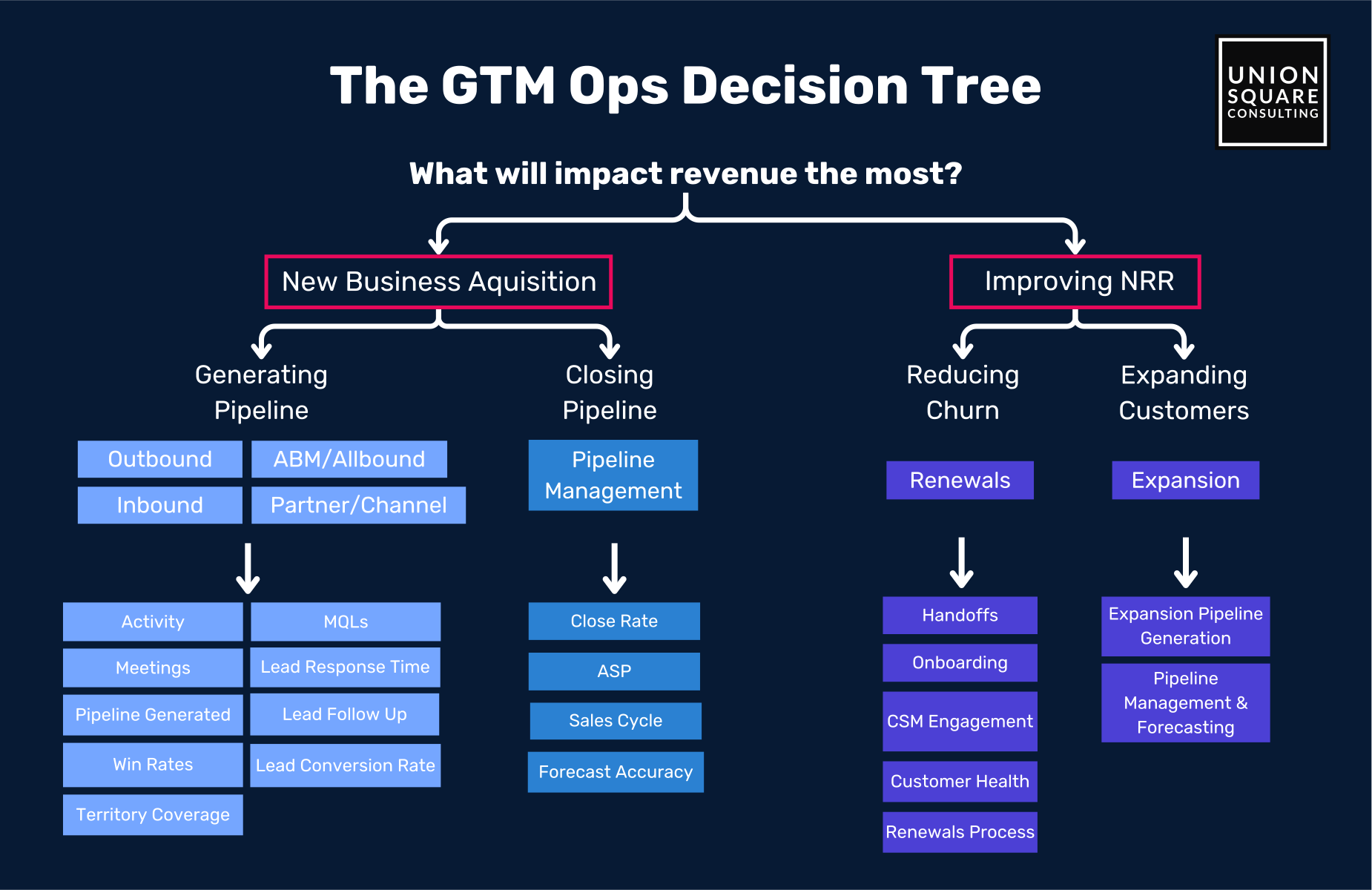
Here’s a quick rundown:
Where’s the biggest opportunity: new business or net revenue retention?
Run the rough math. Model what it’s worth to move new business this year against what it’s worth to close the NRR gap, say 70% to 90% on your current base. Which, if fixed, moves the needle the most?
If it’s new business: pipeline generation or pipeline management?
Our bias is pipeline management first. No point generating more leads if poor pipeline management is causing you to lose them. If you’re already closing well and pipeline volume is thin, generation is the constraint. In this case, go deeper into channel: outbound, inbound, ABM/allbound, or partners.
If NRR: retention or expansion?
You can’t expand unhealthy accounts. If churn is the problem, retention comes first, and you drill into which step is causing friction: sales-to-CS handoff, onboarding, health monitoring, unhealthy-account process, QBRs, or the renewal itself. If retention is solid, expansion comes first and splits like new business does.
From here:
- Keep narrowing to one first priority
- Get executive alignment on the top priority
- Create a list of deferred issues to revisit
Read more about the GTM Ops Decision Tree model here.
Assess Current States and Next Steps
You’ve picked the first priority. Now, find out what’s actually broken inside it and where to start.
The GTM Efficiency Pyramid
Every motion matures through the same four stages, with each layer depending on the one before it.
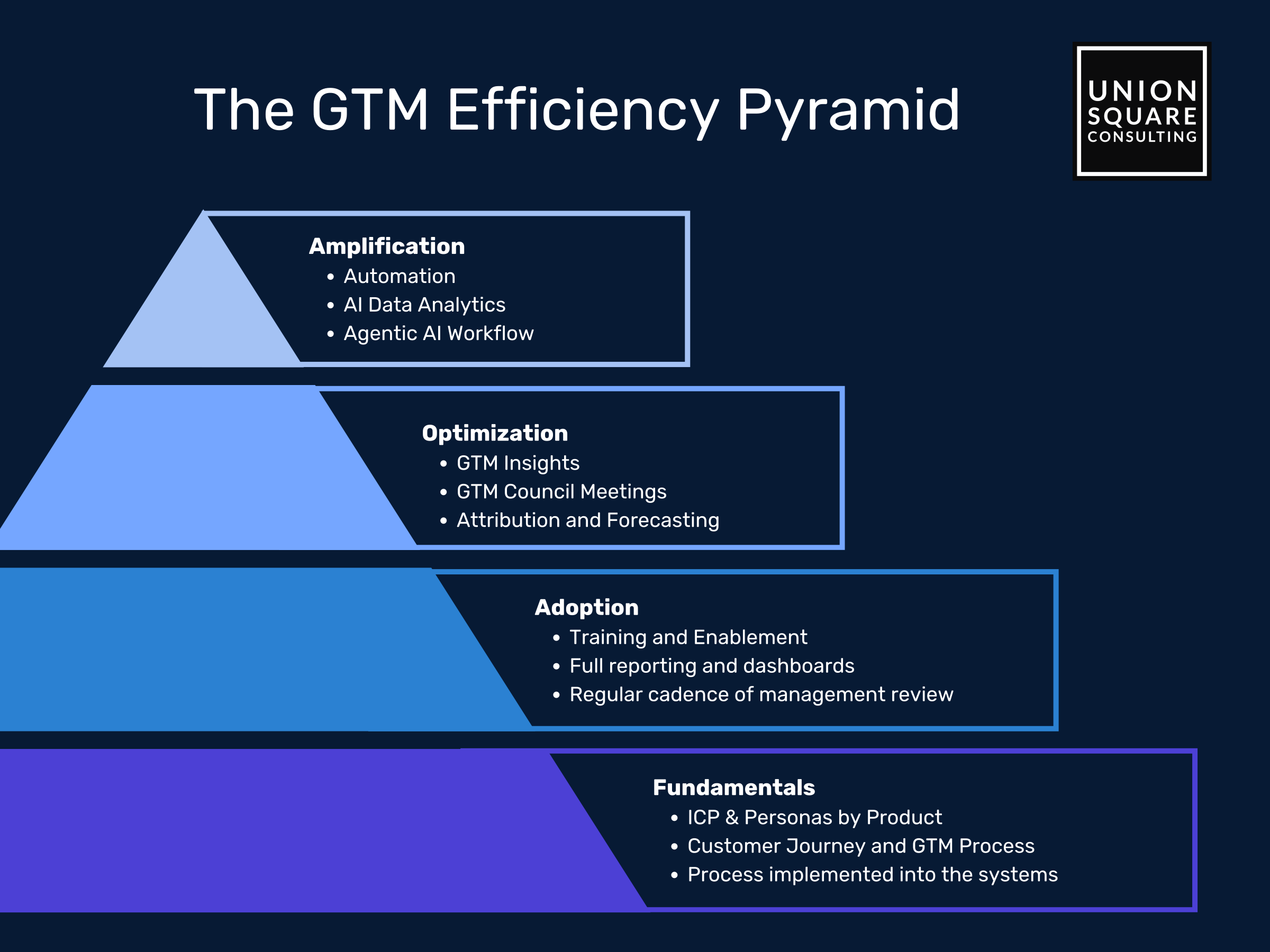
The shiny objects are tempting, but if we build dashboards, fix attribution, implement a bunch of AI tools, etc. to improve efficiencies, and if we don’t have the right foundation in place, we’re amplifying the mess.
Instead we need to focus on one GTM motion at a time, inbound, outbound, allbound, partners, expansion, or pipeline management and get our team executing a defined process consistently. That’s what drives revenue, as well as the data we need to optimize the motion and to amplify it with AI and automation.
The best part, though, this foundation (Fundamentals and Adoption) can sometimes be implemented in as little as a few weeks, for one key motion.
Read more about the GTM Efficiency Pyramid here.
The GTM Ops Diagnostic
So how do we do this? We’ve written a separate Framework on diagnosing your GTM Ops using the models above. Here’s a quick summary:
- Fix Fundamentals first. If anything here is shaky, start here, full stop.
- Then Adoption. Your team needs to be executing those fundamentals consistently and correctly to start gaining real visibility into the business.
- Optimization only once the layers above are set. You can’t optimize on unreliable data, period.
- Amplification only once Optimization is at least stood up. You don’t want to Amplify the things that aren’t working, do you?
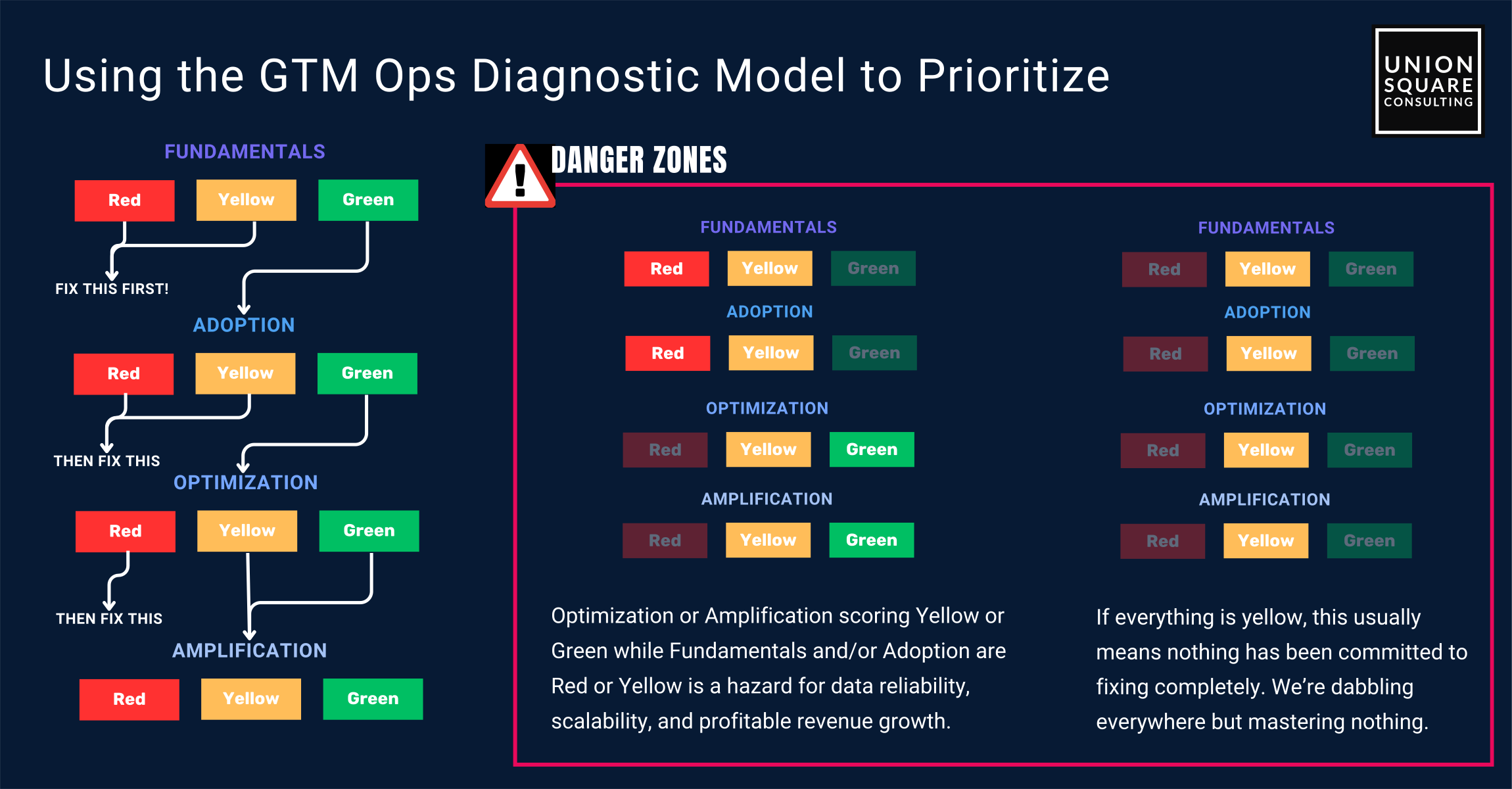
The weakest stage inside your priority motion is your 90-day focus. If you complete that stage within the 90 days, continue on to the next stage.
Read more about the GTM Ops Diagnostic here.
Get your own GTM Ops Diagnostic worksheet here.
Build the GTM Ops Roadmap
Now it’s time to map out the plan for creating the operational changes you landed on. Here’s a quick breakdown of how we build GTM Ops Roadmaps for our own clients.
1. Turn your diagnosis into an OKR plan.
2. Tie objectives to revenue outcomes. One objective, one numeric key result, tied to the diagnosed priority. “Generate $50M of pipeline from outbound this year.” “Grow NRR from 70% to 90%.”
Calibrate to the sales cycle: a 30-day cycle can show close-rate movement in 90 days, a nine-month cycle can’t. So the key result there is pipeline generated, meetings booked, or account penetration.
3. List the initiatives. Straight from your diagnosis. Weak Fundamentals for outbound might mean; redefine ICP and personas, build the capacity and territory plan, segment target lists, rebuild the process, implement it in the CRM. Keep it to three to five at a time.
Need help figuring out initiatives for your top priority? Check out our Frameworks directory, we’ve broken down everything that needs to be in place for each GTM motion in their own Frameworks.
4. Define “done” for each initiative. A clear finish line and a single owner. “Improve outbound” never ends. “ICP and personas documented and signed off by sales and marketing” is either done or it isn’t.
5. Get stakeholder sign-off. Being able to point back to an executive priority lets you triage the next fire drill without derailing the plan.
There may be other things you need to address/consider when building out your roadmap, such as:
- System capacity
- Opportunity cost
- Vendor and support needs
- Headcount and capacity planning
On justifying investment: You may be asked, “what’s the ROI of fixing this?”. If something in GTM Ops is broken, existing data is unreliable. You can’t calculate the precise return on fixing a close rate no one can accurately measure yet.
The obviousness of the gap does much of the justifying. Precise ROI becomes possible after the Fundamentals are trustworthy and consistently Adopted, which is a reason to fix them, not to wait.
Execute and Prove It
The plan is signed off. Run it so it survives the daily fire drills, and produce a report at the end that people believe.
Sprint cadence and reporting. Break the 90-day roadmap into two-week sprints in your project tool. Review each sprint for what got done, what didn’t, and what carries forward, then review the whole roadmap at 90 days.
Underneath the team sprint sits individual accountability: monthly objectives break into weekly priorities, then a daily top 3-5.
Demonstrate progress early. This is why you picked the one, most broken motion. You want visible movement inside the quarter. Track key metrics weekly.
Triage ad hoc requests. Is this genuinely higher priority than the objectives leadership signed off on? If it truly is (site down, major customer escalating), pull people off, handle it, adjust the timeline openly. If not, it goes in the backlog.
Skip this and Ops turns into an IT help desk that never touches revenue. You’ll be surprised how many “emergencies” evaporate once people are reminded what the priority is.
Reporting and Dashboards
- Leading and lagging indicators. Track the outcome (pipeline generated, NRR) and the activities that produce it (meetings booked, accounts worked).
- Weekly and quarterly status. Weekly on leading indicators and sprint progress, a full review at quarter end against the objective. Every initiative ties to a metric.
- Measurement cadence and milestone calendar. Decide up front when you measure what, and when certain goals should be achieved by.
- Change management and adoption tracking. Track whether the team is adopting the process, not just whether it got built. “Reps are running the new outbound process every day, and we can verify this is true by looking in the CRM” is the bar, not “we shipped it.”
The report doesn’t create accountability by itself. The weekly deal review where a manager asks “why is this still in commit, walk me through the risk” is where coaching happens and the process gets reinforced. Skip that and the rep fixes it in a spreadsheet later, and you’ve lost the chance to coach and build the consistency the system depends on.
Check out our Framework on Metrics and Insights for more in-depth info on this section.
At 90 days the barometer is simple: do you trust the report? Can you hand your CFO a number and stand behind it? If yes, you’ve proven operational change works here and earned the room to do it again.
Run the tree again, pick the next priority, and keep climbing.
Ready to Drive More Revenue for Your Org?
Apply for The First 90, an intensive GTM Ops program for newly appointed CROs and revenue leaders. See results tied to revenue in 3 months.