The GTM Efficiency Pyramid Framework
Read time: 14 minutesWritten by:
-

Eddie Reynolds
Founder & CEO
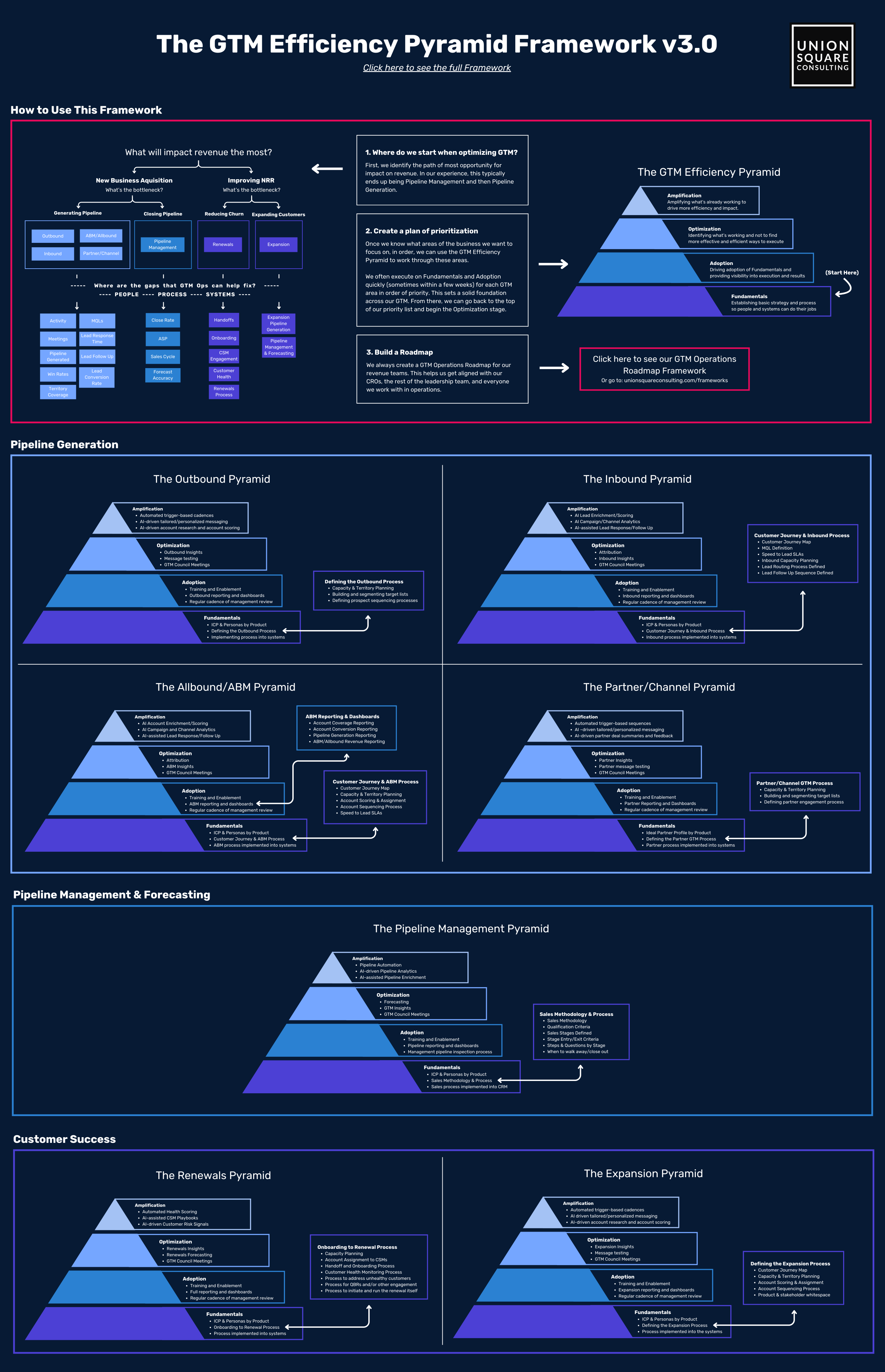
Download Infographic: Click here to download high-res PDF
Introducing the GTM Efficiency Pyramid v3.0
Every CRO and revenue team we meet has 100 things they could improve in their GTM engine, from visibility gaps to pipeline struggles, lost deals, churn, missed expansion, and now implementing AI… everywhere!
This could make anyone’s head spin. An endless list of initiatives with no prioritization. So, we built the GTM Efficiency Pyramid to help revenue leaders visualize their GTM Ops maturity and hone in on the areas where improvement will make the most impact.
How we got to v3.0
v1.0 covered all of GTM in a single framework. In v2.0 we broke it into separate pyramids for Inbound, Outbound, Pipeline, and CS, giving teams more tactical detail in key areas of GTM.
In v3.0 we went deeper to cover other GTM motions we missed and also break CS into Renewals and Expansion. We ended up with seven pyramids across GTM:
- Pipeline Generation
- Outbound, Inbound, ABM/Allbound, Partners/Channel
- Pipeline Management
- Pipeline Management
- Customer Success
- Renewals and Expansion
Lastly, to make this more digestible, we went back to square one and reconfigured the GTM Efficiency Pyramid itself to share common themes across all GTM. This is the foundational framework for almost all the work we do helping CROs and revenue teams improve their GTM Engines.
Let’s get into it.
Reading about it is great.
Doing it is better.FREE WORKSHOP LIMITED TO FIRST 5 QUALIFYING APPLICANTS
You’re not a stranger to GTM strategy. You know where the gaps are. The hard part is figuring out what to fix first and how to get it done with the team you have.
If you’re ready to build a prioritized plan for your specific GTM engine, let us show you how we do it (for free). To get started, book the GTM Efficiency Workshop.
Maturity Stages of the Pyramid
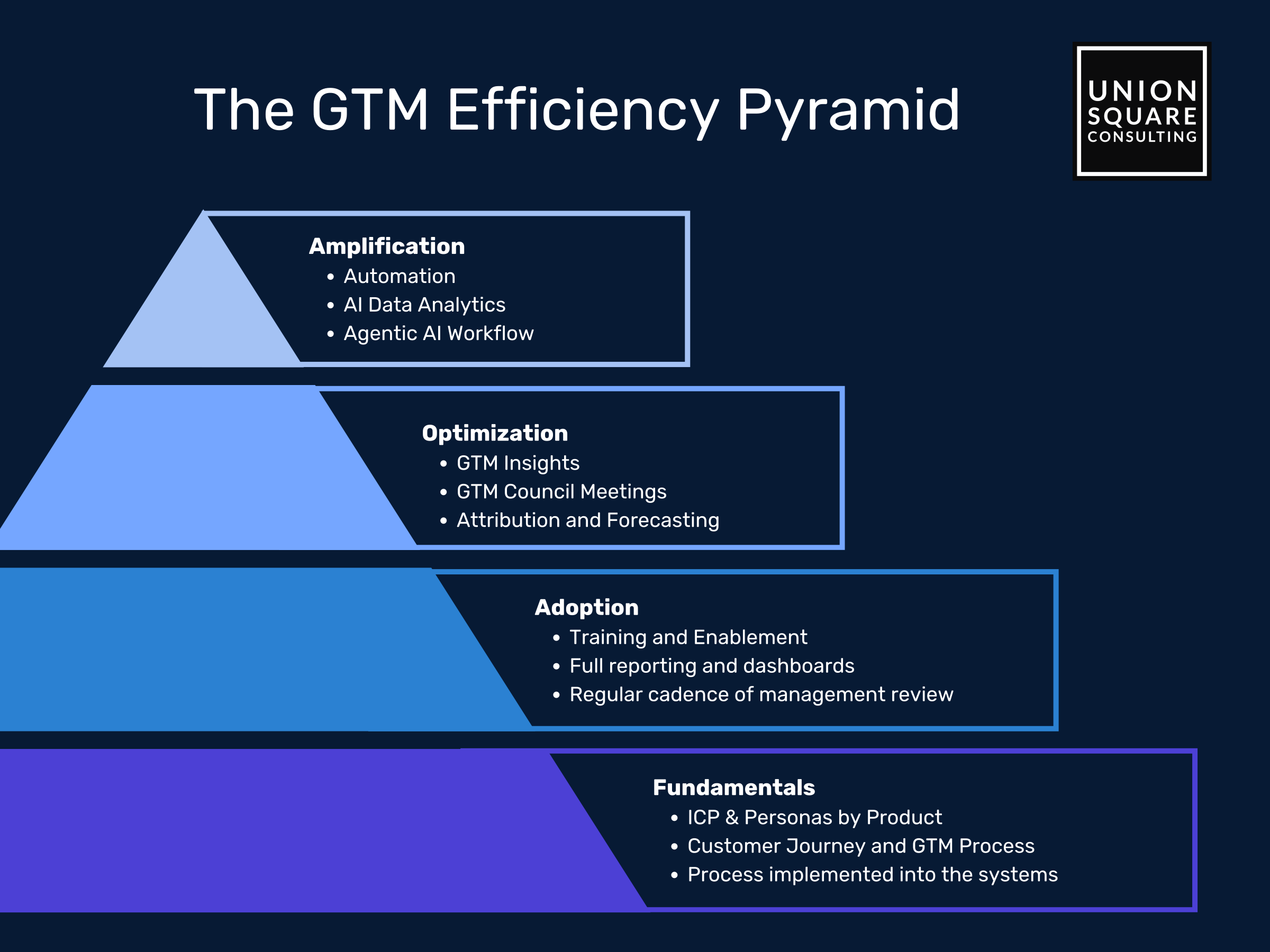
The GTM Efficiency Pyramid breaks down into four distinct stages of maturity in GTM.
Within each stage we’ve outlined three core components of the engine that must be in place before it makes sense to move on to the next stage. Here’s how they break down.
Fundamentals
- ICP & Personas by Product
- Customer Journey and GTM Process
- Process implemented into the systems
The fundamentals always start with having a clear definition of the customer. Then, understanding the journey they want to take and the process our team needs to execute to win them as customers.
That process then needs to be implemented into the systems so that people on the front lines can do their jobs efficiently and management can get visibility into that execution via reporting.
The steps in that process are different for each GTM motion and each phase of GTM. They’re also different for each business, but at a high level it comes down to asking what steps need to be taken, and in what order, to maximize results.
Most mature businesses know what these steps are but many do not have them documented, built into their workflow, or executed consistently by their team. Fixing that is the first step to building an efficient GTM Engine.
Adoption
- Training and Enablement
- Full reporting and dashboards
- Regular cadence of management review
The next stage is getting our team to execute this process consistently. To do that we need to train the team on the process and build a reporting engine to track their execution and results. This is obvious but it’s unfortunately not enough. It can be a one-time exercise that does nothing to drive consistent execution.
We’ve found that the key missing ingredient is a regular cadence of management review. This can be as simple as weekly pipeline inspection and coaching, for example. If this is never done, it’s almost guaranteed the team will have a messy pipeline. If it is done consistently, over time, it’s almost guaranteed the team will follow whatever process is being inspected.
The fundamentals and adoption can be put in place extremely quickly and set the foundation for GTM.
Optimization
- GTM Insights
- GTM Council Meetings
- Attribution and Forecasting
Once we have consistent execution and regular review of the reports, we should have data we can trust. With that data, if we dedicate the right resources, we can analyze it to uncover what’s working, what’s not, and find ways to optimize. The first and hardest step here is blocking dedicated, protected time for the right person or people to review this data on a regular basis.
Once that’s in place, the insights uncovered in this analysis can be brought to a GTM Council Meeting where leaders in sales, marketing, CS, finance, and/or product can discuss what’s working and not and what actions to take in response. More on that here.
Lastly, with the foundation in place and dedicated time and resources to analyze data, we can start to implement attribution and/or forecasting in different areas of GTM. It’s very hard to do this and get value from it if we don’t have that foundation though.
Amplification
- Automation
- AI Data Analytics
- Agentic AI Workflow
Finally, we’ve saved the best for last, the shiny objects we all get excited about in GTM. Automation, AI, and other fancy tools and advanced practices to amplify our GTM. The list of examples here is limitless, so the bullets above are just a few examples, but we’ve saved them for last because they amplify the foundation described above, whether it’s working or not.
If we layer an AI Agent on top of a GTM process, it will amplify what’s working and amplify what’s broken. We could quickly see more pipeline, more deals won, better retention, or more expansion. Or, we could quickly see our domain tarnished, our best prospects blocking our emails, or our best customers churning. It’s a very sharp double edged sword and it’s important to build the right foundation before amplifying it.
Okay, so with all that said, let’s get more granular.
Breaking Down the Pyramid
Now that we’ve gone through the GTM Efficiency Pyramid at a high level, let’s break it down into the three phases of GTM:
- Pipeline Generation
- Pipeline Management
- Customer Success
We’ll cover the core GTM Motions used to generate pipeline, then talk about how we can manage that pipeline and forecast more accurately, and then finally we’ll break CS into Renewals and Expansion.
To keep this digestible, we’re only going to briefly touch on what’s unique in each pyramid and then link to frameworks for each of those pyramids to dive much deeper.
Pipeline Generation
There are six core GTM Motions we see in B2B today:
- Outbound
- Inbound
- ABM/Allbound
- Partners/Channel
- PLG
- Community
We don’t see PLG and Community that often in our work with +$100M B2B SaaS Companies, so we’re going to skip those two, but we felt they were worth mentioning.
One might argue they’re both very similar to Inbound. If our marketing team can drive people to join our community or use our product without ever talking to sales, and then we can identify a subset of those people to pass to sales, it’s not a fundamentally different process than what we’ve laid out below for Inbound. We just need to identify the Product Qualified Leads or the Community Members we want to target.
The Outbound Pyramid
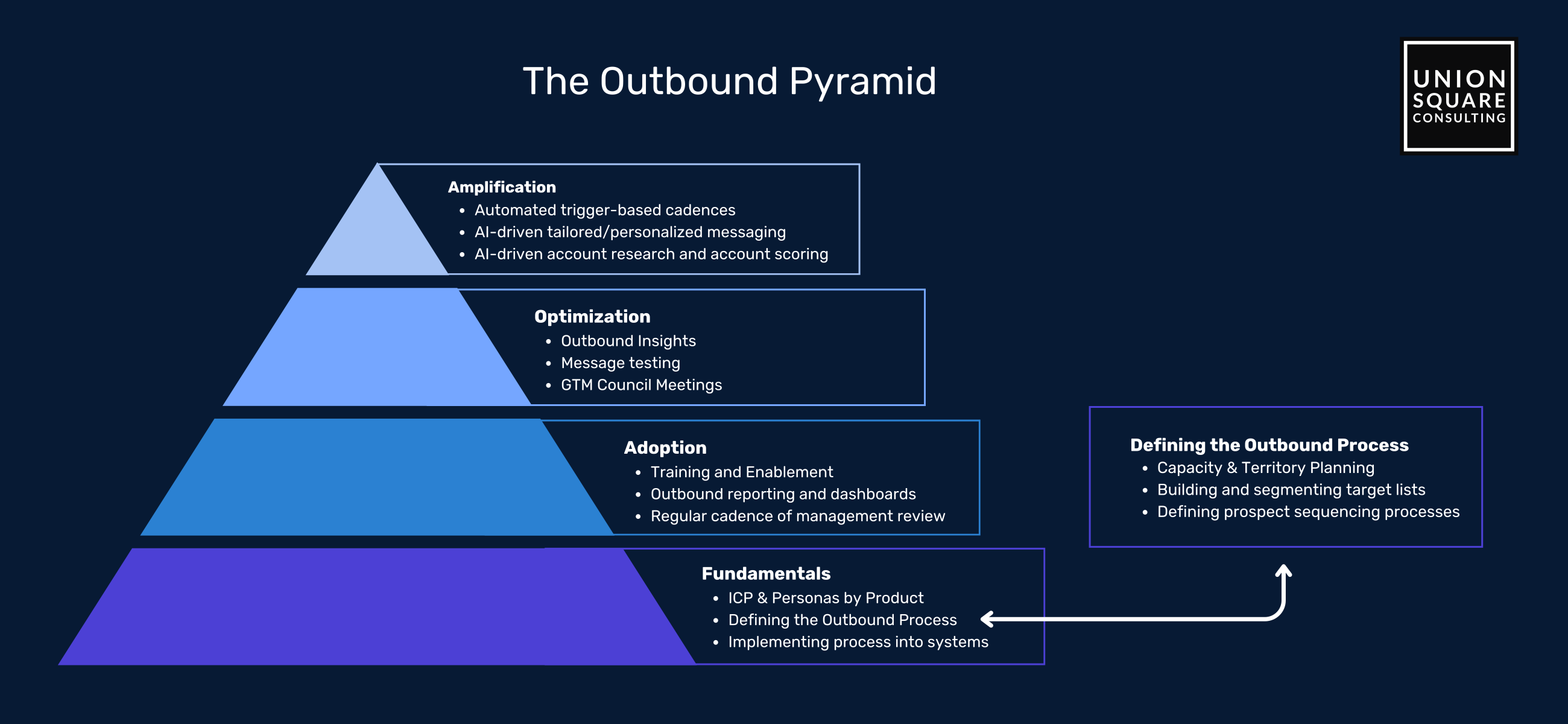
Outbound starts with defining our targets and the step by step process to convert those targets into meetings and pipeline. That includes Capacity Planning and Territory Planning, building and segmenting target lists, so our reps are focused on one buyer with one message at a time, and outlining the sequencing process to work those prospects.
Then we drive the team to adopt that process consistently and analyze the data and the messaging to optimize it. Once we have this foundation in place we can amplify it with automation and AI.
More on outbound here.
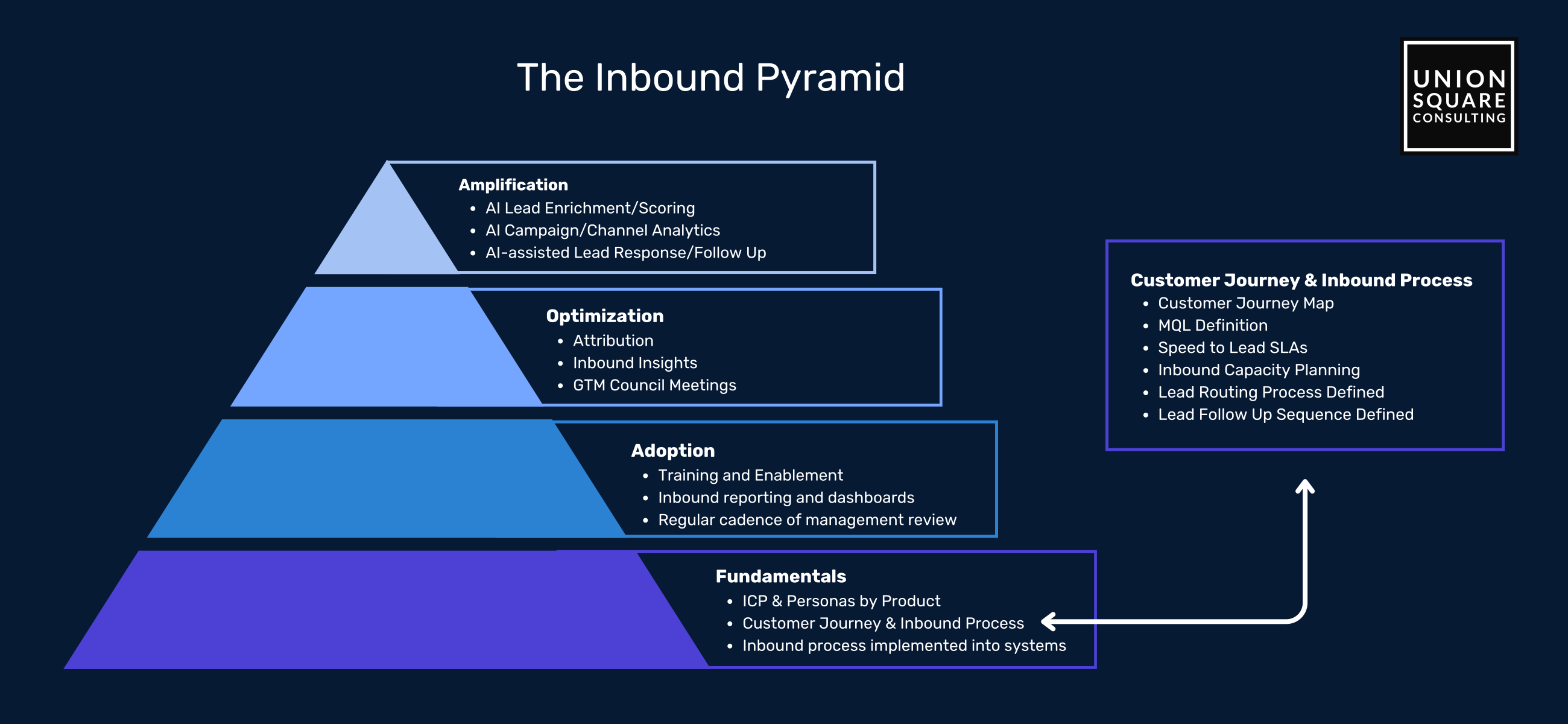
The Inbound Pyramid
Inbound starts with defining what leads we should send to sales and the process to respond to those leads and follow up to maximize conversion rates, pipeline, and revenue. We’ve outlined six core components to that process below.
Like outbound, we can then build upon those fundamentals by driving adoption, optimizing the process, and then amplifying it.
More on inbound here.
The ABM/Allbound Pyramid
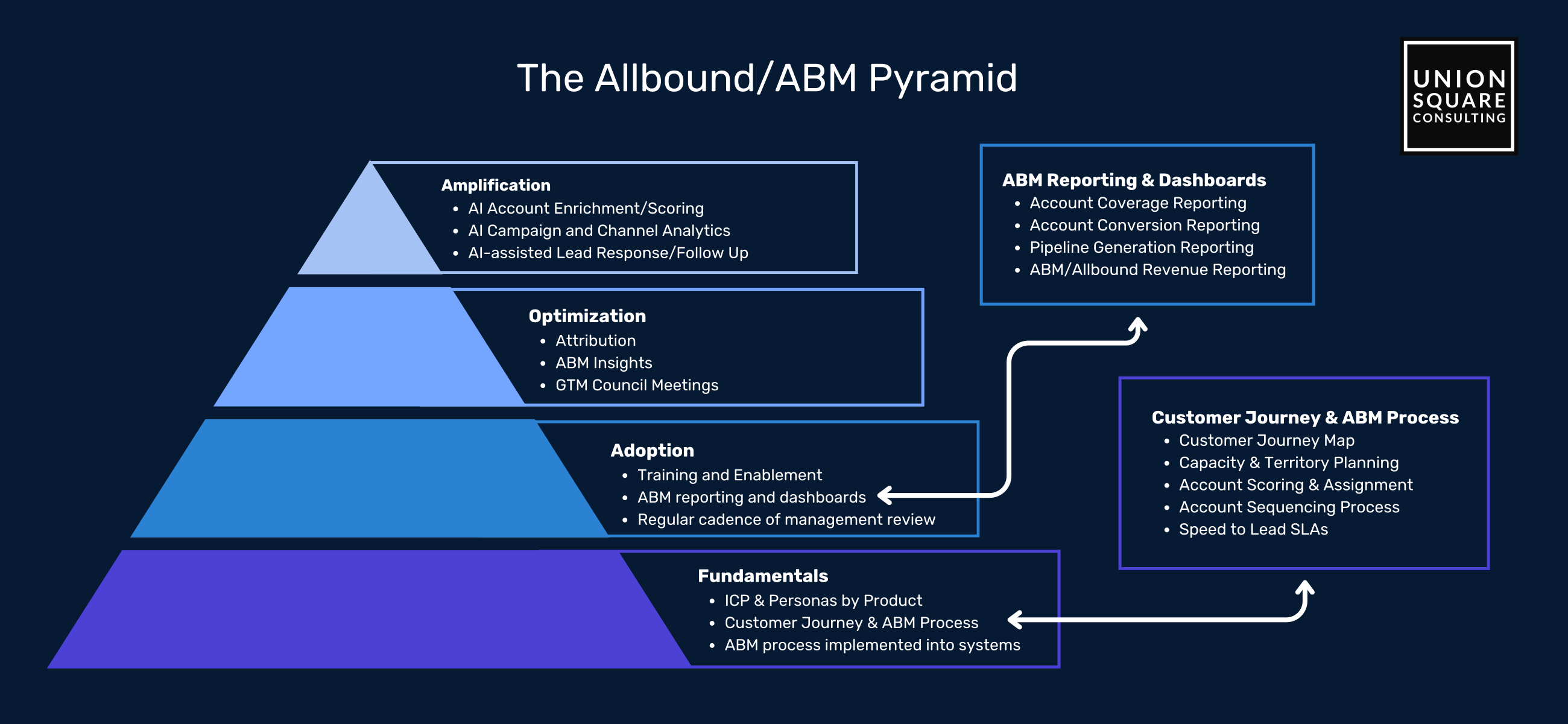
If we want to move into ABM or Allbound, in whatever flavor of it we choose, we need to master the components of both inbound and outbound above and make them work together seamlessly.
This starts with identifying our targets by doing capacity and territory plans and building an account scoring model to identify which accounts to target. We then need to define the process to work those accounts and implement that process into our systems.
As we move into Adoption we will require more robust reporting than with simpler inbound/outbound motions, have more data we can analyze to optimize the motion, and more opportunity to amplify it with automation and AI.
More on ABM/allbound here.
The Partners/Channel Pyramid
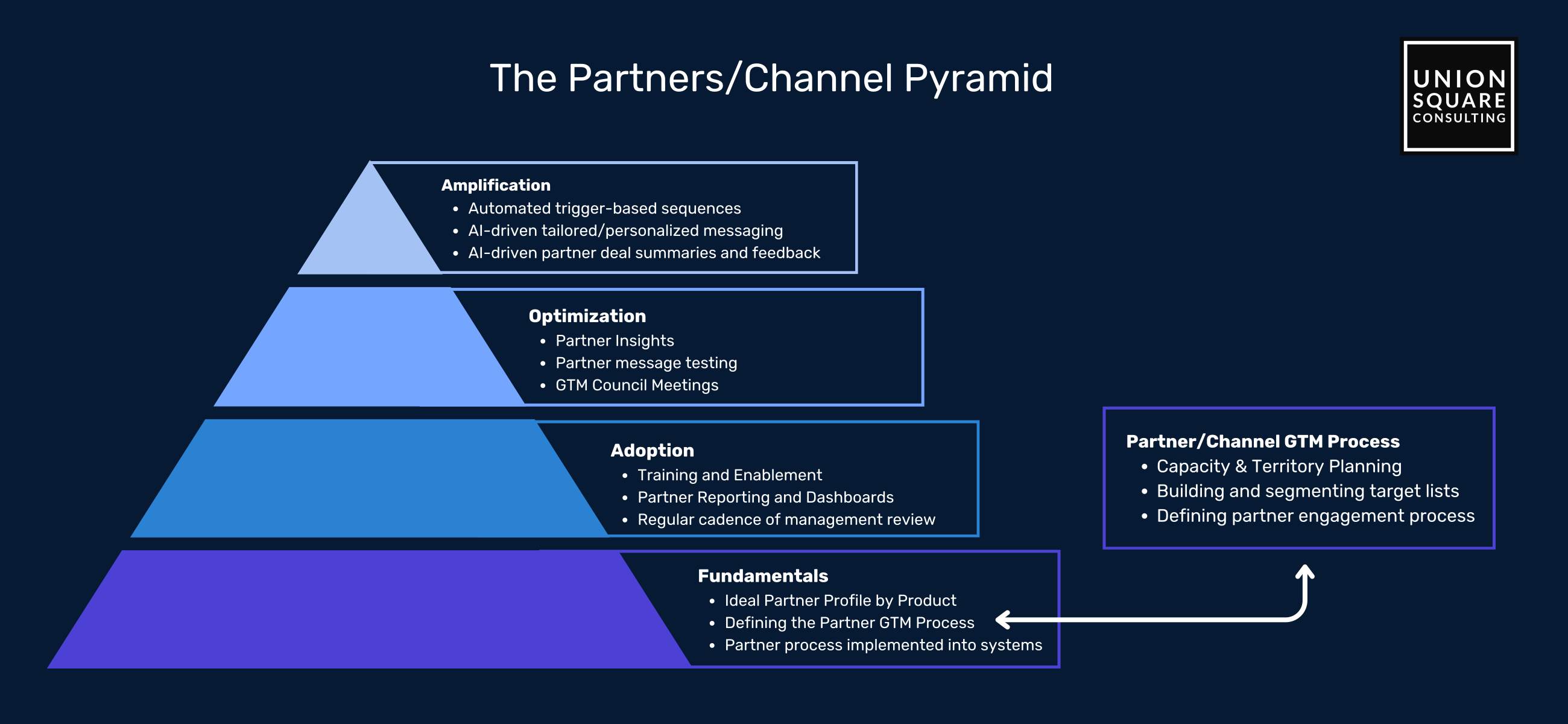
Lastly, we’ll touch on Partners or Channel, which can be very different from one organization to another. Mostly, though, we need to start by meeting a potential partner and then we have to have a process to get them to become a partner and then a process to build and nurture the relationship to see ongoing deal flow.
Like other GTM motions, we’ll need to drive adoption and then optimize things before layering on a lot of AI and automation.
More on Partners/Channel in an upcoming newsletter. Click here to subscribe and get it when it’s published.
Pipeline Management
The Pipeline Management Pyramid
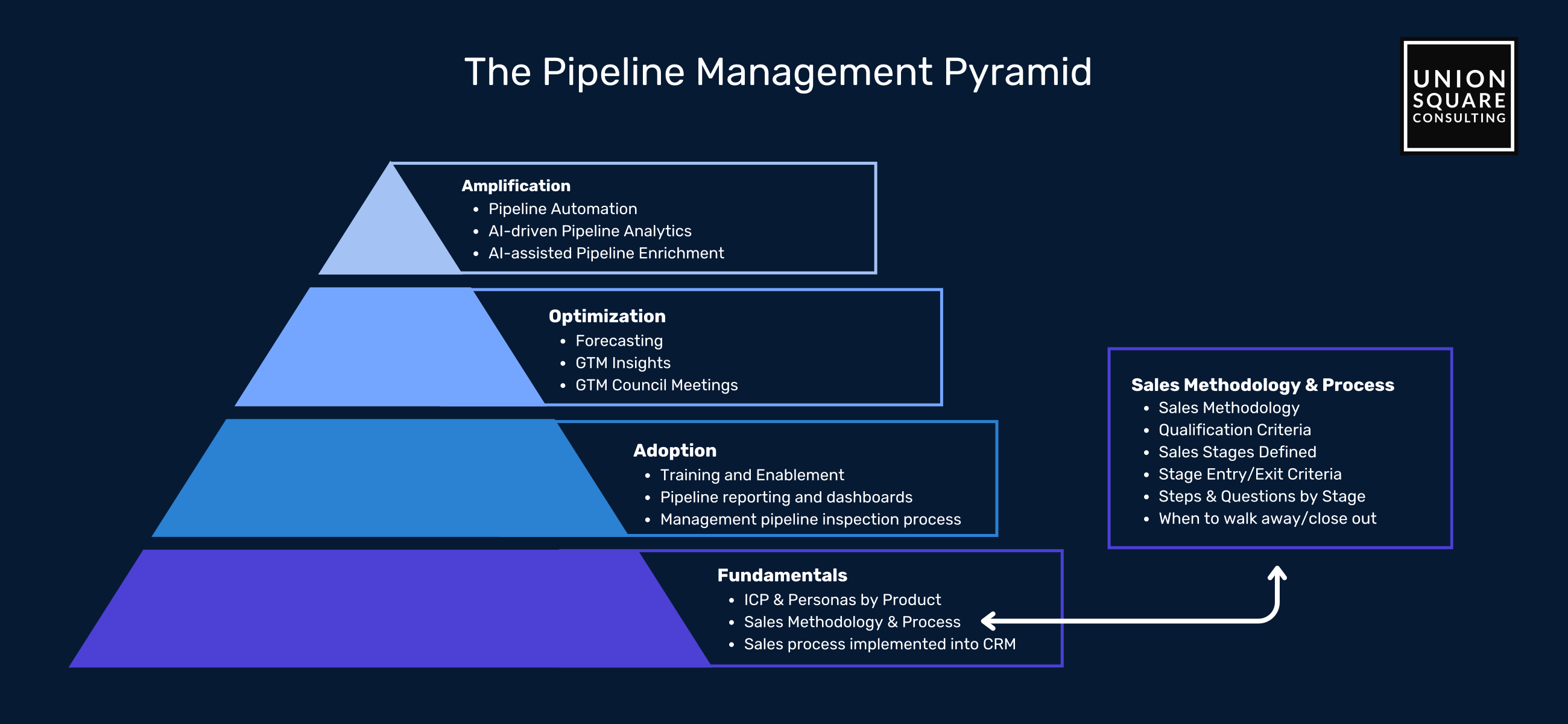
Good Pipeline Management means our reps are executing the right steps to win the deals they can win and avoid wasting precious selling time chasing deals they can’t win. It also means management has visibility into the pipeline and can forecast accurately.
To achieve this, sales leaders typically pick a Sales Methodology they like, such as MEDDIC, and then translate it into a stage by stage, step by step process with the following components.
- Sales Methodology and Process
- Sales Methodology
- Qualification Criteria
- Sales Stages Defined
- Stage Entry/Exit Criteria
- Steps & Questions by Stage
- When to walk away/close out
Once this is in place we can drive the team to adopt the process and then work to optimize and amplify it over time.
More on pipeline management here.
Customer Success
The Renewals Pyramid
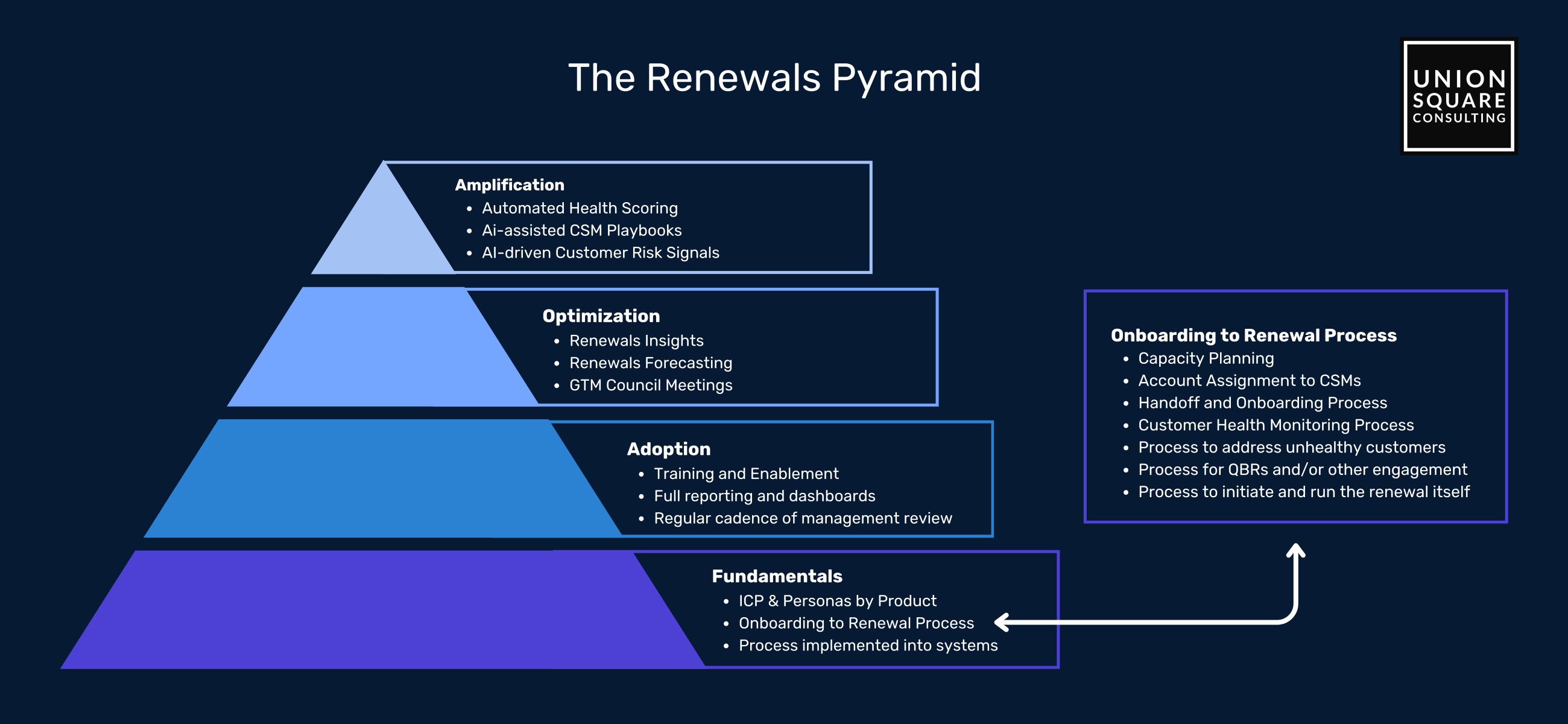
Most renewals are won or lost long before the renewal process begins at the end of their contract. To maximize renewal rates there are a number of processes that need to be in place.
- Onboarding to Renewal Process
- Capacity Planning
- Account Assignment to CSMs
- Handoff and Onboarding Process
- Customer Health Monitoring Process
- Process to address unhealthy customers
- Process for QBRs and/or other engagement
- Process to initiate and run the renewal itself
This starts with Capacity Planning to ensure we have enough of the right people to execute each of those processes. Then we need to assign accounts based on that capacity and map the processes for each stage of the customer journey from onboarding to renewal.
More on renewals in an upcoming Framework. Click here to subscribe and get it when it’s published.
The Expansion Pyramid
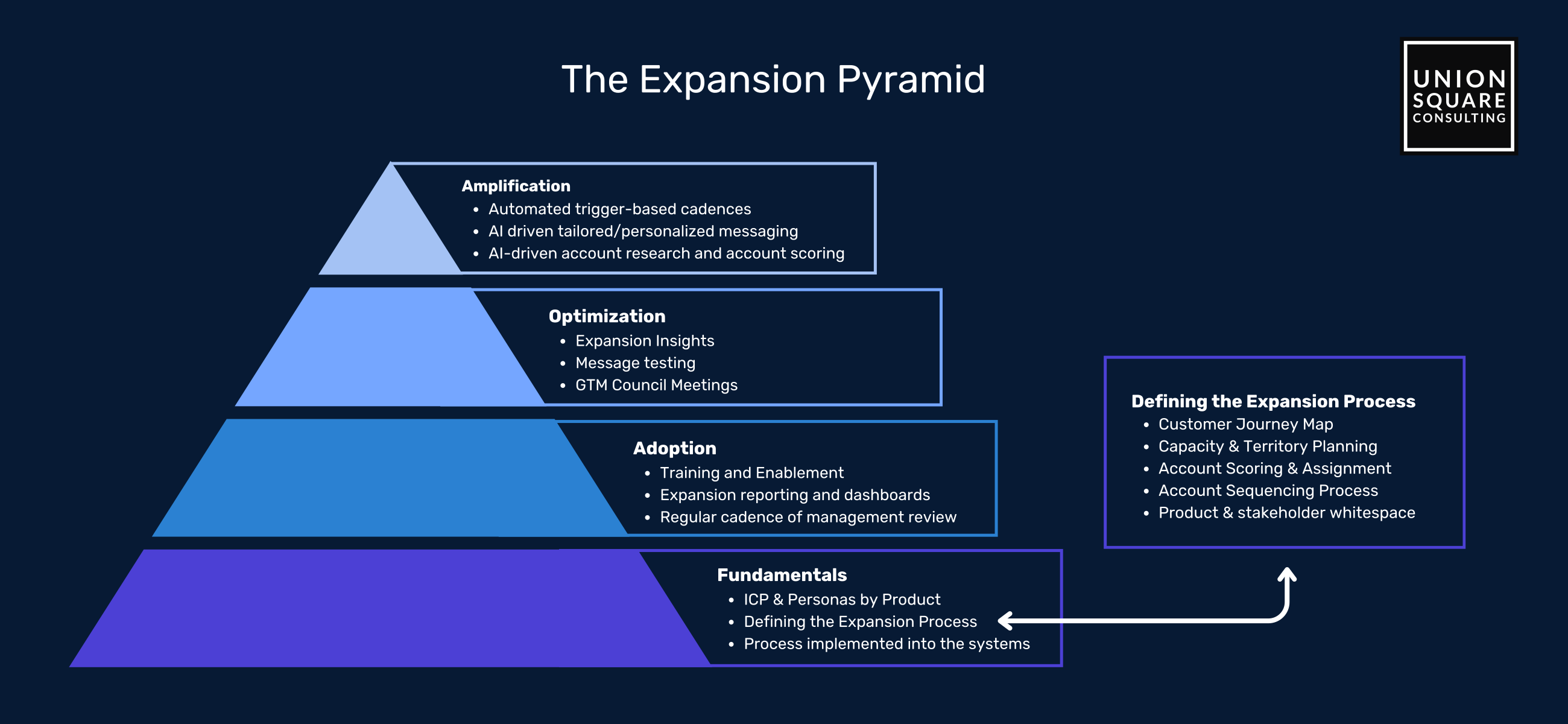
For expansion sales we can look at the Pipeline Efficiency Pyramid above to think through how we would manage and close deals and forecast accurately. In order to generate that pipeline, the process is not too dissimilar to what we’ve outlined above for Outbound or ABM/Allbound.
The main distinction is defining the process to generate that pipeline.
- Defining the Expansion Process
- Customer Journey Map
- Capacity and Territory Planning
- Account Scoring & Assignment
- Account Sequencing Process
- Product & stakeholder whitespace
We could start with a Customer Journey Map so we understand when and how customers become likely to expand. We then need to map our capacity, create capacity-based territory plans, and score and assign the right accounts to the right reps. We also need to map out the process to work those accounts and generate expansion opportunities. Lastly, it can be incredibly helpful to map whitespace we have in accounts that are not using certain products and/or where we have not yet engaged key stakeholders.
More on expansion in an upcoming Framework. Click here to subscribe and get it when it’s published.
How to Implement This Framework
There’s a lot here and we’ve only covered some examples of our own +150 point checklist. There’s a reason we work with customers for multiple years and/or they hire full-time RevOps leaders or entire teams.
But where do we start? How do we get quick wins?
Identify the Biggest GTM Gap
Here are some of the first questions we ask revenue leaders:
- Where do you think you have the biggest opportunity to drive more revenue?
- Is it driving more New Business or improving Net Revenue Retention?
- Is it reducing churn or expanding existing customers more?
- Is it improving close rates, or generating more pipeline?
- Is it improving inbound or outbound?
The big question here is, if we could go from where we are today to where we think we can get to, how much would that improve revenue?
If we’re at 80% NRR and we can get to 100%, on $100M ARR today, that would be an extra $20M in ARR. If we expect to bring in $30M in New Business this year, would improving the process get us to $51M instead?
It’s Usually Pipeline Management
CROs almost always tell us they need more new business and to do that they need to generate more pipeline. We push back, though. What’s the point in generating more pipeline just to lose it in the sales process? There are almost always gaps in pipeline management, across both new business and expansion, so we strongly encourage revenue teams to get things in order here first.
Start with Fundamentals and Adoption
The good news is that getting the Fundamentals in place and driving Adoption can happen very fast, in just a few weeks if the team is small enough. Optimization and Acceleration can take years. In fact, we would argue the last two stages are never “done”. No team has the perfect GTM Engine, but getting the basics in place can make a huge impact fast.
This means we can move from Pipeline Management to Inbound and/or Outbound to Renewals and Expansion quickly, getting the basics in place that will have a big impact before worrying about optimization. This can all be accomplished in a quarter or two, if the team is small enough.
Build a Roadmap
There are a lot of moving parts here so we always create a GTM Operations Roadmap for our revenue teams. This helps us get aligned with our CROs, the rest of the leadership team, and everyone we work with in operations. It sets a clear path and prioritizations for which of these items we’ll tackle first.
- Framework – The Outbound Efficiency Framework
- Framework – The Modern Inbound Framework
- Framework – The Allbound/ABM Framework
- Framework – The Pipeline Management Framework
- Framework – The Revops Roadmap Framework
- Newsletter – The GTM Ops Decision Tree
- Newsletter – How to Get Quick Hits in GTM Ops and RevOps
- Newsletter – Mastering ICP: Understanding Our Customers Better with Data
- More on this topic in upcoming newsletters – subscribe here to get it in your inbox
Reading about it is great.
Doing it is better.FREE WORKSHOP LIMITED TO FIRST 5 QUALIFYING APPLICANTS
You’re not a stranger to GTM strategy. You know where the gaps are. The hard part is figuring out what to fix first and how to get it done with the team you have.
If you’re ready to build a prioritized plan for your specific GTM engine, let us show you how we do it (for free). To get started, book the GTM Efficiency Workshop.