Eddie0:04Welcome to Go to Market Science. In this podcast, we share tangible, actionable playbooks from the trenches working as go to market strategy and rev ops consultants for our clients here at Union Square Consulting and candid conversations with revenue leaders in the market that have been there. Now let's get into it.
Rachael0:22Today on the Crow Stories segment, I'm sitting down with Michael Crow at Lucid Link. Lucid link is a cloud collaboration platform that created its own category, and Michael was brought in to take what it was already a fast growing company and build the go to market infrastructure that would take it to the next level. Before Lucid Link, he spent years in enterprise leadership at Zoom Info, Adobe and Marketo.
Rachael0:45Today, we're talking about what it looks like to walk into a company that's growing, but not yet wired to scale, and how to rework the go to market engine underneath it without losing momentum. So, Michael, you ran a $330 million enterprise division at some info and grew a product line from 0 to $75 million. Then you took the Crow seat at a 250 person startup that's now over $50 million in RR.
Rachael1:10What was the biggest challenge? Jumping from zoom info to Lucid Link.
Michael1:14That's a great question, Rachel. I think the biggest challenge was, even though I spent five years at zoom info and saw an incredible amount of growth and change and was able to put my fingerprints on a lot of it. Moving into a startup environment for the first time, you have all of these grand ideas and you've seen what good looks like at scale.
Michael1:37But the translation of those ideas to actualization and understanding all of the systems and process and the people work that goes into it. I underestimated it, honestly. There was a ton of good intent. There was a ton of good work that had already been done at Lucid Link. But when you are in a position where you're being asked to scale very aggressively in a challenging market, there's not a lot of time to sit back and wait.
Michael2:04There is a bias for action and a desire to do and working through systems and process, build and bringing people along created a really interesting dynamic in the first six months.
Rachael2:16And so when you were looking at this opportunity beforehand and kind of planning your approach to it. What did you think the job was going to be?
Michael2:23I thought that the job was going to be come in and build on top of the systems that were already in place. There was there was defined product market fit. There was a very real market pull that had been created. And as I had been looking at, opportunities in the market lucidly represented something that I've always really been drawn to, which was malleability.
Michael2:43So we have a vertical use case around rich media and M&A. But the thing that was so interesting to me was this struck me as something that was really extensible, sort of across tech and across even legacy organizations. As you continue to see this investment in cloud infrastructure and AI are offering is not limited to the verticals that we've played in historically.
Michael3:10There was just a need to create the awareness and the scalability of our systems and people to be able to go out and capture a broader slice of the market. And that was the thing that I was really most excited about. And when I got inside, it was it became very, very apparent that the market pull was real for a reason, and it represents a huge opportunity.
Michael3:31So broadening the aperture as you're as you're beginning to come online and get integrated into the business, it becomes much more challenging than what it appeared that it would be on the surface.
Rachael3:45Give me an example of something that you expected that would be in place once you got in there that just wasn't there.
Michael3:51Yeah. Segmentation. So, you know, I think a lot of crows and sales leaders, we have a tendency to start at the middle of the problem, which is looking at the sales process, looking at the opportunity matriculation understanding, you know, where does the funnel get jammed up. But the real secret is starting at the top of that funnel. And that is around segmentation rep distribution, understanding where your target buyers are and making sure that you're dividing territories in a way that everybody has enough to eat.
Michael4:23But you're not either overly prescriptive and you're not too broad, because if you're overly prescriptive, then you run the risk of not finding customers and prospects in market. And if you're too broad, the average sales person tends to get analysis paralysis because there's just too much wood to chop. And so not having a defined segmentation model was a real opportunity for us to to sort of tighten the operational belt.
Michael4:48The other thing that's interesting about Lucid Link is small organization, global footprint. So we have a significant sales apparatus that's in specifically in the UK as well as a large sales force in the United States. So we had the double edged sword of you've got a channel friendly UK function that's fairly well defined and you've got to carve up by individual countries, and that's based on who speaks which language.
Michael5:15And then in the US, you've got this broad swath of the universe and a relatively small amount of people to cover that much space. So how do you actually define what good looks like for a wrap at each segment to the business across commercial, mid-market and enterprise?
Rachael5:30And how did these issues with segmentation affect your data and reporting and what you could and couldn't trust?
Michael5:36That's a good question. It affects everything because you get conflating data points around when rates and op creation rates, and how does the top of the funnel, from a marketing standpoint, convert at the mid and lower funnel? We had some more junior reps working more advanced and larger complex accounts. We had some strategic reps who were working on, you know, sort of smaller to mid-market post-production houses and video effects studios, which resulted in decent returns from a revenue perspective.
Michael6:09But the durability of the revenue and the long term growth of those accounts didn't necessarily correlate with the ASP that we were getting up front. And so you got a lot of noise in the data, and we had some challenges around separating signal from noise. There's a lot of organizations do so that we could really cut down into what is our actual ICP, who are the people who buy most efficiently from us, and how do we get ourselves in front of those individuals proactively versus relying on inbound through the website?
Rachael6:39And so what is breaking downstream when you have these segmentation issues and trust issues with your data and reporting.
Michael6:47So you get this standard response of rep infighting, right. Oh, this is my account. It should have been my lead. I was at that trade show. This should have come to me. East coast, West coast, mid-market commercial. Everybody's pointing fingers around each other. Because when you're dealing with a segmentation engine that is not well defined and well enforced, you inevitably wind up with people fishing in each other's ponds.
Michael7:11And so that was the biggest challenge. And then that dovetails into rep inefficiency and a lack of accountability and clarity around what they're actually supposed to be working on. And so at the end of the day, every revenue leader's job primarily is to drive top line growth and revenue, durability. And if you can't articulate where the fallout is occurring and help your sales teams be successful, then you're going to you're going to fail as a leader.
Rachael7:39Really? Yeah, it impacts everything. Like the revenue impact is the biggest thing that you can see downstream. But you know, everything that happens before that affects everybody at the company and how you look.
Michael7:52That's exactly right. And I'm concerned about I mean, it's I'm less concerned about how I look. But when you get into a position where you have the entirety of the company looking at that funnel, the velocity of it and looking to point a finger at one specific thing, that is wrong, that's the deception of this whole process, is there's not one thing that breaks down.
Michael8:16It's a series of either either bad data, misguided data, or KPIs that don't align to what's actually happening downstream. And so you get this sort of amorphous blob of challenges, and then you have to sort of unwind it on the fly while continuing to hit pipeline generation targets, while trying to maintain win rates. And while you're still trying to deliver top time, top line results, it becomes really, really challenging.
Rachael8:43And how long did it take to fix these issues and get back on the right track?
Michael8:47Well, that's a great question. Segmentation is an evergreen challenge. The ICP is constantly changing and evolving. The way that we go to market is constantly evolving. And so it was six months before we really got to a clean baseline. And the the opportunity that that creates is now you can start to segment and realign. And so we have, like most organizations, a very strong direct sales channel.
Michael9:17We have a reseller channel. We have strategic alliances with the likes of AWS where we sell through the AWS marketplace. We have MSPs and sort of bulk data server providers that resell our solutions to third parties. And we have a very robust plug engine. And so for a 250% company, we have five different modalities that we go to market with.
Michael9:43And so once we had a clean baseline, we could start to understand who's buying what from whom and in which geos they reside, which has given us the ability to become a little bit more intentional about the way that we're segmenting and carving, and not only just for the sales teams and for territory builds, but what we're doing from a lead routing standpoint.
Michael10:04So we're a lean data shop. We use Marketo for our core lead management, and we use qualified to route inbound leads on our website. And so all of those lead capture apparatus are using a centralized sort of logic brand that runs through lean data. That's allowing us to be more efficient with the way the leads are distributed.
Rachael10:22And what was your process for approaching the segmentation issue? And, you know, breaking it down, building it back up and fixing everything.
Michael10:31To be gentle and to start small. You run the risk of tipping the whole thing over. If you just go in and start to hack things to pieces. And so I one of my favorite sayings is, is how do you eat the elephant? Right? The answer is one bite at a time. And so we we started with looking at the ICP in a vacuum.
Michael10:53So we did a dump of all of our opportunity reporting. We looked at closed one, closed lost contact roles, contract signers, and we started to triangulate. You know, we had an idea of what our ICP was, but how does that actually fit to the data that we have that we can dump out of CRM and actually take into a clean room and actually start to analyze?
Michael11:13And what we found was we had two very distinct strata. We had an enterprise strata that was large organizations that were coming in, sometimes with a small initial land, sometimes more meaningfully. But the organic growth over time was really strong and durable. And then we had a commercial segment that was really strong. We weren't seeing a high take rate in the sort of mid-market and lower enterprise, but we started to focus some sales resources instead of just looking for conversion into sales lead.
Michael11:45We started pointing some sales resources towards that lower end of the market where we were deploying some advertising dollars, some marketing spend in some outbound efforts to to drive some new logo acquisition. And that for the first time in my career, that cohort of commercial actually represents a higher level of revenue durability than most men market and enterprise shops.
Michael12:08So that was a nice data point for us to identify. And the rationales to why became sort of interesting. It's it's because these companies have real storage needs in demand, but they lack the funding to buy conventional on prem appliances or go direct into Amazon or GCP and acquire large tranches of S3 storage. So it was an opportunistic it was an opportunistic segment for us to show up in.
Michael12:37And we found that it was really fairly durable compared to what you typically see in commercial.
Rachael12:41What was the biggest opportunity that you've identified at Lucid Link?
Michael12:46Yeah. So there's a there's a list. But I think the biggest opportunity that that we identified and it was relatively early on is with that higher take rate we had with large enterprises we were going through. And again, as a startup and you're doing business with some of the hyperscalers, you get taken through the wringer from a legal and compliance standpoint.
Michael13:08And so we had about 30 MSAs that we had enforced with big global organizations that we had been pulled through in order to get our initial lands and our initial lands. But these organizations, you know, you know, 5000, couple hundred K, but nothing, you know, really massive and impactful, but going through the same procurement and legal cycle as you would be for 5 to $10 million deal.
Michael13:35And because there was so much market opportunity, we had a tendency to go through this, take our initial land, pass it off to customer success, and just go and look for the next whale that we could take down. And so when I came in, once we got through the segmentation exercise, this was something that became really apparent, which is we have hunting licenses and some of the largest organizations on the planet, and we're not taking advantage.
Michael13:58And so we began the process of a cow planning and territory planning and even down to opportunity planning where we were looking at, okay. How can we go sell sort of horizontally across the organization with the known use cases? And now what we've moved into with some of our latest product releases is how can we actually go to the centralized IT buyers and have a much more centralized discussion about cloud optimization at scale, which is the really exciting path that we're starting to head down now.
Rachael14:27So what was the process then of, you know, building out this new segment and getting adoption from your sales team, you know, new talk tracks, I'm guessing new processes for for selling, for handoffs?
Michael14:41Yeah. So we have we've deployed a couple of different strategies. Primarily is we've created a sort of subsegment at the top that is strategic. So above enterprise we now have strategic and strategic account reps own a named account territory. That's 25 accounts. And there is a mix of. Net new logo acquisition and customer accounts. And they are responsible solely for new logo acquisition retention and expansion.
Michael15:12So we have that cover. Net new logo acquisition and account managers today that cover renewal and retention and growth. But our teams cover both sides of the fence. And so they now own the land and expand motion. So we have we've we've oriented product development towards meeting the needs of the enterprise. We have created new talk tracks and enablement tracks.
Michael15:34We've aligned with new strategic partners. Like I said before, the AWS relationship is really, really important here. And we have gone through several different modeling exercises to find the right number of accounts per rep is 25, is still technically too high, but we don't have enough surface area to carve them down much further. Yet. What ultimately has come out of this is we are starting to see it's not even green shoots.
Michael16:02We're seeing real transactional volume in real expansion revenues starting to come out of this motion. And we're actually seeing a really high engagement rate from our customers because we have an opportunity to come transact quickly, and we represent a meaningful increase in productivity for distributed teams. So it's actually been it's been fairly well received from the customers, even though we are showing up with new messaging and new packaging.
Michael16:28And like any good sales team with our hands out.
Rachael16:31Quick note before we keep going. If you're listening to this and thinking, I want to do this stuff for my company, we've published the actual go to market ops frameworks that we use of our clients every day at Union Square consulting Frameworks, you can find our frameworks on diagnosing go to market ops, pipeline management, outbound, and even our proprietary go to market Efficiency pyramid framework.
Rachael16:54They're all free and undated right? On our website. Go to Union Square Consulting Frameworks and the link will be in the show notes as well. All right, let's get back to it. Yeah, I'd love to go dig deeper and break down how you came to all these conclusions and how you ruled this out. So, for example, what were some of the modeling exercises that you did to create this capacity plan?
Michael17:18So we started we worked backwards from the AOP, right. And we built a conventional capacity model with the standard quota distribution. And we took that and then measured it against what the quota attainment had been for the trailing eight quarters. And so what wound up happening was we react the the ratio between new logo and expansion to push more emphasis upmarket into the expansion motion.
Michael17:45So the idea being fairly simple thesis, you don't need to capture as many. Net new logos at the top of that sort of strategic pyramid. If you can get, you know, 10 to 20 x your ASP on an expansion rate as you continue through the life cycle. And so we that fed into that, lower the tiering across the lower end of the market where we had that sort of we had the challenge of understanding of how do we make them narrow enough where it's not analysis paralysis, but not too narrow that we don't have enough capacity to actually cover all the hotspots that pop up across the globe?
Michael18:22And when we started to run through some of the data, just through our own win loss analysis, it gave us that revised ICP. We then went out to zoom info and well, we went through this very comprehensive data modeling exercise where we did a lookalike model for our, you know, core buyers and the people that show up or the titles that showed up most often as contact roles on our opportunities.
Michael18:45And that led us to a total Tam based on what our lookalike modeling come back, which is about 200,000 accounts. And then, you know, so you get into ten Samsung. Right. Our serviceable addressable market was about 80,000 accounts. And our obtainable market that we felt like was something that we could actually access within the next 12 to 15 months, about 50,000 accounts.
Michael19:11And so we went very, very intentional at those 50,000 accounts and carved territories to make sure that those were all getting air cover from marketing. We were targeting specific events and field events that they were they were attending. And, you know, so we went to work with trying to cast a very wide net. And then, as I alluded to earlier, we deployed some additional tooling to build some telemetry and understand, you know, qualified has been a huge lift for us as far as managing the inbound and the chatbot.
Michael19:42But the UI on that is phenomenal. We've had really, really good luck with it. But the ability to understand VIP resolution, not only which companies are showing up on the website, but with GEOs are actually showing up. And that allows us, through our partnership with zoom info, to sort of start to narrow the aperture to understand. Okay, well, company like Nike is coming inbound, but they're coming in from Frankfurt.
Michael20:09Which group? Which team? How do we go orient our folks that are in the DAC region to go after that specific piece of Nike? It's just allowed us to get much more specific in the way that we are reacting to traffic that we're seeing on the site, which we then use to fuel the outbound motion.
Rachael20:25Okay. Yeah, I like that. You know, it's kind of an all bound motion that you created. You're taking your inbound signals in order to prioritize lists for your outbound teams.
Michael20:36Yeah. I like all bound. That's.
Rachael20:38Yeah.
Michael20:39Yeah. No, that's pretty good. I mean, that's exactly what we're trying to do. It's triangulation. Because the most important thing that you can do today is meet your buyer and market when they're in market, by the time they raise their hand and reach out to you and actually engage with a chatbot or answer a call from a PDR, even attend a webinar, the buyer journey is largely complete.
Michael21:00The first vendor that they reach out to is typically the first one. The first vendor that they reach out to is typically the one that they're going to buy. So putting yourself front and center and trying to separate the signal from the noise and be in the right place at the right time to catch, that is a lot of what SaaS is becoming today.
Rachael21:18Yeah, absolutely. And what it should be coming.
Michael21:22Yeah, I would agree. It's how I like to buy I mean I buy a lot of tech. I'm sure you do too. And it's, it's it's increasingly difficult to find at an application or a piece of technology that checks all the boxes that times it just right, that engages just the right moment. And you get inundated with calls and God forbid you hit a contact me form on a website.
Michael21:46You get blown up for a month. That's like almost as bad as filling out a contact me form on a car dealerships website. It's just it's really, really difficult.
Rachael21:55Yeah, we don't do that. By the way, anyone who sends a message to us when our contact form, like you only talk to the operator or our CEO, but we do get a lot of cold outbound messages that come in through our contact form, which is always very fun. I don't know when that became a trend, but I'd hope it stopped.
Michael22:17Yeah, I we see it too, but it's yeah, I don't know if it's going to lit up anytime soon.
Rachael22:23Yeah. So you're using these signals to, to tell your outbound reps, you know, how to create relevant messaging as well instead of just like personalized messaging creating like that relevance. Because I know that this person has, you know, engaged with your material in this way, but what other ways are you helping them prioritize their lists because they still like 50,000 accounts, still like quite a lot of accounts?
Michael22:51It's a good question. That's what we put into the sort of engine. And so we also have some fairly sophisticated account and lead scoring that plays into how the how the accounts bubble up. So our territories are all geo fenced. And so they're large swaths of the universe. And so using intent first party and third party intent. And again I was at zoom info for five years.
Michael23:18So I'm sure it's no shock to you that we're heavy users of Z. So using first and third party intent through zoom info and the telemetry we can get from qualified, the idea is to cast a wide net and to react to signals and not just go blindly blast through 50,000 accounts at a time and hope that somebody reacts through an outreach sequence.
Michael23:41There is merit and value in sequencing through outreach. And there's there's the top of mind aspect of it that still exists. But if you are not actively watching and nurturing for intense spikes, champion moves, promotions, funding rounds, announcements of new projects being cast out into the world, you're going to miss your opportunity and then you're just rowing upstream.
Michael24:07And so it's about building systems and tools and process that allows the reps to prioritize their time and optimize their day so that they are able to figure out which accounts are the best ones to target when it's time to go build and rebuild the pipeline, which is obviously an evergreen process. Signal from noise is the most important phrase that I use, and I use it if you ask.
Michael24:31My team probably overuse it, but 1015 times a day noise is everywhere. Signal is very, very rare. And it's very, very impactful.
Rachael24:40Absolutely. Especially with AI these days, it's just getting worse. So how has this, you know, this new motion, this more refined segmentation shown up and impacted the rest of the funnel. So your pipeline management for example?
Michael24:57Yeah, pipeline management is again an evergreen challenge. We still have some work to do from stage Gittings or a medic shop. So we've got med pick tied to stage gates. And so we have a a fairly uniform funnel. We do have some qualification challenges. So we still have our our primary drop out point is between qualification and demo.
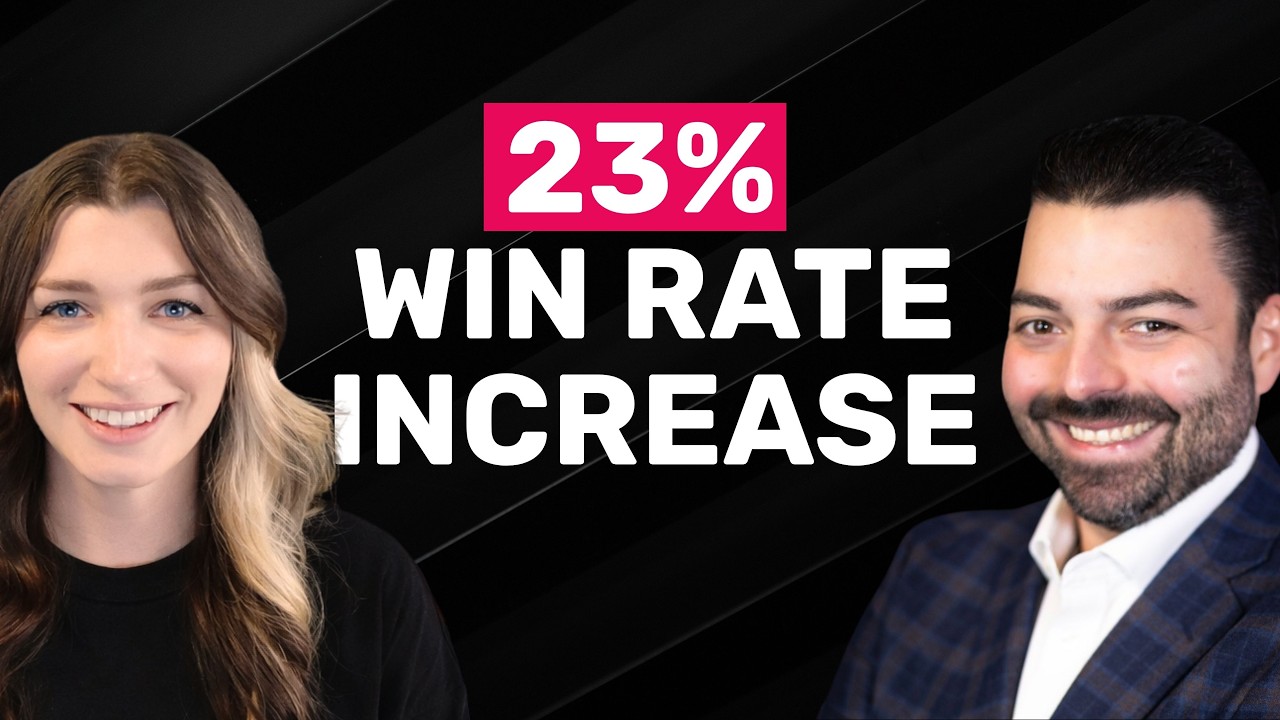
Michael25:22So stage one to stage two. But when you get beyond stage two we have a fairly consistent funnel. You know we've actually seen about a 23% win rate increase from when we started this segment to today. And with that we've actually brought in about a 20% increase in ASP. So we are winning more opportunities and we are doing it at a higher ASP.
Michael25:47And that's just on new logo. So that doesn't even capture any of the work that we're doing as far as the expansion motion in the enterprise. So again, very, very strong, very durable. The issue that I have now is having enough pipeline, which everybody has the same problem, but it's getting harder and harder, in my experience, to carry a three and a half to four and a four and a half x coverage ratio.
Michael26:10With the way that opportunities are moving through funnels today, there's just too much. There's there's not enough velocity or there's too much velocity. And so you get this sort of stagnant top or stagnant bottom of the funnel, and you need to constantly redirect to make sure that you are watching the top of the funnel as well as the progression through.
Michael26:33Because if you take your eye off of either, they atrophy very, very quickly with the way that the market is moving today.
Rachael26:40So how are you approaching that issue? How are you making sure you're, you know, regulating top versus bottom?
Michael26:47So we are doing it through a combination of reporting through Salesforce and by individual manager led inspection. So we do weekly pipeline reviews. We do biweekly pipeline council where we bring our marketing ops, sales and revenue operations, all of the relevant sales leaders globally and the marketing leadership. And everybody gets together and we go through a series of dashboards to look at MKL conversions, number of BDR meetings that are set, a number of number of new opportunities, opportunity progression.
Michael27:21And then, as I mentioned, we got a couple of pretty meaningful product releases over the past couple of months. We also track at the individual product level. It's a manual process, but it gets people in the same room speaking the same way and looking at the same KPIs. And so that is something that I don't have a process or a system or a Tableau dashboard that can take the place of it, getting everybody in the same room.
Michael27:46It's an expensive meeting. It's every every other Friday. I don't know that anybody really loves it, but it is absolutely productive and it keeps us on our toes.
Rachael27:56Hell yeah. Yeah. We are huge proponents of the pipeline council. We talk about it a ton and a lot of our content and pipeline management content and stuff. It is, it is. I mean, maybe for some some companies, it probably is an annoying meeting to have. Some people might not want to be on it. And like you said, expensive meeting.
Rachael28:12But I think it's also a very lucrative meeting as well, because this isn't the type of meeting that you're like, coming in to share numbers and pie each other on the back. You're coming in to like, not hold back your punches. Really talk about the issues that are happening throughout the entire pipeline from the beginning of the sale to post sale and product and everything.
Rachael28:32And really, the mission is just to make the business better and make the customer experience better so you can make more money.
Michael28:37I think that's exactly right. And that's that was the that was the the guideline that I put down in the first one was this is not performative. This is not a backslapping competition about how many MKL or this or that. I will I will caveat this by selling you every week. It's not going to be good enough, right?
Michael28:56There's no such thing as a perfect pipeline. And so we're never going to be perfect. But this is an opportunity to bring sales and marketing leadership together in a way that is meant to drive the business forward. And if you can do that, you can make it productive. You don't have to love going, but everybody's got a point of view.
Michael29:19The sales leaders need to defend the pipeline that they've created and what they've advanced marketing has to defend and establish credibility around what the top of the funnel looks like. Rev ops and Mops need to have very tight alignment on what is the lead flow and the lead pass and the enrichment strategy. And everybody's accountable, myself included, to have a readout and a perspective on what we're doing to improve every two weeks.
Michael29:43And that uniform accountability that I think really makes it useful and impactful.
Rachael29:48Do you have an example off the top of your head of like, an issue that was brought up at a pipeline council meeting that, you know, probably wouldn't have been fixed if it wasn't for this type of meeting?
Michael29:59Yeah, there's one that came up fairly early in the process, and it was around a trade show lead list that got dropped by an automation that never made it to the BDR team. So it's a show that we invested time and money and resources. We had a booth we sent people. There was not, you know, not trivial expense.
Michael30:20And the leader came to the call. And at this, you know, this, if I could go back in time, I would recommend that this person actually raise the flag slightly earlier, the waiting for the Pipeline Council meeting because we lost a week. But he came to the Pipeline Council asking questions about where was the lead list from the event, and it had been processed through Mops, and it had been dropped by some automation before it got pushed into Salesforce as a list of leads to go process through.
Michael30:49And so we lost a week. And if we hadn't established a cadence around the pipeline console, I don't know that that ever would have been picked up.
Rachael30:55And then how much money would have been lost from that?
Michael30:59More than I would care to admit to my CFO.
Rachael31:02Yeah. Expensive meeting, but lucrative meeting. Lucrative also in the sense of not losing money that you could be losing.
Michael31:09Yeah, absolutely. And, you know, it also just shines a light on you can't rely blindly on automation. As good as we are at building systems and stitching them together and having them talk, there's always something that's just waiting to break. In my experience.
Rachael31:24Everything is always waiting to break in my that's true too. Yeah. So what were some of the other results that you have seen through all of this work? The segmentation, the new motion, you know, building this pipeline, cancel and everything. Either that's quantitative or qualitative.
Michael31:41From an overall overarching results standpoint. The business is growing. It's accelerating. It's healthy. We have sort of pushed our way through what was a pretty challenging macro for us in 2025. So we have a high, historically high rate of customers that are in the media and entertainment industry. And M&A took some successive hits across 2024 and 2025 with funding shifts.
Michael32:10And there was a big strike in Hollywood and a bunch of productions were sort of pushed off. We have managed to continue to grow and accelerate the business even through all of that, and I think we are actually much better positioned and much stronger to continue to accelerate into the future, because we have we have hard earned wins under our belt.
Michael32:31And, you know, we we we have crossed some pretty significant revenue milestones in the past six months. And as we think about the go forward motion, we have global scale to unlock. We're looking at unlocking additional geos. I mentioned we have the UK team as sort of an operating unit, but we're thinking about other global GEOs that we can unlock.
Michael32:54We're seeing considerable growth in the US markets. We're starting to see some additional use cases and verticals unlock with some of our new product releases. And so I think a lot in terms of building in Lego, mostly because I have a nine year old who's absolutely obsessed with Lego. Rachel. But the the beauty of Lego is you could build an actual full size house out of Lego bricks.
Michael33:17You absolutely can. It's strong. It's durable. It would probably cost you more than building a house out of wood, but other than that, it's infinitely extensible. And so what I think of terms of process and scale and systems and people building, I think in terms of Lego. And if I look back over the last 18 months, we have a Lego brick foundation that we can build up and go super deep in the verticals that we already operate in, we can expand it horizontally and go into a sort of conventional platform, SaaS play.
Michael33:51We have every option imaginable in front of us. We've got a segmentation engine, we've got a data enrichment strategy, we've got a data driven sort of go to market and marketing strategy. And so the biggest accomplishment and the biggest opportunity for us, from my standpoint, is we now have optionality, which is so rare and is such a such an awesome opportunity.
Michael34:13We can choose our own adventure. And that is just that's super empowering and something that I'm really, really excited about.
Rachael34:20So, Michael, am I allowed to ask what those revenue milestones were?
Michael34:24Unfortunately, I can't speak in specifics, Rachel, but what I can tell you is that we have nearly doubled revenue since I joined in Q4 of 2024.
Rachael34:34Awesome. So if you could go back to day one of Lucid Link, knowing what you know now, is there anything that you would have done differently?
Michael34:42I wouldn't have started in the middle. I talked earlier about the fact that most revenue leaders fall into the trap of starting in the middle, because they assume everything leading up to the middle is good and is durable, and that's the place where we naturally gravitate, because it's most of us. It's where we cut our teeth. Right? We were successful salespeople.
Michael35:00You become a sales manager, you become a VP, and sort of you wind up in this role organically, organically, but logically linearly. You wind up in that role. And so your your previous position is to go sink your teeth into the sales process. Go bring me into some deals, show me some leads, help me understand what's going on.
Michael35:18And I invested a significant amount of time and it it wasn't the wrong thing to do because it builds credibility with your leadership team, with your broader ELT. You know, it shows a bias for action. You get into the trenches, you learn what the customers actually think of your product. But if I could wind back the clock, I would have started with my rev ops hat on, and I would have been with a magnifying glass and a flashlight, going through all of the dark plumbing around lead routing and scoring and ICP definitions, and really sunk my teeth in there because I came in post series C with the remit to go scale this thing, and
Michael35:56that means building sales capacity, accelerate sales process, and drive top line growth. What actually needs to happen is you need to make sure that everything leading up to that lead to from from marketing to sales delivery is ironclad and is running at at least 80% utilization. Meaning if you don't have enough demand coming through the funnel, you need to figure out how to amplify the demand.
Michael36:19If you don't have enough segmentation or the correct segmentation to make sure people are chasing leads that actually close, you're going to wind up running a bunch of cycles and hire a bunch of people who are going to get frustrated because the territories aren't going to produce. And so if I could go back in time, that is the thing.
Michael36:33I would start with my rev ops hat on, and I would dig down deep to understand all of the rhythms of the business before going out and deploying assets and resources to optimize the sales process.
Rachael36:45Absolutely. And that's why we keep trying to tell people to. That's what we help with at Uni Square, consulting all that stuff. So we're like, you guys, this is important. Awesome.
Michael36:54Absolutely.
Rachael36:55So much. Yeah. Thank you so much, Michael. And where can people find you if they want to follow what you're doing or what Lucid Link is doing?
Michael37:02So LinkedIn is the best place to find me or on actually, it's just LinkedIn. I'm not really active on any other socials at all, so feel free to to connect and follow, but would love to chat and learn more about what other revenue leaders are doing in the space.
Rachael37:19Well, you have a good night.
Michael37:20Thanks, Rachel.
Eddie37:21You too. Thanks for listening to the episode. If this resonated, please give us a five star rating and a follow. It helps us reach more people, and you get our latest and greatest content without having to search for it. And if you're looking for hands on help and go to market strategy and or rev ops, please reach out to us.
Eddie37:36We help our clients with everything from annual planning to improving processes and go to market, implementing systems to support those processes and go to market AI. We're always happy to offer a free consultation to help you identify the best opportunities to improve your go to market engine, with or without our health. You can find us at Union Square Consulting and the info will be in our show notes.