EDDIE0:04Welcome to Go to Market. In this podcast, we share tangible, actionable playbooks from the trenches working as go to market strategy and rev ops consultants for our clients here at Union Square. Consulting and candid conversations with revenue leaders in the market that have been there. Now let's get into it.
RACHAEL0:23Today I'm talking with Lou Shipley. Lou is the author of Unlikely Entrepreneurs and a senior lecturer at Harvard Business School, where he teaches what's become the most popular class on campus for how founders actually build and sell. Before that, he was a three time CEO, most notably running the Black Duck Software turnaround. And he sits on a stack of B2B SaaS boards where his job is to walk into a growth problem and figure out what's really broken.
RACHAEL0:47He's been the rep, the Crow, the CEO and the board member, and he's got strong opinions from every one of those chairs. We'll get into how he turned black duck around by rebuilding the entire sales motion, the trap that catches CEOs around $50 million mark, and what a board member is really looking for when they assess whether go to market is actually working.
RACHAEL1:05Thank you so much for joining me, Lou.
LOU1:07Great. Thanks. Thanks so much. Fun to be here. Nice to see you again. Yeah.
RACHAEL1:11Yeah. So you've you've said in almost every seat that touches revenue. Like I said in the intro, you've been the rep, the crow, the CEO, board member, investor. When you walk into a company now as a board member and something feels off in go to market, what's the first thing you look at?
LOU1:29Yeah. Very interesting. You say that because I guess what you've just described is that everybody's in sales from the rep all the way up to the board member in every company. And one of the things I, you know, oftentimes get asked to, to help out founders or early stage CEOs, and I will usually ask them the question, if I were to describe if you were to describe your your sales organization as a pick, your favorite sport, soccer, you know, hockey, whatever.
LOU2:01How would you describe it? Would it be like a youth sports team where there's very few people could even function? Maybe a volunteer mom who's a coach who's not that experienced. Would it be a high school or college team where you have skilled people, good coaching, you know, some depth in your skill sets or to be the championship team, would it be the Stanley Cup champions?
LOU2:20They're all playing the same game. They're just doing it very differently. So I usually ask, ask that question and usually or so. Oh shit, I'm running a youth hockey team. Like like yeah. If one person who can skate, you know, no one wants to play goal. You know, no one can skate backwards. No wonder you can't predict your your sales because you don't have any consistency.
LOU2:42You build any, any structure or scaffolding into the system of sales which you need to do as you, as you scale. So I'm usually looking for those things, and I usually always ask for the same things up front as please send me your best and worst sales calls and I'll take a listen. And because you can learn anything, everything you want to know about a company, I believe you can learn in a single sales call.
LOU3:03You know, well, there's a sales rep have commanded the message. There's a customer have pain for your product. You know, your pricing, your competition, your your reputation. All those things come out in a sales call. And so that's why I spent as CEO. I always spent at least, you know, half my time on the road because I just kept learning so much from what the market wanted.
RACHAEL3:24Are there any other tells that show up really early before it shows up in the numbers?
LOU3:28Well, oftentimes the reason I ask that question is because most people default to a sales execution problem. You know, we must have a sales problem when oftentimes, especially in early stage companies, it's a product market fit problem there. They may have closed a few companies. They may define product market fit as like a revenue number, as opposed to something that truly shows that customers are using your product and choosing it over the competition and growing and asking for more.
LOU3:55And and so that's, that's kind of one of the about half the time it's really more of a product market fit. Question before it is a go to market fit question and a sales execution.
RACHAEL4:06Have you ever walked into a company where it was very obvious that the product market fit was just wrong? And it's like, oh, you need to take several steps back?
LOU4:14Many times, many times. And this
LOU4:16where the trick tricky part of being a founder and CEO is that you both have to be very optimistic to convince yourself what you're doing is worth it, as well as your team members and customers. But you also are responsible to be the chief realist to like, say, this is really where we are.
LOU4:32And so for me, the most important thing I look at for joining advisory boards or boards of directors, the coach ability and adaptability of the founder, are they open to new ways of looking at things, or do they just say they are? And oftentimes they'll say, oh yeah, I'm coachable. And then you coach them and there's just they're not interesting.
LOU4:52So yeah. So if you're not interested then it's probably not going to work because you're just going to say, I know what's better. I know the market better than my customers do. And that's really eventually it'll it'll end up, you know, badly.
RACHAEL5:07So a lot of our audience is, is running companies in this 50 to $100 million range. And a common experience is that the playbook that got them there suddenly stops working. And it's not able to like take them much further in scale. In your experience what actually breaks first when a company is about to cross this threshold or is crossing this threshold?
LOU5:27Yeah, a couple things. I think the first one is I look for and this is actually a chapter in my book where I talk about the flailing founder, a person who's done an amazing job to get a concept off the ground, to create a product, get customers, get financing, hire a team. But when you realize your role is moved from founder to CEO, or you have to abstract yourself and build a team as opposed to be in the middle of everything, that's where I usually see the flailing.
LOU5:54And that's where coaching is important. And people say, oh yeah, I guess because it's such a different skill set. It's why it's so hard to find many examples of people that are great founders and great CEOs. I work with a couple, but they're rare. They're very rare. Most people sort of, you know, kind of hit a ceiling at a certain number.
LOU6:15It could be 20 million, could be 50 million, could be a hundred million. But they hit a ceiling. And then if they don't get the coaching and they don't learn how to build a team, that's, that's when that's when it just ends badly below.
RACHAEL6:27What is it about this stage in particular that exposes these weaknesses where you hit a plateau.
LOU6:33Yeah. It's the complexity of the business. The business starts to get a lot more complex. And you've now shown a light into a really hot segment of the market. So the competition is coming in and trying to get at it, which is which is always the case in all the companies I've been in, the market leaders, all of a sudden you wake up and every day you've got a new competitor.
LOU6:50So you've got a a bigger market, more competition, and then what your job really then is to build the best team. And the CEO of the best team usually has the best chance of winning. But really learning how to build a good team to recruit, retain, motivate, remove like people that aren't members of the team that can get you to that next level as you continue to scale.
RACHAEL7:14And so what does this look like from the board seat as it's happening? What are you seeing?
LOU7:19Well, it's interesting because your first question was about,
LOU7:22you know, missing numbers. And you know, from a sales perspective 2 or 3 things tend to happen. One is you just consistently miss your numbers. And I had I had this happen to me. I, I was in a really hot company that we'd make a quarter and make a quarter miss quarter.
LOU7:36I lost my job because that's because I just didn't understand how important building consistency into the sales forecast for something for a company that was so clearly very, very valuable. The first. That's that's the first one. The other one is when really senior members of the team leave and and, you know, you can't keep your team and, or you have a lot of turnover to a certain position.
LOU8:00That's usually a sign that there's a CEO problem, not necessarily a problem with the VP of whatever the function is that's turning over. Those are the sort of the two two things. And sometimes they're combined. Sometimes they're combined together. You know, you miss a quarter and ahead of sales quit. So something like that. And people kind of give up or they lose faith and what your mission is.
RACHAEL8:23And so as someone sitting on the board, how do you coach a CEO through something like
LOU8:28Yeah, this is the role I think. Well, both, whether your venture or private equity or, you know, self-funded. This is a really important role of an independent board member to to coach. I mean, one of the famous quotes of a US president, Harry Truman used to say, if you want a friend in Washington, get a dog, right. What did he mean by that?
LOU8:50The thing is, when you're CEO, everybody has an angle on you. Everybody's looking to play you. Somehow they want to raise, they want a new job. They want a promotion. Whatever people are. People never come to you with just objective reports. And even your spouse or partner isn't objective. They want you to succeed. So the role of independent board member and I had a number of people play this role for me.
LOU9:13One in particular, blacktop, is getting Mark Fusco, who was just the most awesome independent board member, and I do that now and feel like I'm helping the CEO build enterprise value by being really truthful with them about what's really going on, not not being overly critical, not sort of being true promotional, but being the real voice of honesty and reason.
LOU9:36And they know you're doing it because you're trying to help them build their equity value. And for me, as a multi-time CEO, the closest thing I found to being a CEO was being that, you know, really collaborative, independent board member.
RACHAEL9:49Is there. So is there like a specific move or strategy you recommend to get a CEO past this plateau?
LOU9:56Yeah. So the there's usually a couple of things coaching either from the board or coaching from outside and having a coach. I mean, what's what's really nice is today people are much more open to having coaching and being objective than they were like earlier in my career. It seems like, what do you need to coach for? You must be weak.
LOU10:16Now we all need coaching. I need coaching all the time. Everybody needs coaching. So you start with coaching and then see how how seriously they take it. Because when you when you bring in a coach, you really are basically sending the message, we want you to get better. We want you to improve, but you need to change something.
LOU10:34You need to change your behavior. You need to change what was working before, not working now. And so that's that's I think a good some sometimes it doesn't happen that way. Sometimes the board just loses faith and says, you know, the investors don't believe you have it for the next, you know, so you need to move on or move into it just a board role or get out of the operations of the business.
RACHAEL10:56Yeah that's unfortunate. So in the positive yeah.
LOU11:00But it does happen. But there are a few people that do make it through there. And they do it by really recognizing their job as fundamentally changed for being a founder to a CEO.
RACHAEL11:10So when you have bring these coaches in to help them get to that place, what kind of coaches are you bringing in. Because you know, Union Square Consulting do coaching consulting on revenue operations go to market operations, the processes and stuff. Is that is it kind of like that or is it more like
RACHAEL11:25business coaching or.
LOU11:27Yeah.
RACHAEL11:27No, it's career.
LOU11:29I call it, you know, more call it executive coaching. I mentioned I mentioned executive coaching, I,
LOU11:34I profile a really successful executive coach guy named Will Keller, who is a business school classmate. He's in he's in the book and he talks about when he gets asked to coach, it's usually because something isn't going well. Will runs an executive coaching business, and he will always have a first call, and he will always try out a little bit of coaching to see, you know, to see how coachable a person is.
LOU12:00He has a coach ability index he uses to sort of figure out there's going to be a fit, because if someone really isn't coachable, it's it's really bad. It's just yeah, it's just really bad. And and by the way, you know, everybody says they are but then not everybody is. So, so yeah you bring in more of an executive coach.
LOU12:18Somebody like a will will Keller. There's others that that are in the business of helping senior managers kind of move to the next level and recognize, you know, here are your weaknesses. Here's what you need to do to improve.
RACHAEL12:32from our pre call, it was clear that one thing you really loved is the actual sales math. When you know something's stalling out being able to see with quantitative data what's going on for the ops wanted people listening. How do you think about that math and what do you actually watch to know that a sales motion is healthy or
LOU12:50So this is you know, this is sort of a problem I had throughout my career as an enterprise B2B software infrastructure software person, both sales VP, CEO, now board member, you know, you you have sometimes in that make a quarter miss a quarter, you're, you're missing a quarter. When you don't close a big deal, you're making a quarter when you do close the big deal.
LOU13:13And so what I found is if I understood my math equation for more of a velocity style business. So if just say, for example, at black car enterprise deals were 250 K, I would say a velocity deal might be anywhere from 20 to 50 K. And if you could build up enough of that business to sort of have it be like a third or maybe 40% of your business per quarter, then all of a sudden you're looking at the big deals as blowing out the quarter, not just making it.
LOU13:40And so I really focused in on that, where I had velocity and data to sort of build the math equation, which was sort of ASP cycle time price, some, some variation of those three components, and you'd start to see patterns and start to be able to predict within quarter or even ahead of a quarter, if the pipeline was qualified, pipeline was big enough.
LOU14:03You'd start to see, I think we're going to make it this quarter and might even beat it. Or, you know, we don't have enough lead gen's qualified legions. We're going to we're going to miss this quarter. So being able to like understand a month or two ahead of time where you really were in the business, that's where I, I loved it.
LOU14:18It made it made life so much easier. And you could golf the last days of quarter, whereas if you were, you know, if you were just waiting for that big deal the last day of the quarter, it was more like not.
LOU14:31Many people.
RACHAEL14:35Yeah. So what kind of what foundations needed to be there in order for you to be able to, first of all, see that this is happening? And second of all, be able to forecast out accurately like the changes that you're making and how they're affecting the difference between having this, this whale that's making your quarter versus having the actual smaller deals that you need to sustain scale.
LOU15:00Great question. It's it's it's data and it's from sales operations or revenue operations. And what I always refer to is what I call the single version of truth. So that, you know, each part of the company would have like a different view on the quarter. Sales would say one thing, would say another thing. Marketing might say no, say what I wanted as CEO was the single version of truth.
LOU15:22So I actually at black, I created it, didn't even have a sales office. I created a sales office role. I hired a guy named Loftus to report directly to me. You know, just for the two years, I needed to sort of get that single version of truth. Usually sales on reports to sales. But but I had it before to me, because I just couldn't go to the board with a number unless I knew the truth.
LOU15:43And this Ed Loftus really helped me understand what the truth was, and sometimes it was hard to fathom or I didn't want to hear it, but I still needed to hear the truth. So that single version of truth. If people are on the listening to this, it's like, you know what it is and it's trying to to discern down from the optimism of the sales forecast to the pessimism of the forecast, like really getting to where is the truth?
RACHAEL16:09Yeah, this is something we deal with a lot or work with companies a lot on is getting that source of truth. And yeah, it is tough because a lot of the times it does shine a light on processes or systems or sometimes even people in the organization that are not working the way that they should be. So like you have a closed rate, one salesperson will have a close rate of 80%, another salesperson will have close rate of 13%.
RACHAEL16:36And it's like, okay, well, person A is only putting opportunities into the CRM when they know they're just about to close. And that's why the closer is so high and person B puts every single lead that they even comes across their desk into the CRM. And that's why there's a so low. But it doesn't necessarily mean the person A is like the best salesperson.
RACHAEL16:55So it messes everything up from forecasting to how you end up training your other reps and how you end up like seeing your other apps and all of that stuff. So it really creates like a domino effect. And even something like we call it Zombie Pipeline when you have so many deals in your pipeline that are never going to close, they're they're dead in the water, they're not going to close.
RACHAEL17:16But your sales reps keep them in there and they don't close them out and they keep calling them. And then the opportunity is just like, oh yeah, well, maybe next month, like call me again next month. And he keeps getting kicked down the line quarter after quarter. But maybe the reps get some kind of reprimanding if they're close.
RACHAEL17:34Lost rate is too high. So they don't want to close these opportunities out because it works against them. So it's easier to just keep them open then kick them down the road so it can it can be symptoms of deeper processes at play that are working against you, and you could fix them and have them work for you.
LOU17:52Well, so if I, if I used sales ops rev ops as the output
LOU17:57what I think you need to do to get the inputs writers is is I call it embedded sales enablement. So not just sales enablement sales training but but enablement that's working within the sales team and listening to calls every day and trying to respond to the problem salespeople have with product or features or competitor or price whatever.
LOU18:18And then also to have a have I don't care which methodology sales methodology use, but to use one. So you have a definition of what a sales qualified lead is. And it's it's the same one all across the globe. The Americans don't have a different one than the Canadians, and the French don't have a different one. The Japanese.
LOU18:35It's it's one definition of what SQL is. And so to me, that was the only way I could ever get to be really predictable. And if we thought that a deal would close and say 90 days if an SCL came in and it didn't progress through the pipeline the way a normal deal did, you take it out. And at first I thought, well, that's really brutal.
LOU18:54My pipeline is going to shrink. But no, you're actually you're qualified pipeline. You're going to be much more accurate about it if you're vigilant about taking things that even so, you got to teach the reps, you know, some kind of a sales methodology, whether it's, you know, Sandler or Spin or Challenger or Medic, I don't care which one.
LOU19:11And then have you really religious about what the definition of a sales qualified lead
RACHAEL19:17absolutely. Is that consistency that's going to get you the accurate, visible data that you need to do everything else. If something's not consistent, then your data just starts to mean nothing anymore.
LOU19:27Exactly. Well, well, here's what you tend to see is you miss a quarter and you say, oh, we should probably change our definition of an scope. And then it's like, then you then you need to wait nine months to see if your new definition is any good. So like just take the time, figure it out. It's going to be wrong, but just live with it and then start to try and glean information and insights from that that you can start to course correct.
LOU19:54And whether the problems on marketing or anything up inbound or sales not get about whatever it is, then you at least know where you are. And, you know, maybe you can't fall off the basement floor. That's sort of sick, but at least you know where you're on your occupation floors.
RACHAEL20:09how long, or how many sales cycles would you recommend to wait and collect data before you do change something like the SQL and start all over again?
LOU20:17I went through at Blackrock actually, you know, partly because I first got there, we didn't have the right sales and marketing leaders. I went through like every quarter we missed and then said, well, let's redefine it. And so we did that for a few times. And then I realized we were never going to get better because we didn't have we couldn't collect data that would show trends over time.
LOU20:37So I just agreed. I just I just sort of said, here's what we're going to call the SQL. Actually, in our case, if you use Bant, we said you had to have a recorded call that had need or pain and and budget those two things. That's what would go in. And then if it didn't move you, no progress in 90 days it came out.
LOU20:57So you might even pay the rep for generating the lead and then take it out because it wasn't moving. And like we called it, you were talking about zombie forecast. We called it forecast furniture stuff. That just chair I'm in isn't moving.
RACHAEL21:11Yeah.
LOU21:11Going to move. Take it out. Yeah. Take the pressure out and only work on the stuff that is actually progressing. And then the other thing maybe you your consulting firm has the same thing as make sure the only thing that goes into your CRM is what the customer says. If you're a four stage sales cycle, customer says, yes, I'm moving to stage two networks and they said it by email, not add the rep, put it in because the rep might just have happy ears and say, oh, I think this one's going to close, but it's not going to close at all.
LOU21:39And then you're forecasting stuff and missing that,
RACHAEL21:43Yeah, you need to have those guardrails built into the CRM. Like the criteria, very strict defined criteria that are set and that your salespeople have to like go in and check, like, did this actually happen? Yes or no? If it didn't happen, then no, they haven't moved on to the next stage yet. You can't say that they have.
RACHAEL21:59Well, if you can't commit that number.
LOU22:01It's interesting you mentioned because you know, I've seen it from all the different perspectives. I remember how frustrated I am. I was as a sales rep where people said, you know, put all that in in the CRM and do all this administrative work so someone else can look into my forecast and see what they pick up. I remember being as a rep like, nah, I don't really want to do that, you know, just leave me alone.
LOU22:19Let me, let me do.
LOU22:20My.
LOU22:21Generate my business. That's what you're paying me for. But as as I became a manager and then it became a CEO, you start to realize that information is so valuable to the whole company. And everybody should be listening to those calls so that they know where you're where you are in the market and how well your reps are progressing at command of the message.
RACHAEL22:41Yeah, and that's a really good point to because you do have to like think back on the reps experience as well. When you're putting these things into your CRM, you don't want to overload it or make it too complicated, too much of a burden, because then you're just going to annoy your reps and you're going to like, you know, you're going to lower morale and stuff like that.
RACHAEL22:58Or maybe they just won't even do it. You have to still make it somewhat simple and like, easily doable for them so that they actually consistently do it. And it's not like taking up a bunch of their cell time or anything like that either. And there's there's AI out there. Now that.
LOU23:12I do that, you listen to the call and then populate it for the.
LOU23:16Reps and.
LOU23:17Then their time. I mean, that's an interesting measure to track. My colleague at HBS, Marco Barish, who's written a couple of great books on on this topic. The last one is called The Science of Scaling, was basically to to sort of maximize the amount of time you spend on the phone. So you take away all that other administrative stuff so they can do the work of of moving prospects along in the right play.
RACHAEL23:39Absolutely. I mean, we talked about schools, but also ICP. That one is so, so important. And me and Eddie, our CEO, recently did a podcast episode. It's not produced or out yet, but we did an episode last week and a newsletter that we're going to put out, I think, this weekend just on ICP, because it is so important and the stuff that it affects downstream, it affects literally every single other thing that happens in the pipeline, in the sales process and marketing and customer success and products like everything.
LOU24:13Yeah. No, that's. Yeah. Sorry. You're gonna ask.
RACHAEL24:18Oh, no, I was going to ask. I remember I think you said you had an opinion on like narrowing ICP and like, what people should how people should run ICP.
LOU24:26Yeah, I brought it actually one of my HBS classes. I bring in a former CEO named Ryan back who took over a company called Ars Prism. That was I think they were doing about 10 million, over 25 years of family owned business. He came in as a professional. You know, what he realized very quickly was they were selling in about 40 different geographies and 40 different customer types.
LOU24:52And what he did was he took it down to four, and the business had taken in 20 years to get to 10 million, and in three years it went to 40 million. So so it was it was so bringing it down. And just to your point, like getting to the real because because when customers are really in need of your product and their pain level is high, without it, they they will move more quickly.
LOU25:14So you don't have these super lengthy sales cycles. They need it to to either not get fired or to solve a problem they have. And so, you know, teaching your sales reps to really get good at qualification and understanding, is this really a deal that's going to close is the I always found, at least for enterprise reps is the key determinant of the best reps is they're really good at qualifying.
LOU25:37Is this worthy of my time? Is this customer going to move in the time that I need to make make these deals close?
RACHAEL25:42And we had that happen with us too. It was around the time that I joined Team Square Consulting. We did a bunch of work on narrowing down risk, and we found that having a connection to the Crow of a company was paramount. Like we needed that. That was like a huge part of our CP and CRO needed to kind of like quote unquote get it in terms of go to market operations and how important process is and everything on that foundation that goes underneath all the systems.
RACHAEL26:12Otherwise, they just they looked at what we did and they didn't really see much value in it. Or if it was someone kind of lower on the totem pole, they didn't have the authority to make the changes to the processes and systems that we would need access to in order to actually make changes in the company's go to market operations.
RACHAEL26:31So having a crow on board who has that authority and who understands the importance of this, the importance of this stuff that changed so much and we changed, like all of our content changed, focusing on crows and stuff like that or audience started to kind of recalibrate more towards the Crow side, CFO, CMO side. Yeah, it's ICP is so, so important.
LOU26:56Well, what you're.
LOU26:57What you're getting at with ICP, I think, is this notion of being able to forecast in your in your forecast or pipeline what we call access to power because we're used to at black, used to run simulations of different forecast, you know, accuracy levels based on whether reps were at power or not. And to your point, you said the crows was the key person there.
LOU27:22Whatever the power is, you know, being able to get somebody who has the authority and the willingness to get a deal done and timeframe you done that, that access to power. We found what we needed to do is to train the reps on how to make sure you are at power, because oftentimes your customers will say, there's people that make the decision, but maybe they're not.
LOU27:42And so yeah, and then you miss it be, well, maybe they don't have the authority. So that that was how do you how do you ask that question nicely and politely but get to get the information so you know that you're at power.
RACHAEL27:54Quick pause. Everything we talk about on this show. Diagnosing go to market ops. Prioritizing projects for revenue. Impact processes. Metrics. Insights. Building a predictable go to market engine. We've built frameworks for all of it. They're free and undated on our website. Union square consulting frameworks. The link will also be in the show notes, so make sure you check that out.
RACHAEL28:17All right. Back to the episode.
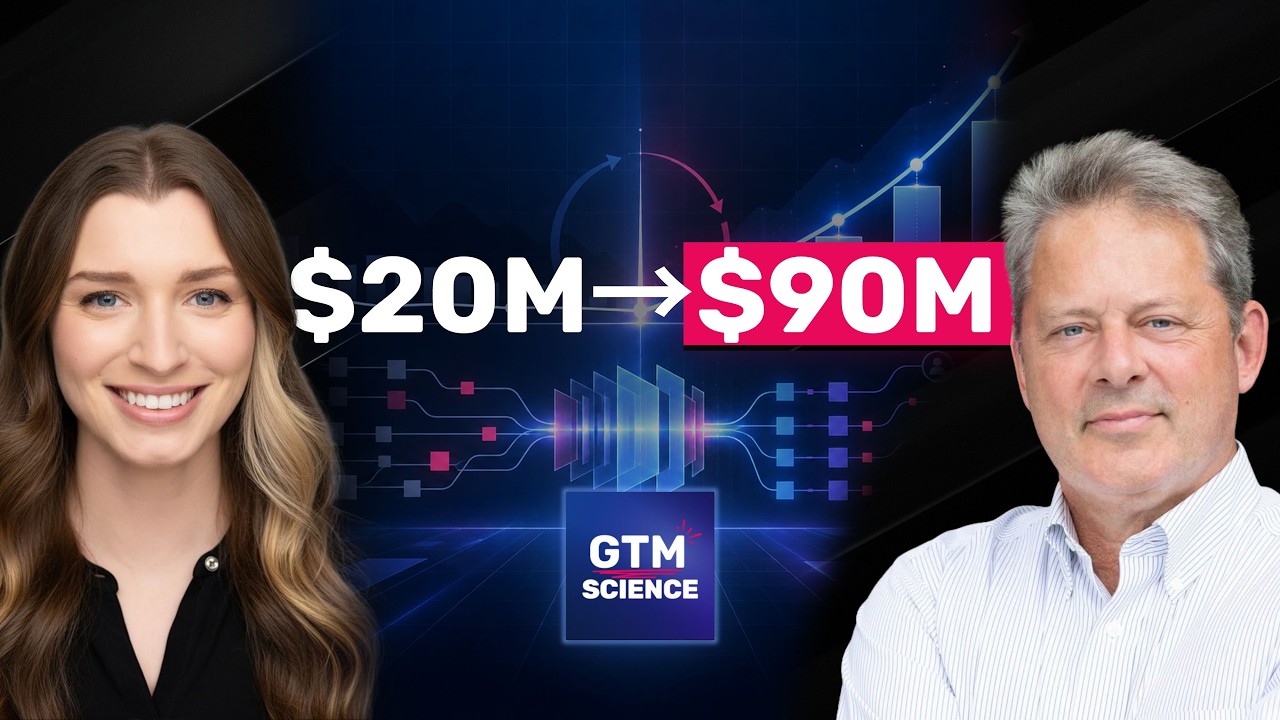
RACHAEL28:19So I want to change gears a little bit here and talk about the black duck turnaround. I think that's a really interesting story I wanted to dig into. So you took Black Duck from around $20 million to about $90 million in revenue before it sold. What did you have to change about the go to market to get to that scale and overcome that $20 million plateau?
LOU28:42Yeah, well, there are three big changes that we made in over time. I would say we changed, as you mentioned, the go to market model from pure sort of Oracle out of the 90s, classic enterprise selling to a a combination of a velocity and an enterprise go to market motion. But they both shared elements of a system we call the plane.
LOU29:07I can explain how the plain works it the first thing. So get go to market. We changed our product strategy. We went from open source.
LOU29:16Of source licensing to open source security. And that was the security was a sea level issue, a CEO level issue. So we we added a product that helped. And I think the other thing we changed not only in the sales organization, but in the whole company was our our company culture. And actually that had the biggest impact over the longest time and obviously was the hardest thing to change.
LOU29:40But those are the three things that we changed go to market, product strategy and culture.
RACHAEL29:48So what what changed about the product strategy so.
LOU29:52Well.
LOU29:52I had in a previous company before Black Duck, I had been CEO of VMM turbo, and I spent a lot of my time in my career selling into Wall Street, into the big banks, and I.
LOU30:05Was.
LOU30:06Sold to JP Morgan and at VM turbo, we won the basically the award for the best startup of the year that the bank picked, you know, the startup that helped the company the most. So I just naturally when I went to Black Duck, decided to go go back and call in some of my big enterprise customers from my previous companies.
LOU30:24And what was really interesting, because I didn't think JP Morgan would use Black Duck, but they did have a lot of software developers, and that company has more developers than than Google has a lot of homegrown applications, like 15,000 homegrown. Lots of them were using open source. I remember being there. I'd been there a whole day in this proof of concept, and I got 530.
LOU30:45I was about to leave and one of the guys said, hey, you know why we asked you to come in? I'm like, well, I think I do. And he said, no. Here's why. Jamie Diamonds getting a hand curated list of open source security vulnerabilities and all of our software sent to his desk every day. So I was like, oh, really?
LOU31:03The most famous CEO in the bank, banking CEO in the world is asking for a hand curated list of open source security. They they must be really worried about this. So I went back to black. I said, we're pivoting to security. And a lot of people weren't on the same page with me, so we did it without them.
LOU31:22We were just going to move to security because the market was was there. And like the biggest, most important customer was trying to solve this problem on their own. Think about it. I mean, now all digital, it's all it's now like you get an instant, you know, readout of everything that's in your software code. But this was now ten years ago.
LOU31:39But that to me was like, why you as a CEO have to spend so much time out with your customers. You learn so much from them, and you see seams in the market and pivots that you need to make are changing, need to make, to be relevant as the market
RACHAEL31:53Yeah. Doesn't you don't get a bigger market signal than that. Finding out that the CEO is like by hand trying to solve this problem, that you could solve for him.
LOU32:02Like like a little. Written down email.
LOU32:06It's like, oh my God. Like they must be. They were really nervous because they had so many homegrown apps and they didn't know how much open source was in there, and therefore they didn't know how many open source security vulnerabilities were in their
RACHAEL32:17That's that's awesome. So taking that, how long did it take to pivot into focusing on security? And how big of a change was that from what you currently had, like product wise and process
LOU32:32Well, it's a great it's a great question because it ties back to your ICP comment earlier. So so we had been selling to, you know, governance and licensing, open source people that were kind of lawyers or open source experts that they weren't in the security. They weren't running security in a company. So what you need to do is to is to get the Google now.
LOU32:55Now it's AI, but it would be, you know, the Google index to recognize you as an authority. So you have to you have to get a lot of articles written and create content and get the market thinking about you in a new way. That takes time. Just because you want to be known as as a security company, doesn't mean the market knows you.
LOU33:13As a security company. Flush. You're competing with big companies like IBM or HP back then, or, you know, Cyber Ark or companies that are spending a lot of money. So you don't you can't outspend them. So you have to really figure out it's back to your ICP point, because it's like, what words are customers using to describe the pain they're in.
LOU33:32And this is what's so interesting. And I see this all the time. Even the little tiny startups, you describe the product as one thing because that's how your markers say you should do it. How the customer describes their pain is so different. Often their word combinations, things that you would never even think that they describe it as, is their actual pain.
LOU33:50Because where you need them to be looking for that and then find you. And so it took a while. It's a good question. It took us probably two years to to to become known. And when we eventually sold the synopsis. It was, you know, the headline was open source security vendor Black Duck Sells. So it took us some time, but we eventually got there.
RACHAEL34:11It didn't mean.
LOU34:12And we didn't abandon our original business. We just focused more on the security piece.
RACHAEL34:17I'm not going ahead vigorously, because before I worked at USC, I was a copywriter for ten years, and that is so correct. So much of like my work as a, as a copywriter was doing so much research into the customers and like interviews and stuff and figuring out how do they actually describe their problem from their own mouths and their own words, not, you know, when they're sitting in front of somebody and their their guard is kind of lowered and they're just speaking from flow of consciousness and their thoughts aren't like meticulously planned out.
RACHAEL34:47You know, you have to get to that point with them in a conversation to actually hear the real words that come up. But anyways, I could I could nerd out on on that stuff a lot. But this is the podcast is go to market science, not go to market art. So we don't talk too much about the artsy stuff, even though that's what I like.
LOU35:06Well, but there is a lot of science in that, that you're you're trying different things, you're iterating, and that iteration is where you learn. I ended up hiring a terrific guy to do our digital marketing, Chris Cyber, who because we had the using a consultant before and I was like, I got to know this. I have somebody who's worrying about this every day.
LOU35:27And I walked past him every day. And I'd say one of the new word combinations today literally would change every day as we went on this journey to become known that way. But it's back to your point about what's your ICP even within knowing as you reposition, you're going to probably still be selling to multiple ISPs that have that touch security and that would have influence on your sale.
LOU35:48Chief security officers, chief technology officer, head of engineering. And you needed to develop ways to to talk to each of those different personas.
RACHAEL35:57for everyone listening, if you don't already do this, send your ICP like top ICP buyer persona sales calls to your marketing teams. Give them your sales calls, let them read through the sales calls or get to, you know, metabolize it down. But but get them to read the transcripts and like, read the actual words that the people are saying to describe these things.
RACHAEL36:21It's so, so, so, so important for marketing and even just like website copy and stuff. But I don't want to get too off topic there. So did you have to rebuild your your sales teams or any part of the team structure at Black Duck? Now that you're focusing on this, this other product side, so much more.
LOU36:40Yeah, I mean, we we ended up building an inside sales sort of velocity team. And we did a lot of college recruiting and training. So some of the people that had been there for a long time didn't really like that because we wanted to develop our own talent. I didn't I didn't like having to go out and test the free agency market like in baseball.
LOU36:58The LA Dodgers just got the best pitcher they can pay for that. I didn't have the money I needed to develop. It took a little longer. But if you develop your own talent and give people a clear career progression, I think you you develop talent that wants to stay in the organization a little bit more loyal, helps you, you know, deal with down downturns.
LOU37:15And we all have those. So I sort of went to the board and said, you know, I can try it the old way, but it doesn't seem to be working. Or I could try this new way of developing our own talent. And and it took some time, but it ended up being so much better because we could then promote from within.
LOU37:30We'll always go out to the free agent market and get a few people, but it wasn't like that was that was the playbook, because previously in my career, that was always the playbook, you know, go to the big markets. I heard the guy with the Rolodex hire the woman with all the decks. I it just didn't scale.
RACHAEL37:44Yeah. So what was this model that you had for developing talent within the organization?
LOU37:48So it started with enablement and sales operations. Those are the two big pieces we in enablement black dots. You have to go through flight school. And it was flight school was like a month long. Here's what here's here's our sales methodology. Here's here's how we talk about our product. And you had to sort of prove you could do it before it would let you get on the phone and talk to people.
LOU38:11And in previous companies, I'd be like, hey, there's a rep, give them a phone, and here's some prospects. So we were much more deliberate about training and then and then having film reviews as a group to make sure, like, Lou's got it down, Rachel's got it down, other people maybe not. Or basically building a culture of like, Rachel seems to be crushing your numbers.
LOU38:32What's she doing and what can we learn from her, as opposed to sort of sales organizations where you let, like, the top person just go off and make their numbers. They don't want to help anybody else. They just want to make their own money. And so we really wanted to that was what I talked about. The sales culture was, was sort of we we built a whole whole team.
LOU38:50The model that we specifically talked about was a plane planned like an airplane, and it had four, four roles on it had a pilot who's driving the plane, who's responsible for revenue, a copilot who is responsible for lead generation in their territory. And then we had a gunner like a, you know, like a World War Two airplane gunner going outbound, trying to get prospects for cold calling, and a navigator who was responding to inbound leads, marketing generated and qualifying notes.
LOU39:19And so you'd go gunner, navigator, copilot, pilot. And once the copilot was ready to take on a new plane, then you'd watch a new plane, make the copilot the pilot, and then through recruitment, fill in the rest of the positions. And so what we had was like this. Instead of just a rep and a sales engineer, you had this unit of sales capacity, and I could track where we were and where we could launch a new plane based on when that unit of sales capacity covered its cost, because the mistakes that made it so many startups was I over hired sales reps before the market was really ready and or the reps were busy enough.
LOU39:59So so this way I was able to see yeah, there's there's now more capacity needed. And we have somebody who can go in and run that, run that unit. And so the planes all competed with each other in a very friendly way. And, you know, you could move up by becoming a pilot and you could go to become a wing commander, which would be multiple planes.
LOU40:19It was just there was a whole progression of, if you stay here, we're going to help you get better in your career.
RACHAEL40:26Nice. Also, I love that because it's not only helping people train up, but it's creating, I guess, investment in the company and wanting to like, stay and grow and continue to grow and almost game buying it a little bit.
LOU40:38It wasn't even fighting a little bit. And then also what you'd find is we had a head of enablement, Chester Lewis. Terrific. And some of the people we hired to come in as reps or as gunners and navigators are like, hey, you know, I'd rather be an embedded enablement person in this, in this set of planes and help them.
LOU40:53And what was so cool about that was at the end of the year, people that made Presidents Club would always nominate their enablement people to come to club. I could never have made presence if I didn't have my enablement. So so they felt like they were helping to and they were helping, and they actually had compensation based on basically making the planes better and more efficient.
RACHAEL41:13Yeah. Structure is so important. Whatever you whatever you compensate is going to happen is what people are going to focus on.
RACHAEL41:21So how far did that model scale before the company ended up selling.
LOU41:26We started with one and we had about 20 when synopsis bought us and they bought us partly because they loved our product, they loved our culture, but they wanted to take their other products and put it through this model. And that was what was really interesting. So the model wasn't just good for us, it was good for another company that wanted to get to market.
LOU41:43And then they were multi-product companies. So the model works. In our case, it was, you know, we had a single product. It's a little bit different the way you design a plane. And I've done this in other companies where you have multi-product or you have upsell is the bigger motion than sort of new logo hunting, but it can work either way.
LOU42:03Like and I've seen it be rockets, I've seen it be boats, I've seen it be airplanes. Either way, you're also sort of in your word was gamify and making fun. The whole process of competing in the market and trying to
RACHAEL42:16So from the time that you joined, when the company was about 20 million to implementing all these changes and trading your reps up and everything. How long did it take to reach that $90 million milestone?
LOU42:30It's about four years and.
RACHAEL42:32Four years. That's pretty fast.
LOU42:34Yeah, I think about four years. So but you had to change the the other piece I mentioned was the culture. And that wasn't just sales, that was the whole company. Growth is hard for some people, so people don't want to put the work in. It is necessary to grow fast. And it was fine with me. It's just but that's that's what you need is you need people to understand how hard it is and who who are willing to put the time and energy into to grow.
LOU42:56So we had to change up a lot of the people, maybe half the people that were there when I got there, you know, left and we brought in other people. But but that was that was good. It was more of a growth, growth mindset culture.
RACHAEL43:09So just a lot of org restructuring.
LOU43:11Yeah. It was you know, what I say to all the CEOs I work with is, you know, back to the best. The best CEOs know how to hire and recruit and retain and promote the best team. So once you have a great team, your job is CEO is so much easier than when you're when you don't have a great team, you have to do everything you way a black duck I was, I was CEO, CFO, CTO, CMO, and VP sales like.
LOU43:37And that's not scalable, you know, but the fact that I could run them all for a little while meant that no one could bullshit me when I wanted bringing somebody to to run the function. But then when I got really good people and my job just completely changed, was much easier to to to manage the company with a great team underneath you.
RACHAEL43:56Yeah. So and you said I remember in our pre call that when like when the board is asking really hard questions to grill the team is to figure out whether the company is like really succeeding as well as it says it is. So does that that kind of leads into that right.
LOU44:12Yeah. I mean, the board's job is to sort of all the board can really do is hire or fire the CEO, right? I mean, like that. That's and so that's why getting the right CEO is so, so important. I think as and I mentioned this and I write about this in my book, the, the thing I think a CEO is really doing, I use an analogy of the, the famous two time president in America and also Union General Ulysses Grant.
LOU44:42When asked how did how did how did you really win the Civil War? And he said, well, I created a thinking. I read this in his memoir was like, wow, that is really cool. What his point was. Once your team understood how you think and how you what your strategy is, you need to be able to let people think for themselves and act for themselves and not fear for retribution.
LOU45:04If something goes wrong. You need to take risks out in the field, and you can't wait for to go back to a central command because you lose the the the time you have to act in the market. And so this thinking machine analogy I think, is what that's really what a great CEO does is create a thinking machine where, where everyone else is thinking for them.
LOU45:23It's distributed leadership. So that doesn't have to all go back through a single person.
RACHAEL45:28Yeah. And I want to talk about the book a little bit too, before we run out of time here. And this question might inadvertently just already have been answered. But so you wrote unlikely entrepreneurs because you'd finally seen the whole thing from every angle. But what's one lesson in there that you wish someone had told you back when you were only sitting in one chair?
RACHAEL45:48Doesn't matter which chair it was?
LOU45:50so I actually coauthored it with a woman named Chris Favreau, who I used to work with at MIT. And we we went back and forth on the title because we do profile 17 different entrepreneurs and their journeys, successes and failures. And by the way, I have a lot of failures. A lot of companies didn't work out.
LOU46:06Companies I backed that haven't worked out. And I go through like, what are the signs of a failure? But the the, the first chapter, we almost was almost the title of the book called the first chapter is called The Problem with the problem. And that's, that's really understanding that what you've come up with as a startup is really of need, and that a customer is in pain because they don't have it.
LOU46:29And I teach a lot of MBAs that want to start companies that have, and I encourage them to do that, but they really have to either understand the pain from a buyer's point of what the problem is, or they have to do the work of canvasing the market and making enough cold calls to sort of see if you have is really a big problem for a customer, or if they can just get by without it.
LOU46:57And that's so the problem is the sort of the the core element of this, because entrepreneurship was so popular now. But, you know, it's easy to fail. There's a thousand ways you can blow up the startup. But I think it starts with that understanding the customer is paying.
RACHAEL47:11Tell me about some of these,
RACHAEL47:13these swings and misses that you had. I'm curious about that.
LOU47:17So one was a great former student at HBS who developed a great software coding product, a company called Wave Script that that got a lot of users, but they couldn't get people to pay for it. And so we a lot of money went into the company. And then and then it failed. And it was because they could never get people to pay for it.
LOU47:41They got people to use it, but they couldn't get people to pay for it. So companies either start with kind of an enterprise approach, selling top down and getting a lot of money and hopefully drive users. Or you could start kind of with a freemium model and start for free and then over time try and monetize the customer base.
LOU47:59This one try both. And it just didn't work out. And it it really was back to the problem with the problem. It didn't they weren't solving a problem in a better enough way than other products out in the market, like GitHub and other software development tools. So so that one was that one was tough. Another one that was failing but then pivoted really, really well was a company called Spoiler Alert.
LOU48:22These are former students from MIT, Ricky Ashton Filter and Emily Molina. And they they got a first big customer like a big, big customer, but they couldn't get a second. And what they realized was they had to pivot and go find a new ICP, basically at the same product. And now they're selling to consumer packaged goods companies doing really well, growing profitable.
LOU48:44But they had to make a hard pivot. And, you know, basically lay off a bunch of people to save cash to to live in a live another day.
RACHAEL48:52Awesome. So yeah, it all boils down to ICP at the end of the day.
LOU48:57Yeah.
RACHAEL48:57Even the unlikely team.
LOU48:59Yeah. Even if you want to talk about another failure, the the first company I was in, avid Technology was a really successful company. And what I'm like 0 to 400,000,005 years, it was a crazy growth company, I loved it. I moved to Japan, around Asia, and then we we did so well with our core product. We started to come out with other products that came out with one that was called spectrum, that was running on a new workstation from Silicon Graphics, and it just was something that the product managers kind of cooked up, but no one wanted to use it.
LOU49:31And so the salespeople started selling it and got a few orders. And but then it didn't solve a big enough problem. We had to shut it down. So even big companies make this failure of trying to, you know, do ad on products that just don't have enough value to sort of warrant being a separate
RACHAEL49:48Yeah. Not everybody gets to find out that the CEO is trying to hand solve the problem.
LOU49:56Yeah.
RACHAEL49:56If only those that easy.
LOU49:58But I'll tell you one thing that's really fun about this book. So it took us a long time. It's been really fun. I knew I had to sell the book because that's that's what everybody says the publisher publishes, you sell. And so I figured when you write a book, you start with a book proposal and you sort of see your target market, all this stuff we've been talking about here, and I thought it would be former students, venture capitalist B firms, etc., and those have all bought the book.
LOU50:21The book's done very well. We've been number one on Amazon for a while, but I got a big order. My biggest single order was from 180 year old company that makes milk called HP Hood in Boston. And I was like, why on earth does a 180 year old company want a book on entrepreneurship? And I talked to the CEO, Gary Canin, and he's like, if we were an entrepreneurial, we would we'd be out of business.
LOU50:43Hood is the number two milk supplier in the US, but they do it under the Walmart milk brand label. So they've innovated on business models. So that got me thinking about this. Like how many companies are there in America? I'll give you the answer. Like 33 million. How many over 100 years old? It's only a thousand. So .00 3%.
LOU51:03It's like, so you and I have a better chance of making it to 100 than most businesses do because it's so, so competitive, so disruptive. And so you have to continue to innovate. So I just thought it was really interesting that we thought our ICP was yeah, I sold a lot of individual books, but my biggest customers have been ones that are older and trying to still bring entrepreneurship into their organization.
RACHAEL51:25Unlikely entrepreneurs, you would say.
RACHAEL51:30I tried, I tried, I guess they're already entrepreneurs, so it's not unlikely, but it likely ICP of entrepreneurs. Very good.
RACHAEL51:39So what would you say is your favorite chapter in the book? Either either just your favorite in general or the favorite one to
LOU51:46Well there. There are a few few people that I mean. These are all people that I knew. I loved writing the story of Bill Warner, the founder of Abbott, because he really understood the problem of the problem. I had a good friend up in New Hampshire who had a great career as a consultant, but he really liked beer and he wanted to open a brewery.
LOU52:05So he opened Twin Barnes Brewery. And New Hampshire has done really well. And so this is a chapter about entrepreneurship as a second act where the, you know, the data shows that the best age for being an entrepreneur is actually 44. Why is that?
RACHAEL52:18Oh, wow.
LOU52:19Get around the block. You've seen what good looks like. You may have saved a little money. You got a network. And Dave is a great example of somebody who's in his 50s that started the business. And so, you know, you just know more you little wiser. So that's it. And then the third, the third one that I really love is I talked about my independent board member, Mark Fusco.
LOU52:41He he was a Hobey Baker winner, which means the number one hockey college hockey player in the US back in the 80s and played in the NHL and then became a really successful public company CEO for Aspen Tech. And his the chapter about leadership was this is so was the sled goes as fast as the lead dog. It's all about yeah here the CEO you've got to lead by example and I just I love that.
LOU53:06And I talk about that probably chapter more than any other chapter when I'm out talking about the book.
RACHAEL53:12Awesome. What's the story there. Are you able to share like a little bit without giving too much?
LOU53:18Oh, about the the sled goes as fast.
RACHAEL53:20It's back to.
LOU53:22Your role as and this is kind of how it all ties together. Our conversation that being an independent board member to the CEO is such a coaching job that he was he was my independent board member at Black Duck and help me a lot. That and then sort of really believed in this thinking machine distributed leadership approach that your job is to hire the best people, let them go.
LOU53:46Don't micromanage them. And then also you just to realize you can't have all superstars. You've got to recruit a lot of people, train them and build loyalty to the mission. So that's that's a lot of what what he talks about. He said, don't don't pay people don't teach your employees, you know, to make money, teach them how to win.
LOU54:05And like, winning is, you know, like a sports analogy, like you don't win all the time. So and when you lose, like learn why you lost and try and try and, you know, adapt to it.
RACHAEL54:16Awesome. Well, I have time for one more question here for a revenue leader listening right now, who knows? The go to market needs to fundamentally change or evolve, but everyone around them is just comfortable with how things are. What's the first thing you tell them to do?
LOU54:31Well, I would if you're not already recording calls, record it and and plug it into Claude and see if your ICP and what your marketing department is saying about what the customer value is, is what the customer say is. I've done this with a bunch of my companies right now, and it's really been, you know, really eye opening about how we talk about ourselves versus how the customers feel about us.
LOU54:54So if you if you really feel you need to make things and by the way, there's nothing wrong with having sales problems. You can have sales problems all the time. You're going to fix 3 or 4 and 3 or 4 new ones are going to pop up. You never done fixing sales problems, just as the team has never done.
LOU55:07You know you don't win all the time. You have to keep changing your team. But I think, I think if you're not using AI to help you understand. Are you really focused in on the right ICP? Because that's to your point, is where it all starts, and then everything that supports the demand gen that feeds the sales reps should come from that point of clarity.
RACHAEL55:27Awesome. Well, thank you so much. This has been an awesome conversation. Where can people find you if they want to follow along with what you're doing? And where can they find your book?
LOU55:37Yeah, you can find it on Amazon. Unlikely entrepreneurs. It's been ranked up there pretty high, so you can find it on Amazon or in bookstores. Bookshop.org Barnes and Nobles. It's in a lot of bookstores, but. And then I've got a LinkedIn. LinkedIn. People can feel free to connect with me on LinkedIn. I post a lot. I also write an article each month.
LOU56:01I do like a number each month in Inc. magazine for startups, so I'm. Those are a couple different ways you could contact me, but I'm happy to happy to talk to anybody or, you know, figure out how to solve sales problems that you've got or just or just brainstorm on different ideas.
RACHAEL56:17Awesome. And we'll have those links in the show notes as well, to unlock the unlikely entrepreneurs on Amazon and lose LinkedIn handle as well. If you're able to click on that when you're listening. Well, this has been so great. Thank you so much, Lou.
LOU56:32Thank you. It was really fun. Great. Great conversation.
RACHAEL56:34Yeah,
EDDIE56:35Thanks for listening to the episode. If this resonated. Please give us a five star rating and a follow. It helps us reach more people, and you get our latest and greatest content without having to search for it. And if you're looking for hands on help and go to market strategy and or rev ops, please reach out to us.
EDDIE56:49We help our clients with everything from annual planning to improving processes and go to market, implementing systems to support those processes and go to market AI. We're always happy to offer a free consultation to help you identify the best opportunities to improve your go to market engine, with or without our help. You can find us at Union Square consulting.com and the info will be in our show notes.