EDDIE REYNOLDSnarrow focus as much as humanly possible. Stop trying to be all things to all people. Try to figure out like, what's the thing that's not working? How many different versions of that are we doing? We're booking all these meetings, but it's with all these different industries and these different individuals. Well, which of those folks are converting and which are not? How can we narrow in on that? Welcome to Go-To-Market Science. There's an art and there's
SPEAKER_01a science to go-to-market. And in this podcast, we talk about the science by interviewing CROs, private equity investors, and other sales and marketing experts, as well as talking about what we learn every day in the trenches helping to build go-to-market engines.
RACHAEL BUECKERTI'm your host today, Rachel Buchert, the marketing manager here at Union Square Consulting.
RACHAEL BUECKERTAnd with me is our founder and CEO, Eddie Reynolds. Hey, Eddie, how's it going? It's going well, Rachel. It's so funny. I only hear your last name when we do this podcast. So
SPEAKER_07I'm like, ah, after, how long have we been working together now? It's been over here.
EDDIE REYNOLDSYeah. Quite a while now. All right, cool. Yeah. Going to get it down.
RACHAEL BUECKERTAnd today we're going to be talking about our outbound efficiency framework, just going through all the things that we discussed in the framework and getting a little bit more in depth with it.
EDDIE REYNOLDSAwesome. I'm excited to go into this. So you've put so much work into like helping me and the rest of the team sort of take these ideas and distill them into this really digestible framework. And then you've been so kind as to ask a bunch of really pointed questions or to outline a bunch of pointed questions here so that we can give our audience the opportunity to understand sort of like more detail and more nuance on this topic. And so hard for me to do this alone. So I really appreciate all the efforts in helping us put this together.
RACHAEL BUECKERTYeah. And it's interesting for me too, because I know before I started working here, I knew nothing about outbound and now I have this wave of information coming at me. So it's interesting to like dig deeper into this and be able to ask my own questions as well.
EDDIE REYNOLDSYeah, of course. Well, you are an experienced marketer. So in some ways it's like, okay, like how much do I believe you didn't understand anything about outbound and other ways? It's like, yeah, that checks. Yeah. So let's, let's get into it. Yeah. All right. So I know a lot of people are kind of losing faith in outbound these days.
RACHAEL BUECKERTWhy does it feel like outbound just isn't working anymore?
EDDIE REYNOLDSYou know, I think for me, it's so hard to say, like I started my sales career back in early 2000s, maybe around 2000. And I remember even then like hearing people talking about all the internet's changed everything and buyers do all their research before they talk to you. And it's so much harder to get to people and there's no asymmetry of information. And then I hear people say the same thing today as if this is some new thing. I think that like we could go back hundreds of years and find that buyers are still inundated with messaging through whatever medium that may be and salespeople trying to get after them. I remember as a young kid going to my friend's houses and seeing like no solicitation signs on their parents' houses, front doors. It's like this new thing that people are saying, wow, like all of a sudden outbound's not working. I think outbound's always been hard. And I also think it continues to work. But I think that we had this brief window of time where it was easier, especially from 2010, 2013. I don't know exactly when until, you know, 2020, 2021. It felt like, especially when outreach and sales loft came out, you could just press send all on an email and you could book meetings. Now, ironically, I never did that. I remember calling one of my friends from Salesforce and I'm like, hey, how are you? How are you generating pipeline? Because she was like a really great salesperson at Salesforce, a little bit better than me. And I was struggling when I first started the business. And she's like, oh yeah, I just used this tool. I don't remember it wasn't outreach or sales off, but one of the competitors. And I just pressed send all. And I thought, that's insane. I'm not doing that. Like, how am I going to get people to engage in a really meaningful evaluation by doing that? But obviously I was wrong. I think that works for a little while. And now it's not working because everyone has those tools. I could even say the same thing about LinkedIn. I remember messaging somebody very important, very important to me back in 2011 on LinkedIn and him responding with, oh, that's such a unique approach that you decided to message me on LinkedIn. And now we're just inundated with messages on LinkedIn. So I think that worked in 2011 because it was new and novel, at least for him. And now it's not. And so now you're not getting this reaction that you got. I'll even say the same thing. Like Sarah messaged me today and this person reached out on LinkedIn and said, hey, we've got this new AI tool for RevOps. And I wanted to share it with you and get your feedback. And I'm like, you know, the first once or twice I got a message like that. I'm thinking, oh, that's really cool. I'd love to share feedback. I'm really passionate about startups and what we do. And I'm happy to just share free advice. But now I have five to 10 messages like this a week and I just can't say yes to all of them. And it's just, and we know it's a veiled pitch. So I think there's a little bit of like new technologies, new methodologies, new channels that work for a short period of time. And then we go back to where we were. At the end of the day, buyers are inundated with messaging and most of that messaging is irrelevant. And now it's become easier than ever to write irrelevant messaging. And I think people recognize it. And even when you do like the merge fields and you add people's names or you use AI, people recognize it. It's like this AI imagery we see online and it's amazing. And yet you still know it's AI. You're like, that doesn't feel right. And I'll get messages from people that'll say, as a founder and CEO and RevOps consultant or whatever the hell my title is on LinkedIn. I'm like, nobody says that like this is not natural human language. So clearly you've templated this and you've already lost me. Yeah. Or it's they capture the wrong part of your profile
RACHAEL BUECKERTand it's something that's old and not applicable anymore. And you know, they just scrape some old information on you. And now they're trying to sell you something that has nothing to do with anything
RACHAEL BUECKERTthat you're interested in. Well, I get at least five to 10 messages a week pitching me on how
EDDIE REYNOLDSthis company can help me book more demos for my software product. By the way, we don't have a software product. We're not a software company. I put my industry on LinkedIn as computer software development, whatever it is. I forget now because that's the industry that we work in. But we are not a software company. And I would say more messages than not don't get that right. People will reach out with all this messaging and they have never bothered to even visit my LinkedIn profile, visit our website or have any understanding whatsoever, even the industry we're in, let alone who we are and what we do. Yeah, I actually got a cold pitch today from someone who is actually a competitor
SPEAKER_20asking me if I wanted to have a chat with them about the services they do. And I'm just like, I don't even know. I don't know if I'm going to respond to that because I feel kind of embarrassed for them. I get a lot of that too. Yeah. People throw you into like the send all and it feels like,
EDDIE REYNOLDSwell, this is so much work. And I think we experienced the same thing with Troy, our new sales rep. You know, he joined recently and I don't know if this was his training from a previous role or what, but despite me saying, Hey, don't do this. You know, he wanted to get into all the tools that we have because we've got a lot of them and start sending out all these messages. And it's like, Hey, we got to get volume. And I saw hundreds and hundreds of messages going out, but we weren't booking any meetings. And I said, Hey man, like, let's slow down. Like, I want you to focus on these 45 named accounts. I want you to research them heavily. I want you to do a fraction of the activities you're doing. And I just want you to put as much time, attention and thought into each and every one of these messages. And I gave him some templates and a little bit of coaching. And now all of a sudden he's consistently booking a meeting every single day, five meetings a week as a full cycle sales rep that is still ramping. Most SDRs that spend all day, every day doing nothing but outbound are lucky, lucky to book 10 meetings in a month. He's booking twice that while also managing deals while also showing up to all the team meetings while ramping up on like how to manage our deal cycle, how to scope out engagements. He's learning a lot of stuff and doesn't have all the time of the day to prospect. And he's already after a month or so booking twice as many meetings as the average SDR. Yeah. And that's why, you know, we always talk about eating your own dog food, making sure that
RACHAEL BUECKERTwe're doing the things that we tell people that they should be doing in their business. And we see the
RACHAEL BUECKERTresults for ourselves when we do that. Yeah. And then sometimes we see that we were wrong about
EDDIE REYNOLDSsomething and we have to change our viewpoint. Yeah. Hey, you know, ship and then iterate, right? Yeah, exactly. So in saying that, what circumstances need to be happening for outbound to work? Oh, that's such a broad question. Well, I guess the, if you're queuing me up for like this little soundbite, I think the simple answer is, is like, how does outbound work? It's when you get the right messaging to the right people at the right time. It's really that simple. Or you get, you target the right people in the right companies with the right messaging. Doing that is difficult, but that's how simple it is. I am inundated with sales messages. And at the same time, if somebody sends me a message and says, Hey, here's a problem that you have right now, I have a solution to that problem. If I believe that they genuinely have a solution to that problem, then I'm going to respond to that email. If I believe, I will say though, that even then there's a lot of times I've ignored it because I'm like, these guys just are spraying and praying me. They don't know anything about my business. I have no faith that they actually can help me. And I'm actively searching for this solution elsewhere. And so there's no reason for me to respond to this email because there's nothing in here that tells me that these folks are a better fit to solve my problem than the people that I'm active or the companies I'm actively researching.
RACHAEL BUECKERTHow important do you think brand is for this kind of outbound? Like do smaller companies that maybe don't have like a household brand name, can they have any hope of using these methods and seeing success with it?
EDDIE REYNOLDSOn the one hand, I think brand matters, but I think it's also a double-edged sword. I mean, I started this company from absolutely nothing. I mean, we didn't have a website. We didn't have any brand recognition. We had absolutely nothing. And I was reaching out to organizations like Salesforce, for example, and not just the people that I worked with. Ironically, those folks weren't very interested in me. I think just because I left as a salesperson and it took me some time to prove myself before they thought that maybe I knew what I was doing in terms of consulting. But I ended up reaching out and also a lot of them got promoted well past like RICP. I started reaching out to people that I didn't know from Adam at Salesforce and found that the lack of brand wasn't an issue. And that's, if you think about it, it's in a way an enterprise sale. I think brand really does matter and it helps a lot, but it's a double-edged sword. If you reach out to me from XYZ Fortune 500 company, I assume you're a cog in the wheel. And my experience is going to be that of a cog in a wheel. If you're a small organization, like you have this advantage of pitching like, Hey, like I'm going to give you that white glove service and that personal touch. I think that's all the more reason that stuff needs to be personalized. It's a little bit more so for us because we're in professional services. I think that people understand that you're more likely to get a better service from a small boutique organization than you are, you know, a large organization that's just going to sort of throw bodies at you. But it's the same thing with a software company or any other product. At the end of the day, like the people that I'm going to be working with, if I trust that they're going to help me find a solution to my problem, that really matters to me. And it's very rare that I feel that way.
RACHAEL BUECKERTYeah. Awesome. That makes a lot of sense. And I guess in that way, being a part of a smaller company could be an advantage over the bigger guys. It can be a huge advantage. I mean, again,
EDDIE REYNOLDSI think that most buyers understand that as organizations get bigger, it becomes increasingly difficult to consistently deliver a quality product. This is why most of us would rather go to like an independently owned restaurant than to go to a chain. Because we know that if you go into like the amazing steakhouse that not to knock Ruth's Chris, I'm sure that they put out a quality product, but like, it's just a factory. I've eaten there once. It was fine. But when I think about like the best meals I've ever had, it's going to be where that chef is in the back of the kitchen, like pouring their heart and soul into it, not because they've created this machine to just crank stuff out. And so I think there's an advantage and a disadvantage of being small versus being large.
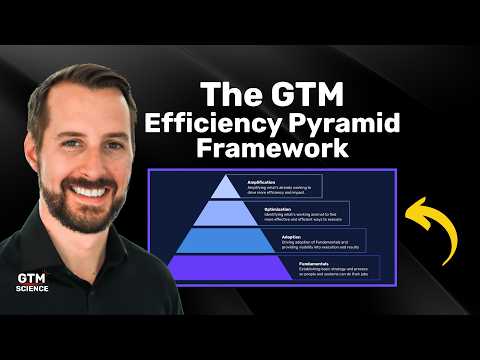
RACHAEL BUECKERTSo let's get into how we actually do this. I know on the infographic, we start off with the go-to-market efficiency pyramid, and we're giving an example of that for Outbound specifically.
RACHAEL BUECKERTCan you intro us a little bit to what the go-to-market efficiency pyramid is and kind of how it works?
EDDIE REYNOLDSYeah, absolutely. So here's the problem we're trying to solve with this, right? I've been doing this for, I don't know, 12 years, depending on where you draw the line. And by this,
EDDIE REYNOLDSI mean talking to B2B SaaS revenue leaders about how they can improve Outbound, Inbound, Pipeline Management, retention, growth, et cetera. And a number of the people on my team have also
EDDIE REYNOLDSbeen doing this for 10 to 15 years. So we've got collectively 50, 60 years of experience and we see a million problems, right? Outbound's broken, inbound's broken. We've got this list that isn't the right people. We're sending the wrong messaging. We have the wrong tool set. Our reporting isn't good. Like we can't get visibility. We don't know what reps are doing. We have to train them. It's overwhelming for any one person to think about like all of these problems that every organization has or almost every organization and where do we even start to solve them. And so we've tried to distill this down and we've put incredible amounts of effort into it through multiple iterations to say, okay, of the hundreds, literally hundreds of things that could be broken, how do we sort of bucket these into different categories and prioritize them?
EDDIE REYNOLDSAnd we've created four buckets across four different channels. So for the channels, we have outbound, inbound, or I shouldn't say channels, but like go to market motions, outbound, inbound, pipeline
EDDIE REYNOLDSmanagement, and then retention and growth, which probably should be broken down even further.
EDDIE REYNOLDSThen within that, we have fundamentals, adoption, optimization, and automation.
EDDIE REYNOLDSThe concept here is, is that for each thing, let's take outbound since that's what we're here talking about today. What are the fundamentals that people need in order to execute good
EDDIE REYNOLDSoutbound, right? Like what do you need in order to do quality outbound? Then how do you take those fundamentals and get your team to adopt them and actually go do that? Then how do you take what you're doing and start to measure it and find things that are working, things that are not working to
EDDIE REYNOLDSoptimize it? That's the optimization. And then the last piece is automation. And the idea is that by the time we get through optimization, we've got something that's working. We've built this foundation that's actually like our team is executing on the things that they should be executing on. We've identified the things that are working. We're doing more of that. We've identified the things that are not
EDDIE REYNOLDSworking. We've either gotten rid of that or we've optimized it. We've, we've built a better process and now we've got something working. And now we look at how do we use workflow automation? How do we use AI? How do we use other advanced tools and concepts to accelerate this further? That is so important to have that bit last because everyone wants to start with the shiny objects,
RACHAEL BUECKERTright? And they want to go for all this cool, innovative AI technology that people are talking
RACHAEL BUECKERTabout on LinkedIn all the time, but you can't scale something that's broken. You're just going to have a lot of crap.
EDDIE REYNOLDSYeah, absolutely. And like, I've been following Kyle Coleman at copy.ai a lot on this. And I think it's really interesting. Like they're coming out to market and they're saying, we have an AI solution to fix outbound. We're going to write all of your messaging with AI and it's going to be amazing. And even Kyle himself is saying like, if you don't have the fundamentals in place, if you like haven't figured out who you're targeting and what their pain points are and your value prop, you can't just slap
EDDIE REYNOLDSthat into AI and expect that AI is going to magically solve that. You have to have these foundational building blocks in order to leverage tools like that.
RACHAEL BUECKERTSo where do we start with the fundamentals? What's the very first thing we should be looking at?
EDDIE REYNOLDSWell, the first thing that we look at in any go-to-market motion is, are we targeting the right people? Specifically our ICP, our personas, and if we have multiple products, breaking each of those down per product.
SPEAKER_38Okay. And why is that so important?
EDDIE REYNOLDSI think it's pretty obvious. And what I'll say is, this is kind of obvious that you would want ICP, but I think the problem is, is it's not obvious that most definitions of ICP are not sufficient. So if you think about our TAM, SAM, SAM, our total addressable market, our serviceable, obtainable market, we have this giant list of companies that could potentially become customers. And that list is probably a hundred times bigger than our ability to actually serve those customers. So let's say it's a hundred thousand companies and we've got a sales team of like 50 people. How many of those hundred thousand companies can we really get to? How many can we outbound? And I'm skipping ahead to like the next point, but I'll take it back to ICP. What is ideal?
EDDIE REYNOLDSSo how do we define the absolute best customers that we have today? They're every single data point we can think of. It's not just their industry and their revenue range or headcount range. It's all the factors that describe our best customers, like what their funding status is, their growth rate.
EDDIE REYNOLDSDo they have key individuals in specific roles that are relevant to what we do? As an example here at USC, we have found the most success with B2B SaaS companies that have $50 to $500 million in revenue, that have a CRO in place, that have a CRO that really cares about building a data-driven, process-driven,
EDDIE REYNOLDSprocess-driven, repeatable, scalable, go-to-market motion that's willing to work with their team and ours to make that happen. And they either don't have a VP of RevOps or the VP of RevOps needs more help because they don't have the experience and or they don't have the bandwidth to do everything across their team. And so for one reason or another, they're calling us to say, can you come help us with things like building this outbound program?
EDDIE REYNOLDSAnd that is a much, they're also based in the U.S. Usually we do have some customers in Europe, but they're willing to pay us in U.S. dollars. They're willing to work in a U.S. time zone. They're all using Salesforce because that's like our main platform. And then there's a bunch of other tools, but they usually have a lot of tools and you see how granular I'm getting. So when a customer calls us and they're like, hey, we're a B2B SaaS company with $100 million in revenue. And I'm like, okay, cool. Like what CRM are you using? Do you have a CRO in place? Like, do you guys care about process and data? And they're like, no, no, no. We just want to, we want to implement pipe drive. And we're like, yeah, you're not our customer. Like, yeah, we can't help you. And I think so many other organizations would take that and they'd be like, well, let's figure out how we can take that customer on. And that by definition means that that particular example, it is going to cost you more money to acquire that customer. For every customer you talk to that's not in your ideal customer profile, by definition,
EDDIE REYNOLDSlike literally we're reverse engineering this based on looking at our best customers and looking at the customers we've won and lost. And so the customers that are not best, they have lower conversion rates. They have lower average deal sizes. They have lower retention. They have lower net promoter scores and CSAT. They have lower lifetime value. They have higher cost to acquire, higher cost to serve. That is the definition of ICP, that they are the best, easiest, most profitable customers to acquire. And so if you think about how carefully you want to define that, that spans everything you do in marketing, sales, and CS.
EDDIE REYNOLDSSo if we don't do a good job there, everything we build on top of that is going to be less efficient, less profitable, less effective.
RACHAEL BUECKERTAnd for us, specifically, the CRO bit was kind of that key missing piece that we didn't have for a while. And it took us like looking through the data, really analyzing, you know, all of our past customers, all of our past leads and pipeline, where things went wrong in the call notes and all that stuff to figure out like our prospect needs to have a CRO in place that cares about this stuff.
RACHAEL BUECKERTThat is where our sweet spot is. And I think a lot of companies don't dig that deep to find those little pieces of their ICP definition that really matter.
EDDIE REYNOLDSYeah. And I'm sure we'll go further. I'm sure in a year from now, we'll look back at a larger set of data and get even more granular there. But yeah, it's like we had folks coming to us, literally coming through our inbound engine, folks we were outbounding that felt like a fit. And then once we talked to them and went through literally 100 sales cycles, we found, wow, like the folks that look like this, none of them are closing. Or if they're closing, they're churning. They're not getting value from what we're doing because at the end of the day, like they don't have the right people in the seat that care about the problems that we solve and the solutions that we bring to the table. And there's nothing wrong with that. There's lots of companies out there that don't want to listen to this podcast, that don't want to build a bigger inbound engine, that just want to say, like, let's just hire more sales reps and let's see how that goes.
EDDIE REYNOLDSAnd those are not our customer.
RACHAEL BUECKERTAnd then once we have an idea of our ICP and we can get our lists going, the next step is capacity planning and territory planning.
RACHAEL BUECKERTSo how do we find the capacity of our salespeople?
EDDIE REYNOLDSSo I skipped ahead a little bit before and I alluded to this, but I'll share a complex example. And hopefully for our listeners, it's a little bit simpler. So this will make it easier. When I worked at Salesforce and also most of the jobs that I ever had in sales, I was covering everything. So I covered new business and existing. I covered identifying expansion opportunities. I had to close pipeline. I had to prospect. I even covered renewals a little bit, though, like I had help. And so you think about each and every one of those activities and then you stack rank them by priority, right? So let's start with pipeline. Active pipeline is going to come first. So you think about how many deals does a rep need to close? Keep in mind, we're talking about an AE. Obviously, if this is an SDR, you can skip over this piece. How many deals do they need to close in order to hit quota? How long does it take to close that many deals? I remember at any point in time, let's say at Salesforce, if I had 15 opportunities in my pipeline, it was going to be very difficult to find any additional time to do outbound prospecting or to field a large number of inbound leads, right? All right, so we figure out, like, we need this many leads and it's going to take this many hours in the day to do that. Then the next piece is going to be probably your inbound leads, right?
EDDIE REYNOLDSAssuming the inbound leads are quality and it's a big assumption, then reps are going to jump on those inbound leads before they pick up the phone and start cold calling or pick up their email or LinkedIn. Big assumption that those are quality leads. How many leads are they going to get in a week, in a month, and how much time will it take to process those leads and either convert them to pipeline or to dead them out and move on? All right, next, now we've got existing customers. How long does it take to work an existing customer? Now, the way I like to think about this is, is what does a quality activity look like, whether it's outbound to a new customer or whether it's outbound to an existing customer? What amount of research does a rep need to do before they send that, write that email, write that LinkedIn DM, pick up the phone? If you have a very low price point on your product, it may be a minimal amount of research. If it's a very high price point, it's a lot more. And you really need to define what does good outbound look like and how long does it take in order to do that activity? The number that I arrived at when I was at Salesforce personally while balancing everything else was 20 activities in a day. And I think that's probably because I had about an hour, maybe 30 minutes to an hour to actually research my accounts. I'd usually do that the day before. And then I'd have about two hours to go prospect before I had to start working pipeline and showing up to meetings and trying to close deals. And so you are probably going to call your existing customers before you call new business, right?
EDDIE REYNOLDSSo if you've got AEs that are covering both new and existing, you think about, all right, how many activities can they do in a day that are quality? How much time do they have, obviously? And then you think about how many times do you want to contact a specific person before you give up? And how many times on average do you think you actually have to contact that person before you give up? So let's say I give you, Rachel, 100 contacts to call and I say, I need you to call everybody 10 times. Well, you reach out to the first person and the email bounces and the phone number is dead and you can't find any more information.
EDDIE REYNOLDSSo you're done. That was one activity and you're done. The next person, you reach out to them 10 times and there's no response. And so you pitch it back to marketing to nurture that lead or whatever it is your process is.
EDDIE REYNOLDSThe next person, you call them and after two calls, they set a meeting with you. Okay, what's the average number of activities that that's going to land out at? If you have the data, you can look at that. If not, you can just assume it's 10.
EDDIE REYNOLDSYou can assume that if you have decent data that most people are going to call them and they're just going to ignore you. Like, unfortunately, conversion rates are pretty low. So to simplify it, we could just go with 10. All right, cool. So we're going to reach out to each contact 10 times. Now, my next question is, how many contacts in an account should you cover before you give up on that account? Let's say that in every organization, I want to call the CRO, the CFO, and the COO. And so that's three individuals that I want to call. Okay, so now my 10 activities has turned into 30 activities on an account. How many activities can I do in a day? Let's just say I can do 30 activities in a day for easy math. There's 233 working days in a year for most companies if you get three weeks vacation and working holidays. So that means in a year, at 30 activities a day, three contacts, 10 each, I can cover 233 accounts. So if you give me 2,000 accounts, which is very common, what do I do with that? I all of a sudden have to sit down and think about, well, which of these 2,000 accounts are my best 233 accounts?
EDDIE REYNOLDSI'm a sales rep. I'm not a data analyst. I don't do SQL queries and jump into Power BI and do all kinds of crazy stuff. I'm sitting here looking at this list of 2,000 and I'm just like, who should I call? And I've got two choices. I can just randomly pick someone to call. Now keep in mind when I've got 233 accounts I can actually call properly and 2,000 accounts in my name. By definition, sheer like simple math, it's about a 10 to 1 ratio.
EDDIE REYNOLDS90% of the people that I call will not be among those 233 best accounts. And I will only call 10% of those 233 accounts. I will miss 90% of them. And so what is the conversion rate going to be with account number 2,000 in terms of like propensity to buy versus account number 20? It's going to be a huge, huge difference. So I think it's critical. Like you hire salespeople to do what salespeople do best, to go sell. You don't hire them to be data analysts. And it's just an incredible inefficiency for me that organizations don't do this exercise to map out their capacity and build territories with the ideal customers inside of the exact number of accounts that they can actually cover in their capacity.
RACHAEL BUECKERTAnd I imagine when you are creating territories out of those lists, you want to take into account other factors for the individual reps,
RACHAEL BUECKERTsuch as location, geography, there's specialties, segments, stuff like that.
EDDIE REYNOLDSYeah. I mean, there's a lot of different views on this. I mean, there's just like you see everything under the sun. You see territories that are geography-based, that are industry-based, et cetera, et cetera. I think it really depends on the sales motion.
EDDIE REYNOLDSSo for example, like right now I do everything remotely. So I could care less if somebody's in Los Angeles or New York or Timbuktu. Again, as long as they're willing to pay us U.S. dollars and work in a U.S. time zone. Though I do think in Timbuktu, it's probably less likely. If your sales motion is we go visit our clients face-to-face, which is a great sales motion. I have nothing against it, I would do that if I could, then geography is going to be really important. Equally, I was blown away because I worked in finance before I joined Salesforce, and they did not put me on the finance team, which I thought was funny. And then, especially after I left, I started working with the finance team a lot. And I was working with reps, and they were selling canon copiers last week. And now all of a sudden they're calling banks, insurance companies, private equity firms. And I'm like, okay, you went from selling canon copiers to this. It's hard enough for you to understand how private equity and venture capital works, and banking, and insurance. Why are you doing that? And I've seen that Salesforce is increasingly verticalizing, especially as you get into larger accounts where you have reps that are only working on banking. But that's also a luxury of having a very large organization that can afford to hire literally an army of reps and break them up industry to industry. I think it just really, really depends a lot on who you're selling to and what activities are best. But I think focus is paramount, which I'm sure we're going to get into in your next question.
RACHAEL BUECKERTYeah, it's a perfect segue into the topic of context switching between the accounts that you're prospecting into, which is why we have segmenting your target lists as one of our fundamentals. Can you explain a little bit more about that?
SPEAKER_18Yeah, absolutely. For me, it's really simple.
EDDIE REYNOLDSAnything that you do repeatedly, like, what is the word? Repetition is the, well, I can't think of it. Repetition is the father of mastery or something like that.
SPEAKER_20Yeah, I know what you talked about.
EDDIE REYNOLDSI don't know why I'm blanking. I think we all know the expression, though. If you give a rep, let's say, hey, like, we're going to have you call on CROs and B2B SaaS companies with $100 to $200 million in revenue, and you're just going to spend all day on that, all month, all quarter, all year on nothing but that, how much better is that rep going to get at producing quality messaging and doing it more efficiently, meaning, like, more quantity of quality messaging versus someone who's bouncing from one type of company and one persona to the next? I mean, imagine you open up your list of prospects or your cadence or sequence or whatever, and the first person is, like, a CRO in a B2B SaaS company, and the next is a CFO in an insurance company, and the next is a chief compliance officer in a hospital. What do I know about compliance in hospitals? Now, all of a sudden, I've got to, like, do all this research, or I don't. Like, what's more likely is, like, I've got my activity quota, I've got to hit 30 in a day, and it's like, I don't have time to go learn how hospital compliance works, so I'm just going to take my template, and I'm just going to press send. So, this is where I've been lucky enough to, for the most part, with some exceptions, I've spent my entire career only selling to two industries, essentially banking slash private equity venture capital and software. This is all I've done for 20 years. And any time I've branched out of that, like, when I was at Salesforce, one of my major segments was advertising media. I never understood it. Didn't understand it then, don't understand it now, don't know the first thing about it. I just know, like, the highlights, like, enough to begin a conversation, and the second you ask me a difficult question, I have no idea. Like, I just don't know how it works. I kind of realized, like, you know what? I don't need to know that. I've had a really great career just focusing on two industries, and it'd probably be better if I only focused on one. But, you know, VC and private equity firms invest in SaaS, and so that's now my sweet
EDDIE REYNOLDSspot is covering that overlap.
RACHAEL BUECKERTAnd so that kind of brings us into adoption.
RACHAEL BUECKERTAnd like you said before, adoption is about making sure that your reps have the support and knowledge they need to put these processes into action. And we start with cadences. So how do you build up cadences that are efficient and effective, you know, using these segmented target lists?
EDDIE REYNOLDSWe can also replace cadences with just process. I'm actually not big on cadences or sequences in the formal respect myself.
EDDIE REYNOLDSI like just using a list in Salesforce and just going through it manually. But to each their own, I think it just depends on your motion. But I think this point here is all about, like, defining the process.
EDDIE REYNOLDSSo we've built up these segments, and we've said, okay, we're going to focus on B2B SaaS, and we're going to cover CROs and CFOs. We've broken them into two different segments so that we now can build a cadence or the concept of a cadence for each one of those. And so we say, all right, here are the templates that we're going to use to reach out to CROs and B2B SaaS. Here are six different pain points that CROs and B2B SaaS are facing alongside six different solutions that go with them. Here are six different pain points that CFOs and B2B SaaS companies are facing and six solutions to go alongside them. We're now thinking about, like, what is the process? And let's say that we're using outreaches, just as an example, though my intention here is not to plug outreach. When we define this process, one of the first questions I want to ask is, what research do you want your reps doing before they start to write that email or pick up the phone or send that LinkedIn DM? So as an example, do you have their LinkedIn profile embedded into the software? Is it accessible in Salesforce? Is it accessible in outreach so they can press one button and it opens up their LinkedIn profile and they're able to see that? Or do they have to go and manually search for that person and try to find them? Which takes 10 times more time. Same thing for the website. How about revenue ranges? How about whether or not they've raised recent funding? Like, what information do you want your reps to know as they research an account before they reach out? Now, how can we put that information at their fingertips? So we've defined the process and we say, all right, as an example, we want to see how long the CRO has been in their role, if they've raised any funding, what their growth rate has been, what open jobs they have on their website. Now we've got all this information at our fingertips and the rep can just click, click, click, click. And they are now able to do really thoughtful research in a fraction of the time that it would otherwise take them with an inefficient process. That's what I mean when I say build out cadences, whether or not you're using actual cadences or actual sequences in a tool like outreach. For me, it really just comes down to like defining the step-by-step process. So you can think about like, what is the most efficient? And even more importantly, what is the most effective way for our reps to execute that process?
RACHAEL BUECKERTAnd how are we making sure that our reps are actually following these processes and doing this the way that we want them to?
EDDIE REYNOLDSSo the first step is that we need to provide enablement and training. We need to walk through and say, this is the sales process or the outbound process that
EDDIE REYNOLDSwe're going to execute. This is how we use the tools in order to do that. And then we also need to build reporting. So I'm a big believer that like, I don't really ever want to train anybody on anything without some kind of a reporting mechanism behind it. So I say to the rep, hey, I want you to make 30 calls every day. I want you to go after this list of folks. Here's your B2B SaaS CROs. Here's your B2B SaaS CFOs. Here's your 233 accounts that you're covering. I want to see 10 activities per contact before you give up and walk away. This is the process for you to message. Here's the report that's going to show how many activities you logged, who you logged it against, how you're covering these accounts, et cetera, et cetera. And we have this exact dashboard internally, and this is how I work with Troy to coach him and provide feedback. And I would even go so far with new reps as to go and look at the actual messaging and say, hey, like our process was that you were going to research them and find out if they had, you know, these key hires. Are you actually doing that? Do I see that reflected in the message? Or are you taking the templates? And I have nothing wrong. I have nothing against templates, but I think templates should be personalized, at least to some extent, at least for our tier ones. Are you just taking these templates and pressing send all? Or are you actually doing the research and writing really thoughtful messaging that's going to make this person on the other end think, oh, wow, like you actually researched my account. You know who I am. And you say you can help me. Maybe you can.
RACHAEL BUECKERTAnd are there any other types of reports and like data points we should be looking at
RACHAEL BUECKERTin Salesforce or elsewhere to give us an idea of how our reps are reporting or how our reps
SPEAKER_23are performing?
EDDIE REYNOLDSThere's a lot, right? And so like activity tracking is always a really controversial topic. I tend to think this like let's reverse engineer with the end goal in mind, right? So the end goal is that our reps are hitting quota, whether that's a full cycle AE that's hitting a revenue quota, or it's an SDR that's hitting a meetings booked quota, or hopefully a pipeline generation quota, or maybe even a revenue quota. If I have a rep that's hitting quota, then it's like, okay, cool. Like I don't care how much pipeline you're generating, how many activities, how many meetings, like I don't care. I might look at that stuff to give you some coaching to say, here's things you could do better. You're at quota, you're crushing it, but you could do even better if you did XYZ. But like you're at quota, like this is great. If you're not at quota, then the next thing I want to look at is how much pipeline are you generating? Same concept there. You're generating pipeline. I don't care as much about how many meetings you're setting. What I'm looking at is, is this real pipeline that you're generating? And why is that not converting to revenue? And let's drill in there, right? Okay. So let's say we're not generating enough pipeline. All right. How many meetings are we booking? We're at our meeting quota, but we're not getting enough pipeline. Like what's going on in these meetings, right? Okay. Now let's say that we're not booking enough meetings. Then I want to say, are you logging enough activity? Well, if you're logging enough activity, but it's not translating to meetings, then I have to look at the, at who you're contacting and the quality of that messaging. And this is the exact challenge that I ran into with Troy in his first couple of weeks on the job. And I don't mean to throw him under the bus. I mean, this is a hard job to like learn go to market strategy and operations overnight, but the messaging just wasn't resonating. That's probably my fault for not doing better enablement training. So I'm saying, wow, you did a hundred, 200 activities today, but didn't book any meetings all week or for a couple of weeks. So let's take a look at this. Let's narrow focus. Like, let's make sure number one, that we're targeting the right people. And number two, let's make sure that this messaging is resonating with them. And so that's what I worked on with Troy. We actually brought his activities down from over a hundred a day to just, you know, the targets 40. Some days he's only doing 30, maybe 25. But again, now he's booking meetings. So I'm like, well, you know what? I don't need to ride you on activities because you're booking the meetings quote goal, right? He's still new in the role. We've got to translate these meetings into pipeline. But one of the key elements here is, are those meetings with the right people? So we've got a really specific list of named accounts and we're getting meetings with those named accounts, which is only 48 accounts, if I remember correctly. So it's like I've done, or we've done as a team, our best job to identify the best accounts and we've given them to Troy, if those accounts don't convert into pipeline, that's a bit on me. That's not on Troy, right? Because I'm giving him very specific instructions and saying, hey, I want you to target these accounts. But I'm also joining those meetings. I'm looking at the recordings and I'm seeing what he's doing. And now we can ask, how is this translating into actual pipeline? And I think that's what you have to do. You have to look at the entire funnel and you have to identify what's the piece that's working? What's the piece that's not working? How does one translate into the other? And then of course, there's always like a million different ways to slice and dice it, right? We talk about a very large organization. You got different geos. You've got different types of companies you're going after. You've got different products. And the big thing for me is just narrow focus as much as humanly possible. Stop trying to be all things to all people. Try to figure out like, what's the thing that's not working? How many different versions of that are we doing? We're booking all these meetings, but it's with all these different industries and these different individuals. Well, which of those folks are converting and which are not? How can we narrow in on that? Yeah. That's my answer to the types of reports that I would want to run. I'd look at activities, meetings, pipeline, closed one deals. And then you could, over a longer period of time, look at like LTV and retention rates
EDDIE REYNOLDSbecause that's really important. But those are the things I would look at. And this reminds me a little bit of something we've talked about before as well called, or
RACHAEL BUECKERTwe call it zombie pipeline.
RACHAEL BUECKERTAnd I think that's just another thing that these types of reporting can get a sales leader can get their attention to when maybe their reps aren't trained well enough on the sales process or maybe they don't have a process for identifying and closing out deals that are clearly going nowhere. And so you have your pipeline full of these dead deals that just keep getting pushed out to the next quarter, to the next quarter, to the next quarter, and not getting closed out. So it looks like you have this amazing full pipeline, where in reality, that's never going to translate into revenue. And your win rate is really high because you're never closing out these deals that are never going to be won. So yeah. Yeah, I mean, it's a very, very common problem.
EDDIE REYNOLDSI would put that in the bucket of pipeline management or closing, which I think of as somewhat
EDDIE REYNOLDSseparate from outbound. But I will say, here's how these two things relate. There's like a very specific example. One of the first companies that I worked with in this regard here at Union Square Consulting, you know, I came in to work with this sales team and they had exactly what you're describing. And they kept telling me, I don't have any time for outbound. I don't have any time for outbound.
EDDIE REYNOLDSThis goes back to capacity. They spent all day, every day chasing this zombie pipeline that was never going to close. And it was very obvious to me why I wasn't going to close. So I did an exercise with them to identify this zombie pipeline and help them to like self-identify that they had zero chance of closing it. One key indication here was that their sales cycle was like 30 to 60 days for deals they won. And all these deals were like 360 days old. And I was like, guys, you're not closing these. One of the reasons I think they were dragging this on was they didn't have any accountability for outbound. So they were able to get away with making this excuse and saying, well, I don't have any time to do outbound because I've got 15 deals in my pipeline that I manage. Once we close that out, they suddenly had zero pipeline, which is always a tough thing to share with upper level management. But what we did is we freed them up to start doing outbound and create pipeline they could actually close.
SPEAKER_08Yeah. It all connects together.
EDDIE REYNOLDSYep. I mean, it's so common that reps just like prospecting is the first thing that dies, right? You get super busy and you can't find time to prospect. And then it creates this cyclical process where reps will have like an amazing quarter and they crush it and they close everything. But during that quarter, they were so busy, they didn't have any time to prospect. So then they wake up on day one of the next quarter and they have no pipeline. Then they miss their quota, but they spend all quarter building pipeline. So they've missed quota. Now they go into the next quarter and they've got this full pipeline. And so they close it, but they don't build any new pipeline. It's just this vicious cycle. And I go up and down and up and down. And you see entire teams and companies doing this as well. It's really, really unfortunate. So it's critical that we have pipeline generation goals on a month by month or quarter by quarter basis, independent of what we're closing, because that's going to be our next quarter.
RACHAEL BUECKERTRight. And bringing this back to our next stage here, optimization. So now that we have all these reports and we have these review cadences and everything going
RACHAEL BUECKERTon from our adoption stage, how do we drill deeper into these reports and kind of slice the ISIS data more to find what's working, what's not, and improve the engine that we've
RACHAEL BUECKERTgot going on now?
EDDIE REYNOLDSYeah, it's such an interesting question because I'm always searching for sort of this like plug and play answer, and I think it's a bit nuanced, but I'll try my best here. I think to some extent, you need to look at these standard reports. We need to look at the number of activities. We need to look at how many meetings are being booked, how much pipeline is being generated, and how much is closed one. We want to look at the conversion rates from one to the other, and we want to look at that rep, by team, by geo, by product, et cetera, to see what's working, what's not. I miss customer segment, by the way, right? So I keep using this example where we're calling like CROs and CFOs and B2B SaaS companies. Most of the time when we talk to our customers, they're covering a lot more industries than that, a lot more personas. And so I'd really encourage folks to think about how do we narrow that down and identify the folks that are converting the most. And this really struck me when I worked at Salesforce. I covered almost every industry, period. Every industry, with the exception of financial services. I think that was the only industry I didn't cover when I was at Salesforce. And I remembered one of our sales engineers coming to us, and they're basically the equivalent of RevOps in this exercise. And they said, hey, we built this dashboard, and it shows you all the SIC codes and NIAX codes of the customers that spend the most money with us and close the fastest and close for the bigger dollar amounts. And not surprisingly, all of those industry codes at the very top of the list were software companies. And then the next in line was probably professional services, and the next was like advertising and media. And then you have everything else. And so I looked at that, and I thought, wow, okay, so I can call software, and I work at one of the best software companies in the world, so that's a little bit easy. I can call professional services. Professional services isn't too difficult to wrap my head around. I can call advertising media, which might be a good opportunity, but my God, I don't understand anything about it, or I can call like, I remember I had like an inbound lead from a company that like installed commercial HVAC equipment, which is like, no idea how that works. No desire to understand how that works. And so it's like, why don't I just focus on my efforts on software, and maybe to a lesser extent, professional services and ignore the rest? I can probably be really successful if I just focus on my energy right there. And these are the kind of exercises that, you know, companies can do and really optimize their engine, especially with a smaller team. At the time I was at Salesforce, we had $5 billion in revenue, and even then, I'm just looking at it, and I'm like, you know what? We've got more people to call than we have people to call them, so why don't we just call the best people? Like, really simple conclusion here. So I think that that's part of the optimization, is just taking the progression from activities to meetings, to pipeline, to revenue, and slicing and dicing it across different types of customers, different personas, different products, different geos, and trying to identify which of these convert to the most revenue, the fastest and the easiest, and at the lowest cost. I think that that's a really big piece of this. Another thing that I'm always a big proponent of is this idea of focus. I want to look account by account. How well are we covering each account? If I give a rep 233 accounts, ideally, by the end of the year, they've covered all of them. But in the beginning, let's say we're three months in, they just try to call every single person once. That's not super effective. So what I really like to see is, are you going in and working each account one at a time in order of priority in the way that you should work the account that's most likely to convert the account? Which means you can't just call everybody once and then wait three months and then call them again. You might not want to call your customers every single day for 30 days. That's a bit obnoxious. But where's that happy medium? You know, I will oftentimes like reach out to somebody today, then maybe follow up in two days and maybe follow up three days after that, four days after that, five days after that. And over the course of like 30 to 45 days, you've hit them a number of times. Maybe sometimes you like leave a voicemail, you send an email to follow up. Now you've definitely gotten in front of them. They're aware that you exist and they're going to respond or not respond based on whether they see value in engaging with you. And when you do that across multiple contacts in an account, you really build momentum where that person might respond, ah, you know, I'm not interested, but you should talk to so and so. You're doing everything you can to convert that account, not just that contact. And you can do that before moving on to the next account. And I think that's something that's really oftentimes overlooked. I'm like, wow, our rep put in all this activity and they booked this meeting. He's like, cool. But where did that activity go? How focused was that activity? And I'll say the flip side of this. I remember talking to a customer about this just a few weeks ago and they were saying that like they had reps doing that and they had other reps that like called one person like 55 times in two weeks. You're just like, what is going on here? That'd be awful. That would be awful. People do it. Peace. It's like, hey, I'm going to I'm going to call you twice in the morning, twice in the afternoon, twice in the evening.
SPEAKER_38Oh, they'd be blocked so fast.
SPEAKER_18Yeah. But people do this.
SPEAKER_38Damn.
RACHAEL BUECKERTSo who should be responsible for doing this deep analysis? I know we don't want our outbound reps to be doubling as data analysts, right? So whose job is it to like go in and look at these reports and figure out what can we really optimize here?
EDDIE REYNOLDSYeah, I would say I don't want my reps, you know, acting as data scientists. But like, I do think they should like understand like basic reporting.
SPEAKER_70Yeah.
EDDIE REYNOLDSI mean, granted, this is what led me to do what I want to what I do today. But I've always wanted to understand like for my own data, like what's working for me and what's not. And I think that we can empower reps by building them the right dashboards and the right reports so they can see that themselves. Everything I'm discussing is something I've built for Troy in our dashboard. Full transparency there. Like, hey, Troy, like this is who you're covering. This is the accounts you've covered, the contacts you've covered, who's converted, who hasn't converted, how many activities you've done, what the conversion rate is, et cetera, et cetera. But I think that like in order to do analysis, and this is where a lot of companies really fall off, like you have to have the right person with the right skills with the right uninterrupted time. And most companies don't have that. The CRO might attempt to do this a little bit. And I think a good CRO is going to do this. But the CRO doesn't have time to consistently do this the right way. Your Salesforce admin probably doesn't have the skills or the go-to-market acumen to understand how to do this. But you need to find somebody that's probably a VP of RevOps or maybe director of RevOps or an analyst in RevOps that you can say, look, like every single week, I want you to analyze this data. I want you to look at what's working, what's not, and identify what's going on there. And Rachel, for better or worse, I've tasked you with doing this across marketing, across partners. And I'd be curious, like, what your experience has been doing that for a little while now.
RACHAEL BUECKERTI personally love doing it. I really like analytics and digging into that and figuring out what questions I want to ask and the answers to those.
EDDIE REYNOLDSYeah. It's been really interesting to see you doing, because again, we try to eat our own dog food. And even though we're small, we have like a sales team of one. It's like, I want to know what's working, what's not. And as CEO, I don't have time to do the analysis that I want to do. And you brought in some really great insights. It's just been interesting to like create this rhythm of every week going into our team meeting and hearing you say, hey, guys, this is what's working and this is what's not.
SPEAKER_76Yeah.
RACHAEL BUECKERTAnd finding the time too can be difficult as well, because we're doing so much right now with marketing, especially.
SPEAKER_38It's a challenge, but it's exciting. It's fun.
SPEAKER_18Yeah. I hesitate to use the word startup.
EDDIE REYNOLDSWe're small, but we're not new. We've been around for eight years, but like all growing companies, like everybody's stretched thin, but it feels like such an incredible miss to not be doing this.
EDDIE REYNOLDSAnd then like when you don't have one rep, when you have a hundred reps, here's the analogy I always use. If you hire a sales rep and you give them a million dollar quota, that means that they
EDDIE REYNOLDSare responsible for producing $500 in recurring revenue per hour of working time, just assuming
EDDIE REYNOLDSyou're 40 hour a week. That's an insane amount of money, right? So at what point in time, when you have 10 reps, 50 reps, a hundred reps, 500 reps, at what point in time can you really say, hey, you know, it doesn't make sense for me to pay somebody, you know, a bit of money to spend a couple hours every week analyzing what these folks are doing, what's working, what's not working and to help them narrow focus. And I think for me, even at Salesforce, where they do a lot of this, I was still starving for that because I'm like, I am investing an incredible amount of effort. And I did have a million dollar quota at Salesforce. And I just want someone to guide me and say, hey, like, we're looking at the data. This is what's working and this is what's not. And I got some of that. Like I told you in the form of like, here's the six codes and NIAX codes. And I had management coaching me on like, you know, what's going on with my pipeline and how deals are progressing, et cetera. But I wanted more of that. I wanted to like work in a machine where like I had a coach that's saying like, this is how we can optimize. And I think that's probably what inspired me to want to do this.
SPEAKER_79I think salespeople should be focused on what they do best.
EDDIE REYNOLDSAnd there's just incredible opportunity to work in the data and help salespeople identify where they can be most impactful.
RACHAEL BUECKERTI think the optimization stages, and maybe I'm wrong here, but I personally think it's the most important stage of all of them because, you know, you get to this part and maybe you've
RACHAEL BUECKERTalready done your fundamentals and adoption, but here's where you figure out where all that work that you've just previously done, what are the results from that? And maybe the case is that you have to go back a little bit and change stuff like how we had to go back and look at our ICP again and make adjustments there. And that led to much, much better results going forward. So it's like the stage where you really start fine tuning things and get them in a place where they're efficient enough that they can be scaled.
EDDIE REYNOLDSWell, I also think it's like the biggest stage, right? So like we'll get customers will come to us and they're like fundamentals, adoption, optimization,
EDDIE REYNOLDSautomation, like how long is all this going to take? And we're like, well, we can do the fundamentals and adoption in like a week. And then optimization could take like 10 years, right? Because you really think about it. It's like, okay, you can sit down and map out your ICP and your personas, ignoring the data analysis that might be necessary. But like, if you really know it, like we could sit down in one hour and like map that out probably better than what you have today. We could probably do a capacity and a territory plan in like a day if we're really like just heads down. We could segment those lists in just as much time. We can build out your cadences and literally like in a couple days, we could have this all ready, have your team trained and have your reports built and have like, see those reports being populated with real data because reps are executed. That can happen so fast. But then, you know, like let's use an example of an enterprise sale. What customers are going to be most likely to close for the most revenue? Well, we have a one year long sales cycle. So you tell me how long it takes to answer that question. I will say that like you log a bunch of phone calls and you look at how many of those translate to meetings that can happen much faster. But we don't know if those meetings will translate to pipeline yet. Okay. We grant and we generate a pipeline. We don't know if that's going to translate to close one business yet, especially in an enterprise sales cycle. So this can take a lot of time. And then you figure it out. And then, oh man, we have COVID and the whole market's changed. And all of a sudden, like interest rates have changed. Like everything is like up in the air right now. And then you got to go redo this stuff.
SPEAKER_84Yeah. It's just constant testing, reporting, iterating on everything.
EDDIE REYNOLDSSo Pipeline Council is just a recurring meeting that's really meant for larger revenue teams
EDDIE REYNOLDSwhere if you're small, like, you know, you're the CRO and you've got like 10 sales reps and you've got like one marketer, like you can do everything we're discussing and just sit down with them and say, hey guys, this is where we need to go. But now you have a much larger organization. You've got huge marketing team, huge sales team, SMB, Minimarket Enterprise. You've got all these different leaders in place, not to mention CS, product, finance. At some point in time, you need to bring all these people together and bring these insights and say, hey, this is what's working. This is what's not. Let's discuss what we're going to do about it. Let's prioritize. Let's actually take action. And a Pipeline Council meeting is not this meeting that's just like, let's go over some fluffy stuff and talk about, oh, hey, like we hit this number or we released like this marketing campaign or what have you. It's, hey, this is what's working and not working and generating and closing pipeline. And so we need to actually take action on this and we need to come out of this meeting with specific action items. And we've written at least one newsletter. I can't remember, maybe multiple ones on this and gone into great detail. So if you're listening, I encourage you to check it out. But I'll leave it at that. I just think it's so important. It's like we can talk philosophically all we want. Like we have to actually take action to see this stuff through.
Yeah.
RACHAEL BUECKERTWe have a podcast on creating your own Pipeline Council as well. If you want to take a look at that in our list of podcasts. It's only a few months ago, I believe.
SPEAKER_21We'll put it in the show notes, right, Rachel?
RACHAEL BUECKERTYeah, we'll put it. We'll put it in the show notes. We'll put it in the show notes. Easy. Easy as that.
SPEAKER_87All right. What's next?
RACHAEL BUECKERTABM. So at what point can the outbound team start collaborating with marketing on ABM lists?
EDDIE REYNOLDSSo this is something I always found really fascinating. It's like, what the hell is ABM? What does it mean? What is inbound? What is outbound? All these terms are frankly meaningless to me. What I will say is, is like when we think about inbound and outbound as a separate motion,
EDDIE REYNOLDSwe're calling the same types of companies, or we should be, and trying to convert them to meetings. So let's take high intent inbound, declared intent inbound, separate, okay? So somebody comes to the website, they raise their hand and they say, I would like a meeting with sales. I would like a demo. Let's push them over here on the side. That's great. That is a distinct and unique group of people. And it is critical, critical that you respond to these people in like five minutes and you get a meeting set, or maybe you have calendar functionality on your website even better. And you get in front of them as fast as humanly possible because that will make or break your ability to convert that lead. Okay, cool. That's a hot lead. Awesome. Let's push that off to the side. We got a thousand leads this month and that was like five of them. All right, what do we do with the other 995? These people do not want to talk to your sales team. If they did, they would have requested a demo. They do not want to talk to salespeople, just like your outbound prospects, right? So the first thing that I would say is organizations will create these like separate silos and spend all of this money, like chasing down these like worthless MQLs. And I just have a really simple question. And then they're like complaining that salespeople don't want to call their MQLs. All right, if I call a thousand cold prospects and I generate a million dollars in ARR out of that, and then I call a thousand MQLs and I generate $200,000 of ARR out of that. Let me ask you, Rachel, why in the world would I ever, ever call an MQL ever again in my life? I, you wouldn't. So I think that you have to set the bar and we'll talk about this, like in terms of like lead value, like again, like, okay, so you have a thousand, uh, dead prospects or not dead prospects, cold prospects, and you've got a thousand MQLs, a million in revenue, 200,000. Well, what does that mean? Well, that means that the value of each cold prospect is a thousand dollars and the value of each MQL is $200. One way to look at it, I think that you need to raise the bar for MQL so that it is at least, at least as much, but preferably higher than your outbound. Otherwise, like, why are we calling MQLs? That's where I think, you know, ABM starts. You can get into all kinds of advanced stuff. We're going to like place targeted ads on the computer of that CFO, that B2B SaaS company that like we want to get in front of when he goes on Facebook or whatever. I don't know. I don't know a lot about targeted ads, nor do I really care to be honest, but let's just keep this really, really simple. We have a team going outbound to cold prospects, and we have a team going outbound to MQLs that don't want to talk to them. Why don't we just combine that? Why don't we figure out where the bar needs to be such that it's worth the time for a rep to go outbound, whether it's an inbound or outbound lead? And then let's just look at this and let's say, how do we identify the best accounts, not contacts, but the best accounts, account-based marketing, right? Or account-based sales or account-based X, whatever. The best accounts to go after. One of them is the best because they've never heard of us from Adam, but they're our ideal, ideal, ideal customer. They're the perfect company. They have the highest propensity to buy. They have intent. They've got the right people. It's just, it's perfect. Let's call. Let's call that company, okay? And then over here, we've got another company that is almost as good, and like five different key stakeholders have hit our website like 100 times. We probably want to call those folks. So how can we come up with an account scoring model that says, let's take all of this into account. Let's take the engagement with our marketing. Let's take their firmographic and technographic data. Let's take intent data if that's helpful for us. Whatever data we can get our hands on, let's just simply unify this motion and say, ignoring the folks, not ignoring, but separating the folks that specifically requested a meeting with sales, who should be highly prioritized, once we're done with those folks, who is the next group of folks that we should call? And I can't care less whether it's an MQL or a cold prospect.
SPEAKER_16Let's just figure out who has the highest propensity to buy, and let's call them first.
RACHAEL BUECKERTAnd I think this is a place where, you know, we were talking in the beginning about how brands might be able to help outbound. People, if they've heard of you before, they're more likely to respond to your cold email because it's not quite cold, right? They have some idea of you in their head already. So marketing and sales, there's a lot of power there for them to be working together to make
SPEAKER_91it easier for your salespeople to get those meetings.
EDDIE REYNOLDSI mean, why are we on this podcast, right? Like, I think I've seen this firsthand with my outreach. I mean, it's crazy. Granted, my outreach is pretty narrow because I don't have a lot of time, but I've measured in the past and it's like, I'm getting like 20% conversion rates from like cold outbound
EDDIE REYNOLDSto like meeting set. Granted, that's like a tailored list. And these people oftentimes have like heard of us because of our content, but yeah, it really makes a difference.
SPEAKER_35This is why as a very tiny organization, we generate all this marketing content because
EDDIE REYNOLDSI think it really matters.
RACHAEL BUECKERTYeah. And not only have people heard of you, but they know that you know what you're talking about.
EDDIE REYNOLDSHopefully. Hopefully. What they don't know is that I go back to the team and I ask them like, hey, how do we do all this stuff?
EDDIE REYNOLDSNo, I mean, joking aside, like it's a collaborative effort. It's not just me. Yeah. Like I leverage our entire consulting team and talk to them about what they're seeing on a day-to-day basis. And we compare notes and we work really hard and you're so helpful with this, Rachel, in helping us to like distill this into like digestible messaging. It's a team effort. Like for better or worse, like I represent the brand, but like we're all putting our heads together on this stuff.
RACHAEL BUECKERTYeah. And you know, that's not a bad thing because, you know, when we are working with the client, they're also, they're working with all of those consultants that we get this information from, so.
EDDIE REYNOLDSYeah. It goes back into our delivery methodologies as well.
RACHAEL BUECKERTExactly. Exactly.
EDDIE REYNOLDSBut anyway, where do we go next? What do you want to ask me about now?
RACHAEL BUECKERTAutomation. So this is the last, the peak, the final stage of the go-to-market efficiency pyramid. Now that we have all these systems and processes set up and we've optimized everything and things are running great and they're profitable and efficient.
RACHAEL BUECKERTNow we can look at using automation tools to really scale this and make it even faster and better.
RACHAEL BUECKERTAnd so where can we start with this? Like there's so many different tools we can use with automation. Eddie, what are some of your, your favorites, some of your go-tos?
EDDIE REYNOLDSWell, there's just like a million things that we can do here, right? I think this goes back to like the fundamentals and the process. And so you think about like that step-by-step process of who do we need to target? Who do we need to reach out to? What is our process for researching the account? And then you want to identify what tools can help us do that better and faster. There are tools that can help you. And I do put like the AI at the top of this pyramid, but I will say there are also tools that can help us with the fundamentals. There are tools that can analyze your AI tools that can analyze your data and help you identify who your ICP is. There are tools that can help you do capacity planning and territory planning that can help you build and segment lists. I think tools as simple as ChatGPT can be used across the entire spectrum, even if you're just asking ChatGPT, like, how do I do this? ChatGPT is really good at introducing like just generic best practices. And so I think like you can use AI throughout all this, but we've gotten to sort of the top of the pyramid and we've got something that's not only working, but we work to optimize it. And now I think like, how do we accelerate that? This is one of the things where I think like using AI for outbound messaging can be really helpful. We've figured out how to write messaging manually that works. Now we can ask ourselves, because like we know what good looks like.
SPEAKER_35So now we can ask, how can we use AI to do that better and faster?
EDDIE REYNOLDSWe do a lot of that here. We talked about like automated trigger-based cadences. So the concept here is, all right, we want to get to the right person, the right company at the right time with the right messaging. How do we identify the right time? Well, there's this concept of triggers. The way I was always trained on this is like, okay, you go and you type in all your customers into Google alerts or whatever. And then you get like this flood of emails that tell you, so like XYZ company just bought this company or did that or just hire this person. It's a lot to digest. I think that that is a fantastic way to sell. I remember even when I worked in finance, like colleagues that would just like read the newspapers and they see how XYZ is happening. They'd reach out to somebody and they book all these meetings and just bring in all this money. And it's like, how do they do that? It's like, well, they know their customers and they know their market. How do you automate that? But I think it really depends on your go-to-market motion and what makes sense for you. And we've listed just a couple random examples. And there are like hundreds, if not thousands of examples of tools that you can use and advanced things that you can do to take this further. And I'll leave it at that. I think though, in our experience, the companies we work with, like if you've gotten to the top of this pyramid, like my God, you are in the 99.9th percentile. It's very rare. And even if you've gotten to the top of the pyramid, it's like, wow, congratulations. Like you did all this stuff and you're a hundred million dollar company, but that's your SMB team. What about your mid-market team? What about your enterprise team? What about your EU team? What about this new product you just launched? Oh, wow. We just entered a new market. And so it's so hard to get all this stuff right from fundamentals adoption to optimization that I'm not knocking AI and automation, but I'm just saying that like, if you're at the top of the pyramid across your entire go-to-market, man, you're in a good spot. And then you are among rare company.
RACHAEL BUECKERTYeah. The biggest takeaway for me having automation at the top is if you're trying to start with automation and you're trying to spray and pray these templated AI messages to a list of thousands of thousands of people and you haven't gone through the steps below, you're not going to go very far with that.
SPEAKER_101Even though AI can be used throughout the pyramid, throughout your journey getting here, it should
RACHAEL BUECKERTbe thought of as the thing that you're using to scale stuff that already works.
SPEAKER_23I mean, I agree.
EDDIE REYNOLDSAnd I'll say like, we even used AI in like helping to build our own territory plans. I mean, simple things like asking like, which of these companies fit this criteria is great. Like there's nothing wrong with all that stuff. I would also add in data enrichment in here. It's another tool. Like data enrichment is really, really critical. Doesn't need to wait until the top of the pyramid. That can be really critical in just building out your territories. So this stuff does kind of thread through, but to your point, you've identified the ideal customer and the ideal personas and you understand the industry. And then you're like, all right, I'm going to go, I'm going to go read their annual report and I'm going to use chat GPT or whatever other AI tool to analyze that report and match it up against like our value prop and the problems we solve. Like that's fantastic. That is night and day different than just saying, here's a list of a thousand companies spread across a hundred different industries. We do X, right messaging for them.
RACHAEL BUECKERTYeah. And I also want to mention too, making sure you have a human reviewing your AI messaging.
RACHAEL BUECKERTThat is so important.
RACHAEL BUECKERTI've seen, you know, people posting on LinkedIn about cold outbound that they received because some AI software was scraping their LinkedIn posts and was using like very personal posts that you might see on LinkedIn in a sales email.
SPEAKER_20And it was like, I don't know if I, how much of, I want to repeat what was going on, but it was like, Oh, like people that are sharing like really serious personal issues that's being
SPEAKER_21translated into a sales email.
SPEAKER_20Yes. And it was just like nauseated.
RACHAEL BUECKERTThat's awful. Yeah. Never be sending out AI scrapes generated messages without having a person able to like look at that and at least review it. But ideally add some like actual human touch in there. Otherwise it's super obvious when something is completely AI written most of the time.
SPEAKER_18Yeah.
Huh.
SPEAKER_18Yeah. This stuff's hard work.
EDDIE REYNOLDSLike we all want the, like the easy button, right? But, um, sales is one of the highest paying professions out there. And this is why.
SPEAKER_31Exactly. Exactly. All right. Well, that pretty much sums up our outbound efficiency framework.
SPEAKER_48Cool. What do our listeners do from here, Rachel? Where can they find more information?
RACHAEL BUECKERTWell, if you would like to see the full framework yourself, as well as download the infographic that we have, you can go to UnionSquare Consulting slash frameworks, and you'll find the outbound efficiency framework there. Also, if you are interested in having somebody come in and do any of the stuff that we've talked about today for your business and your teams, you can contact us at UnionSquareConsulting.com. Yeah. And we can talk more there.
EDDIE REYNOLDSCool. And you'll put all this stuff in the show notes, right?
SPEAKER_85I absolutely, I always do.
EDDIE REYNOLDSYou always do. You always put it in the show notes. I'll do it. So, another thing out here, if anybody's listening to this and you just want to get like a free half an hour, an hour, and just like bounce this off of us, assuming you're in our ICP and you're the kind of company that we actually understand and can help, like if you're advertising media, I'm sorry, I can't help you, then book a call with us. You can do that on our website. Rachel will throw a link into the show notes. We're happy to talk through what you're trying to do. No obligation. Give you some feedback. You can run with it. You can hire us to help you. Whatever you want to do. We're here to try to be helpful.
SPEAKER_109Exactly.
EDDIE REYNOLDSWell, cool, Rachel. Thank you so much for putting this interview together. It was fun going through this. We've got all these great links in the show notes below. Folks, if you're listening and you want some of these resources, check it out or feel free to DM me. My DMs are always open on LinkedIn. Hope we can be helpful to you, whether it's via our content or calls with us or our services or
EDDIE REYNOLDSwhatever we can do to help you grow and scale your company.
SPEAKER_111Awesome. Thanks so much, Eddie. See you later.
SPEAKER_01Thanks for listening to the show. If this resonated and or you'd like help with anything we talked about in the show,
EDDIE REYNOLDSplease reach out to us. You can find us at unionsquareconsulting.com and the info will be in our show notes.