EDDIE0:00If we could just take a bunch of phone numbers and push it into like an auto dialer and print money on the other end, like nobody would care about what we're talking about here?
EDDIE0:08point is not to have perfect reports. The point is to drive revenue.
EDDIE0:13Welcome to go to Market Science, the podcast for crows and revenue leaders scaling mature B2B companies. There's an art and there's a science to go to market and we're obsessed with the science.
EDDIE0:23In this podcast, we share tangible, actionable playbooks from the trenches, from what we're learning, working as go to market strategy and DevOps consultants for our clients here at Union Square, Consulting and candid conversations with revenue leaders in the market that have been there.
EDDIE0:38If this podcast delivers value, we'd love a five star rating and a follow. Now let's get into it.
RACHEL0:46Welcome back to go to Market science. I'm Rachel Burkhardt and with me today is Eddie Reynolds, our CEO and founder here at Union Square Consulting. And today we're going to be talking about a topic that we recently released in a newsletter called Go to Market Ops first 90 Days Playbook.
RACHEL1:01And we're also we were talking about The Crow's first 90 days as well. So.
RACHEL1:06Hey, Eddie, how's it going?
EDDIE1:08It's going well.
EDDIE1:09I'm excited to get into this because you did a podcast with Warren Zane on the first 90 days for CRO, we published this newsletter titled Go to Market Ops first 90 days. And I was posting, I think like a week ago or so, like promoting, the newsletter. And when I was thinking about promoting and I was thinking about it through the lens of a CRO and or VP of go to market ops.
EDDIE1:33So, it's really the same thing is like in the first 90 days, how do you improve the go to market engine? And since most of my conversations are with crows, because, you know, the go to market ops people are the ones on my team in this equation. I'm oftentimes thinking about this through the lens of the CRO.
EDDIE1:52But I think they both apply like whatever role we're in, how do we improve, go to market substantially first 90 days on the job. And, I'm anxious to dive into that with you.
RACHEL2:02Yeah. And the conversation with Warren, I believe, was more so like the first things you have to do in a new role, kind of like, politically and, like making sure you have everyone on the same page and like those kinds of things. And we're talking more like, operationally, what are you trying to tackle in the first 90 days?
RACHEL2:20Operationally and strategically? So yeah.
EDDIE2:23Oh, I didn't mean to interrupt. Sorry.
RACHEL2:24Oh, no. No, I was fine. Did you want to.
EDDIE2:26Just going to say when I posted this Gary Fox has a CRO commented on my post and I thought it was great. He goes, I'm going to be thinking very hard about exactly this sequencing in the CRO role. I start in a few weeks, but on top of your points, I'll have to also think about positioning, marketing, offering, design, talent management, alliances, comp plan review, sales collateral, sales method.
EDDIE2:48It's a long list. Then I got to put a roadmap together that works with the constraints of leadership capacity I have around me, and that just blew me back. I thought, okay, I've been in my own little world just thinking about how do we build the go to market engine? Like, you know, we go in there and I'm not just talking about like configuring Salesforce.
EDDIE3:03We're going to talk about strategic aspects of the go to market engine. But I'm not thinking about positioning. It's just not something I'm an expert in. But when I do my own annual plans as a CEO and CRO in my own company, I'm thinking about positioning. I'm thinking about marketing, I'm thinking about offering design and talent management especially.
EDDIE3:22And so these are all really relevant things. And I'm not going to talk about all of those things because that's not where my expertise lies. That's not where our expertise lies. As an organization, we don't pretend to be the world's experts in talent management, as important as it is. But we are going to talk about how do you build an engine around those things so that go to market can produce more revenue, more efficiently, more profitably and more reliably.
EDDIE3:47And that is something I'm excited to dive into, which is a different perspective on the same idea that you dove into with Warren.
RACHEL3:53And shout out to Gary, by the way, a long time follower. Always great comments and engagement. We see you. Thanks, man. So today, the newsletter that's based on the podcast we're talking about today, the link you can find out in the show notes. So let's get started. Eddie, what is the biggest mistake you see and go to market ops people making in the first 90 days on the job.
EDDIE4:16I think the biggest thing I see is just trying to tackle too many things at once. Trying to boil the ocean.
RACHEL4:24Can you elaborate?
EDDIE4:26Sure, I was trying. I was like, I'm going to go into this podcast, and I'm not just going to drone on on these, like on a soapbox for 15 minutes. I'm going to stop myself. And you're like, oh shit, I wasn't expecting that.
RACHEL4:35It's just when the first one word ends, or one sentence after, I think you've ever again.
EDDIE4:40Sorry, I just got back home from, being out, and I was listening to a different podcast and a lot of, like, one word zingers, so I was trying to. Yeah, follow suit. So a lot of times my conversations are Ciara reaches out to us and they're like, I'm starting this new job. I need help with, you know, UPS, here's all the things that are broken.
EDDIE5:01And even without me asking any questions, it seems like stuff will just come out. It's like, okay, outbound engine is broken. Reps don't know how to do outbound properly. We're not covering the right ICP. Like, okay, cool. Like I can wrap my head around that and all of a sudden like, we're over here and they're like, if we, you know, we don't onboard our customers very well.
EDDIE5:19And like, we're not tracking health scores. I'm like, okay, cool. And I remember, you know, the first time that I did this, like I started having conversations like this sometime around 13 years ago. So it's been a while. And even when I started this consulting company, I remember vividly going into, an office with a CRO and his whole, like, whole go to market leadership team.
EDDIE5:41And I started to whiteboard this stuff out, and I'm writing down all the stuff I just mentioned. You got the album problems here, you got the onboarding problems here. You know, nobody's managing pipeline over here. And it literally felt like whack a mole. I'm all over this whiteboard and I'm just like, I left this meeting with no definitive conclusions.
EDDIE5:56And I remember telling somebody about this and him just looking at me, actually, I'll just I'll just name drop here. Whatever. This is at a time when I shared office space with Jake Dunlap at scale, who I have a lot of respect for. And I was explaining this to him, and he was just like, what the fuck?
EDDIE6:14Like, you just looked at me like, what an amateur. Like, you need to guide this conversation and I kind of I was taken aback by that. I felt like, well, yeah, like I'm letting them jump all over the place instead of asking the hard questions. What is the priority here? And as this is evolved over the years and I've had many more of these conversations, a lot of times I will start my conversation with, if you could only fix one thing and go to market, what would it be?
EDDIE6:41We've published a newsletter on this, the go to market office decision tree, where we like mapped out all these different, different, you know, branches in the tree to get down to a tangible list of things that we could we could tackle. But it's like, okay, cool. Like, so onboarding is is broken and outbound is broken. And, you know, reps don't manage their pipeline very well and they just dump deals into there.
EDDIE7:02And we're getting all this pressure. We've got to implement AI, whatever that means. Like nobody's specific about what they need to implement and I or what problem they're trying to solve with I. But we've got to implement AI. And so we're all over the place and I'm just trying to narrow this down like, let's just pick one thing new business or nah.
EDDIE7:19And then every series is new business. Like, okay, cool. And then we say, okay, do you want to close more of the deals that you're already generating or generate more, more pipeline? Or they almost always say, let's generate more pipeline. Now I can test some of these assumptions and I can I can push back a little bit. But if we go down that path and then we go, well is it non outbound.
EDDIE7:38Is it partnerships is a plug. Whatever we get somewhere and then we go we look at the outbound thing and we go okay how big is the team. And forgive me I'm probably jumping way ahead here for your questions Rachel. But if we're just talking about a single sales team and let's say that we want to and I know in the newsletter we went down this path of like an example of outbound and pipeline management.
EDDIE8:00That's something we can probably knock out in 90 days. And we're going to have to push back on saying, like, I understand that inbound is broken. I understand that onboarding is broken, that our expansion sales is broken. We can't fix everything in the first 90 days, because not only do we need to fix the process and go in and like redesign like what the steps are and document that and train the team, update the systems, we've got to actually train people to change their behavior, which is a lot of work.
EDDIE8:31And we need a repetitive management motion of getting the reps on the team. In this example of outbound and pipeline management to do things differently and hold them accountable week after week after week. And in order to achieve that, that's going to take everything we've got. We don't have time or resources, presumably to go and fix every other thing under the sun.
EDDIE8:53But if we can do that now, we're generating and closing more pipeline in the first 90 days, or at least we've set the foundation that we will do that after the first 90 days. That's pretty magical. And so that's where I try to push back on people on a cross that are like, they have all this pressure to do all of these things.
EDDIE9:14Not to mention I and I see the sigh of relief of like, okay, we can we can achieve that. And then I would even push back on this sometimes I'd say, okay, like, let's think about the short term versus long term. What is in the best interest of the company long term. And the answer is always going to be net revenue retention, right?
EDDIE9:34If our net revenue retention is not good, specifically, if if the gross retention is not good, meaning renewals or churn, we've got a fundamental problem in our business. Maybe our new business is bringing in the wrong customers, but I understand not every CRO owns customer success. Not every CRO has the luxury of thinking that long term, there may be immense pressure to say we need to bring in more new business.
EDDIE9:59And, you know, we face that pressure as well at the end of the day, like you got to do what your boss is telling you. And if a client hires us and they're hellbent on like we got to generate more pipeline, we will try to help them do that. But what's in the best interest of the company long term is going to be to really make sure we're bringing in the right customers and retaining and growing them, and then to think about how we add more of those customers.
EDDIE10:19Why don't I stop there so I can actually give you some room to ask some of your questions?
RACHEL10:23Yeah. Well, I wanted to mention like, and I think you'll remember this better than I do. There was something you said in the news. I read along the lines of the first 90 days isn't about, trying to, like, build everything. It's about trying to prove operational change can help or can work. Do you remember that line?
EDDIE10:42I think I remember that line, looking at it and thinking, you wrote it and I was like, ooh, I like this.
RACHEL10:46Oh, maybe I did, right. Yeah.
EDDIE10:48You know, for anybody listening, Rachel writes a lot of these drafts. I always review them. Sometimes I completely rewrite them. Sometimes I like a lot of the stuff that's in there, but I don't think I can take credit for that. I think that was you. Maybe help me.
RACHEL11:01Well, maybe it was me I like. It was a while ago that that we wrote this.
EDDIE11:05But I think that I think that that's a key point. Right. The average tenure of a CRO is something like 18 months. It's not a lot of time. So if you think about three months or 90 days, that's what what's three over 18? One over six, it's like 12% of your potential tenure. Set the right math. Now it's that math isn't right.
EDDIE11:26Whatever. It's a big chunk of your of your tenure. So you're going to come in and you've got 90 days to set an impression. Most heroes aren't going to get fired after the first 90 days unless they do something really, really bad. So are you going to try to tackle everything and just fail at everything? Because, like, sure, if you put a gun to my head and say, Eddie, I want you to document the process for inbound outbound pipeline management, onboarding, customer health management, customer success, engagement renewals, tubers, expansion.
EDDIE12:04I can sit down in front of a Google doc and write all that stuff up in 90 days, for sure, but is that actually going to have a change in the behaviors of the team? Are you going to suddenly see all these cubes that are scheduled and run by your team in a meaningfully different way, such that it impacts your net revenue retention?
EDDIE12:25Those are two very different things, right? It is really, really hard to take an entire team and change the things that they do every day. And so like documenting the process is the easy part. Updating Salesforce is the easy part. Even telling management like these are the things that you need to look at in the systems, so that you can see whether or not the team is executing is the easy part.
EDDIE12:48It's like constantly reminding folks of like, hey, this is the new way that we're doing things. I need you to follow this. Trying to win people over. People are going to resist change. That's really hard. And if you can do that in 90 days, and we're talking about like in this example, outbound and pipeline management is basically like, okay, we've got the whole thing that like that determines whether we win or lose new business deals.
EDDIE13:11That's oftentimes very similar or exactly the same thing as our expansion deals, meaning winning them. At least when I was at Salesforce, like new business expansion, we had the exact same sales process. I don't ever remember once having somebody tell me like, oh, this is different in this way. It's just like we just did the exact same thing.
EDDIE13:26Whether that's good or bad, you can debate that in the comments below in the podcast. Please do, I don't know, do podcasts have comments? Yeah you do, they do. Oh my gosh.
RACHEL13:33There is a comment section.
EDDIE13:34Yep. Maybe I should pay attention to that.
EDDIE13:38then we've got the outbound motion, which may be for this particular company like the most meaningful way that they build pipeline. And so now, like we've done something that impacts a meaningful portion of go to market, that should be enough for 90 days. And then you do something similar the next 90 days.
EDDIE13:54Now we tackle inbound. Maybe maybe we tackle the onboarding process the next 90 days. Maybe now we like really sit down and think through like what we do with unhealthy customers. And how do we, you know, turn them into, you know, strong chances of renewal. And then we tackle the expansion process. And now in like six, nine, 12 months, like, we've completely revamped our entire go to market.
EDDIE14:18That's very meaningful.
RACHEL14:19Versus just playing whac-a-mole like nine, 12 months later, you're probably still just playing Whac-a-mole because you haven't solved any of the root issues that's creating that whac-a-mole problem.
EDDIE14:29I can't tell you how many times I've had this conversation with heroes. And then, you know, I'm not trying to plug our services, but they don't hire us. And then I talk to them a year later and I'm like, how's it going? And they still the same problems.
RACHEL14:40Has happened recently a few times actually.
EDDIE14:43Still trying it. Yeah. Because like, yeah, we just finished Q4 recording this January 5th and there are a number of conversations I had with zeros in Q4 of 2025 that were just rehashes of of conversations we had in Q4 of 2024.
EDDIE14:59And a lot of it was like this thing we're talking about and it's like, so how's our bond going? And it's like, you know, we're still trying to get people to like our reps to make more outbound calls are still waiting around for leads. I mean, like this was a problem 12 months ago.
RACHEL15:13Yeah.
EDDIE15:14Why haven't we fixed this?
RACHEL15:16Yeah, I feel like we could get deeper into that. But I don't know if we showed this on this podcast. You're.
EDDIE15:22The host here. I'm just following your lead. Rachel.
RACHEL15:24Yeah. I don't know if we should get even that. So when a company has, like, a really complex teams and departments and 15 different segments and products, how do we make the call between, narrowing our focus versus, adding more resources versus, like, what should we narrow in on? How do we make these decisions when there's a lot going on?
EDDIE15:48Well, I think that this is like always a question I have in my mind when we have a customer come to us because some of the customers come to us and it's like, hey, I've got one sales team, we've got one product, we've got one market, we've got one sales team, one geography. Everybody's doing the same thing and you're like, okay, that's easy for us.
EDDIE16:04Like, no problem. And then sometimes I get somebody that comes in, they're like, I've got an SMB team, I've got a mid-market team, I got an enterprise team, I've got an international team. We've got six different products. We've got 14 different industries. We're targeting. And I'm like, okay, how much can we can our team do? And then I turn over my chair and I talk to our team and I'm like, what do you think?
EDDIE16:25And it's like, okay, this is definitely more work. But it's not like one plus one plus one plus one equals five times more work. It's like one plus one plus one plus one equals two times more work, because you just shouldn't have your processes be that complicated. Right? And, you know, I'm thinking of one particular company that I had in mind that's, I think 340 million in revenue.
EDDIE16:47But when I was in Salesforce, we grow from 5 billion to 10 billion in revenue. And granted, I was only in one segment of that business. There's a really big difference between like, how SMB and enterprise sells, for sure. But I did sell, you know, 25 different products or whatever it was. And it's just the same exact process.
EDDIE17:04Sure. There was some sales enablement there and some product training. And, you know, I remember we're all trying to figure out how to sell Heroku, and they're trying to teach us like how to understand what the heck a developer does. And none of us understood it. It's like, okay, whatever. Still don't. It's fine. Zero interest in learning that, but you know, like for the sales, service, marketing stuff, like, you know, this is all the stuff that, like, we spend a lot of time digesting the sales process was the same.
EDDIE17:32The territory plan, the accountants was the same. So it wasn't like astronomically more work, because if it was, if we had like a separate sales process for every single product, for every single, you know, persona that we were going after, like, it's not something that I, as a sales rep, could have wrapped my head around. And so I think, like, I'll give you a concrete example, you take your sales process for new business and then you apply that to expansion at Salesforce.
EDDIE17:57It was exactly the same thing in other companies. That may be a little bit different, but it shouldn't be night and day different, such that we're starting from zero and we've got to do twice as much work. And so I think what we do in this situation is we're just looking at this and we're like, okay, how much extra work is this going to be?
EDDIE18:14And you also have to look at how much work is it going to be on management to try to train the team? How many layers of management, etc.. But it's not five times as much work for these five different, you know, flavors of this. If that answers your question, I think that when push comes to shove to try to find a solution to this, it really comes down to like, well, how many resources do we need?
EDDIE18:36Like we can always find another VP of ops if we need some help. I mean, again, not trying to plug our services, but that is sometimes when we're brought in, like I'm always surprised when I'll meet like a really smart VP Rev ops. I'm like, I need your help. And I'm like, why do you need our help? You seem to know what you're doing.
EDDIE18:51Like, I just only have so much time in the day. Okay? Got it. So don't we divide and conquer there? Like I'm going to go tackle this thing. You guys tackle this thing. We meet in the middle. It's like, okay, great. Like that. That's that's something that we can do that's executable. And I think that that's what it comes down to.
EDDIE19:09You also have to think about like what is leadership capacity. So this is something like I'll plug Gary again in his comment that, really took me a back. And I'm gonna go on my soapbox here. I'm a really big proponent of capacity planning, and I don't take credit for this. One of our consultants, show showed me the light on this.
EDDIE19:30You can only do what you have capacity to do, right? That applies for sales reps. That applies for marketing, that applies for management, that applies for executive leaders. So you also also have to think through the lens of like, okay, if we're going to fix this outbound and this pipeline management process, and we're going to do it for SMB, mid-market enterprise International, etc., how is that going to roll down from the CRO to the various department heads to frontline sales managers in this?
EDDIE19:57In this example, I'm imagining multiple layers of management. If you have the capacity to go execute on that, and that SMB manager that has eight reps under him or her has the time to sit down and say, this is our new sales process, this is our new outbound process. Every week I'm going to look at the reports in Salesforce, and I'm going to ask you a bunch of questions so that I can get you to a point where you're doing all the right things in the right ways.
EDDIE20:19Then we can execute on that. But if your sales manager is already like, drowning, that's going to be really tough. And, you know, given that this is January 5th and we just did like our New Year's resolutions and everything like that, I was listening to some podcasts, trying to think about what I wanted to do and completely unrelated to go to market or software or anything like this.
EDDIE20:42And, people were talking about capacity. It's like it's really easy for us to say, I'm going to wake up every morning at 4 a.m., and I'm going to go spend two hours in the gym, and then I'm going to run for two hours, and I'm going to work 14 hours, and I'm going to eat nothing but like boiled chicken and rice, that I cook from scratch.
EDDIE20:56And it's like, okay, this is why everybody gives up on their New Year's Eve, resolutions within like I think the average is like ten days. Everybody's giving up because you can you can just add more and more stuff to your plate, and that's a recipe for failure. You're going to take stuff off your plate too. So you have to think about what is the capacity of my management team, my frontline people, to go execute on this thing.
EDDIE21:15And if we try to say we're just going to revamp every process across go to market in 90 days, you're going to fail at that.
RACHEL21:21Yeah, absolutely. Now you've got me thinking of New Year's resolutions and stuff like, oh no, I think I already failed to remind.
EDDIE21:29Rachel.
RACHEL21:30I to I can't take anything off my plate. All I can do right now is add to it.
EDDIE21:36We all get 24 hours, my friend.
RACHEL21:38I got a I got to take more Mexican food off my plate and put more chicken and rice on my plate. That's.
EDDIE21:46You know, I save the chicken and rice tongue in cheek. I hate chicken, I like really, but like I hate chicken.
RACHEL21:54Man, I love chicken.
EDDIE21:55It's cheap.
RACHEL21:56I love chicken, but I meal prep it all the time, so it's like all I eat. So after a while I'm like, I can't eat this anymore.
EDDIE22:03Why do you punish yourself?
RACHEL22:07I don't know. I don't know, Eddie.
EDDIE22:09I just had a cheeseburger and fries for lunch.
RACHEL22:12Oh, my God, I could never.
EDDIE22:13Seen your macros. My friend. If it's in your.
RACHEL22:15Macros, it's not. It's not at my macros. They'd be the only thing I ate all day.
EDDIE22:20We found this in your restaurant, and it literally tells you, like, the calories in the protein on the menu. And I was like, oh, I can I can fit this in, like, I'm going to have a cheeseburger and French fries.
RACHEL22:31There's this that's actually, that's very smart marketing ploy, though, for the restaurant.
EDDIE22:37Yeah, that's why we went there. Super smart. Let's go here. We know exactly how many calories it is. So I was like, yeah, sold. Let's do it.
RACHEL22:43Oh my God. Yeah. I don't want to take us down. Down. Too much of a tangent, but I just had a meeting with my personal trainer today and we had to, like, revamp my food plan. I'm just like, I don't want to do this.
EDDIE22:53It's not too much of a tangent, because whether we're talking about New Year's resolutions or go to market, like what I have found has worked in this business and in my personal life is figure out something that you actually have the capacity and the desire to, to execute, figure out things that you're going to enjoy doing, figure out foods you're going to enjoy eating, and figure out a way that you can do this consistently without killing yourself.
EDDIE23:19And you're much more likely to succeed at that, right? Like last year, I lost 20 pounds and it wasn't anything crazy. I was like, I'm gonna wake up three days a week and go to the gym. Now it's five days. It's ironic that I've actually expanded that, I'm going to go walk ten K steps. I get calls in with you and other people on the team, like on my midday walks, and that's it.
EDDIE23:39That's like, okay. And that's a lot. I couldn't have done that. Like when I started the business or when I was working at Salesforce. But I got 10,000 steps. And actually, just because I lived in New York and I had to walk to the subway and back, and it just happened by itself. And I work from home.
EDDIE23:53So I guess it's just, but if you try to say, like, I'm gonna wake up at 4 a.m. every day and go to the gym for three hours, like you're just going to fail with that.
RACHEL24:01Yeah. And it comes back to like the consistency in the whac-a-mole thing. Right? Like
RACHEL24:06if you try to do everything at once and, you know, only eat chicken and rice three meals a day, work out three hours a day, you're going to fail at that. And 12, 12 months from now, you're still going to be playing whack a mole or yo yoing with your goals, your weight, or whatever you're trying to do.
RACHEL24:22It's the same thing, like starting out small, trying to make small changes to prove that growth can happen and then continue on from there. You're way more likely to see an improvement in your goals, in yourself, in whatever you're doing 12 months from now.
EDDIE24:36You want a fun fact?
RACHEL24:38Absolutely.
EDDIE24:38Say, let's say, this isn't the case, but let's say that I am 30 pounds overweight and I graduated college 30 years ago, right? Does it sound like, you know, a good representation of, like, a large number of people? Do you know what it takes to get there? And let's say you graduated college and you were, like, in peak shape, and you wake up 30 years later and you're 30 pounds overweight.
EDDIE25:05That is nine extra calories per day. Jesus Christ, that's it. Because a pound is 3500 calories, so you're eating an extra 3500 calories a year. There's about 350 days in a year, so it's nine calories per day. That's it.
RACHEL25:23That's brutal.
EDDIE25:24Another sort of thing think about like if that was a positive development, like that's all it takes to achieve 30 pounds of growth. Like and the flip side of that is, is like just not just eating nine calories less or burning nine calories more per day, like, but everybody like, they get on these like New Year's Eve resolution bands.
EDDIE25:44And it's like, I had to learn lose 30 pounds in three months. Why 12 months from now, you're still going to be here? Hopefully. So, where do you want to be in 12 months? And like when I did my diet last year, I was like, I want to do the lazy man's approach. And I kind of kicked it up because once you start succeeding at something, you kind of want more of it.
EDDIE26:03But the first six months, I think it took me six months to lose 10 pounds, which isn't like when I get on the cover of any magazine for that. But I did like the easy way. I was like, I'm going to eat what I want. I want to just walk, go to the gym like 2 or 3 times a week, be lazy about it.
EDDIE26:14And and I was like, oh, this is actually very sustainable. Like, I could do this for the next 50 years and I hopefully well.
RACHEL26:21Yeah, that's I mean, there's so much for so many more nuances with those like hormonal fluctuations over those 30 years, especially if you're like a woman going through different hormonal changes and stuff. But that's crazy.
EDDIE26:32That's like baby. And fun fact men do gain weight. Yeah, and their wife has a baby and it's a hormonal.
RACHEL26:37Thing and empathy weight. Yeah. I don't know about that. You got you can get morning sickness too. Can you.
EDDIE26:42Punish? I don't know about that, but I just know men put on because we're mentally preparing for less sleep.
RACHEL26:48Yeah, yeah. That's crazy. That's weird how the body knows.
EDDIE26:51Yeah. Anyway, let's get back into it anyways.
RACHEL26:53Yeah. All right, so moving on to step two. In this in this newsletter we're talking about assessing the fundamentals. So once we have a priority and we know what we want to tackle in those first 90 days, Eddie what's next. How do you figure out specifically, what needs to be fixed inside of that priority?
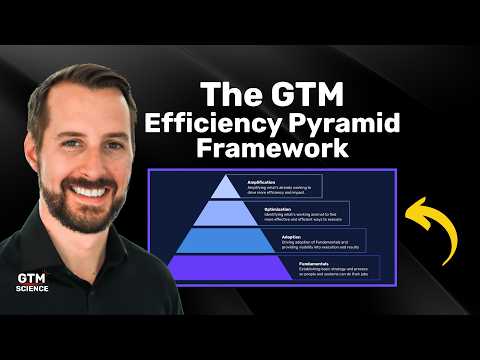
EDDIE27:11Well, this is where we plug our go to market efficiency pyramid, right. And we've got this all mapped out. You can check out the framework on our website. And when you look at the fundamentals it doesn't matter what go to market motion we're talking about. It's all ICP. And by personas at the very base. Right. Like are we targeting the right people if we're trying to figure out why?
EDDIE27:26Nah is lagging. The first question is like, are we winning the right customers? Are these companies that we can't, you know, retain and grow? But then whether it's, inbound outbound pipeline management or, and are the next piece is like, what is that customer journey and that process. So it's obviously different for each of those categories.
EDDIE27:49But what is that step by step process. Let's say that we, want to go outbound okay. We've got our ICP and our buyer personas identified. We've mapped out our Tam. Samsung, we need a target list. Right. So how do we identify that target list? We start with capacity planning, which is good that we just talked about that.
EDDIE28:06Like how many calls can a reps actually make in a day? What does a good call look like? Do we research the account first we reading, you know, their annual report like is this an enterprise sale or. No, this is an SMB sale. And like we do five seconds of research and we just go for it or we're just robo calling.
EDDIE28:24It's not something I'm a big fan of, but obviously, like plenty of companies do, that. What is that step by step process to make an outbound call? How many calls can I make if they follow that process without skipping any steps? What is their actual capacity for outbound? Are they in SDR that has all day long? Are they an aide that only has two hours a day to do prospecting?
EDDIE28:46How many calls can they make? We can then figure out, well, here's the size of the target list. So now we've got our target list. We've segmented it. And then we have, you know, built this into the system. So I'm, I'm hesitating there because I just skipped a step. But basically all that stuff I mentioned is essentially what's the step by step process, right?
EDDIE29:05If I'm going to make this really generic across all of go to market with inbound, like what is an Mql, when do we route it to people? How do we route? Like what is that step by step process? How many times do we follow up, how do we follow up, etc.? Okay, cool, we've got that process mapped out.
EDDIE29:21Then how do we need to change the systems in the reporting? What does the Salesforce report look like. That's that's kind of like our very foundation. Then the next piece which we call fundamentals, then the next piece is adoption. How do we get our team to adopt that process. So let's say I'll skip over to pipeline management. Let's say that we have rethought our entire sales process for closing deals.
EDDIE29:47And we've rebuilt everything in Salesforce. And we've got these new pipeline manager for it. So we train the team on it. How do we get to a point where we actually trust the pipeline? We need to have a management cadence where we go in and we pull up the pipeline report, we ask questions about it, just pipeline inspections.
EDDIE30:04What I'm talking about to cut to the chase and get to a point where everybody trust the pipeline. That's the adoption phase. That's what you can do in 90 days. So in our example where we're going with outbound and pipeline management, we could do those two things in 90 days and get to a point where we say, here's the reports that show all of our outbound activities, as well as our meetings booked, our pipeline generated.
EDDIE30:27And here's the report that shows how we're managing all of that pipeline rep by rep, team by team is a good, bad or we where we need to be or we not where we need to be doesn't really matter in the first 90 days. If we can just trust those reports, that's a win. And then if what those reports show us are not good, we now have the ability to go in there and start to optimize that, which is sort of the next level of our pyramid.
EDDIE30:51Maybe we need to change the ICP definition. Maybe we need to change the way that we research accounts or reach out, or how we qualify deals, but like we've got something that's at least being executed. And so now we can start to tweak it. But more than likely, just a simple fact that we've got everybody in our team doing things the same way.
EDDIE31:09We're probably going to see some massive uptick because presumably somebody on the team knows how to generate a deal via outbound and close it. So if we have talk to that person and reverse engineer the process then and gotten everybody to follow that process, we're most likely going to see more success than having everybody just do things their way.
EDDIE31:32And I think that that's the problem I see when I talk to crows and they share with me what's going on in their in their company, it's like they're not telling me like, oh yeah, we got all these reps, like making all these outbound calls and we just can't book any meetings. It's funny, like nobody ever tells me that.
EDDIE31:46Like, I hear the most basic problems. Like, I hear people telling me, yeah, like, we can't get our reps to, like, make outbound calls or, you know, we have 55,000 leads that nobody's followed up with. I'm like, wait, first of all, how do you have 55,000 leads for a sales team of 20? That doesn't make any sense. Like these aren't real leads.
EDDIE32:02What does it mean? Oh, well, we uploaded a list from Zoom Info four years ago. 35,000 contacts into Salesforce. Hey, that's not a lead. That's the fundamental process is broken. Yeah. So these are the things that I think that you can do in 90 days. And it's hard to like rifle this all off, rattle this off on a podcast.
EDDIE32:22If anybody's interested, check out the show notes, go to the go to Market Efficiency Pyramid Framework on our website. And we've mapped all this out. Bullet
EDDIE32:28point by bullet point.
RACHEL32:30And, you know, correct me if I'm wrong, but just to like to sum all of that up and give people like the CliffsNotes versions, I don't know, you have cliff notes in the States. Craig's notes for.
EDDIE32:40Us, it's Cliff notes.
RACHEL32:42CliffsNotes.
EDDIE32:42Canada, it's Coles notes. Cool. Oh, I have Cliff called Cole, and he was like, hey, Cole, I know you're doing some cool shit in Canada. I want the rights to your notes in America. And Cole. So a cliff is notes. I learned all this at Salesforce because I worked with a bunch of Canadians.
RACHEL32:57I've only ever known. CliffsNotes.
EDDIE33:00Yeah, well, we only know Cole's now. Cliff notes. Why did you say Cliff or Cole?
RACHEL33:05Cliff, I've only known CliffsNotes. Really? Yeah. So I'm like, looking at you, like, what is possible. I don't know why. So I'm so confused.
EDDIE33:13From Toronto. I know you're from another part of the country. Yeah. They all talk about Cole's notes, and I was like, who the hell is?
RACHEL33:18I don't know who Cole is. Okay, well, so I was right. That the CliffsNotes, the CliffsNotes for this, basically, from what I understand, is that we're just trying to make sure we have the building blocks set up to get accurate, consistent, real data and that the process and doing that means we're making sure everyone is doing the same process.
RACHEL33:43We have the process written out. It's all defined. It's the right process as far as we know, and everyone is doing it and everyone is executing on it. And we know that for sure.
EDDIE33:53Recognize your pronunciation of process. For me.
RACHEL33:56I always do that or I try to always do that.
EDDIE33:59I like it when you say process.
RACHEL34:01Process. I don't know why is the process sometimes I'm Rachel.
EDDIE34:06Look, I agree with what you say. Said I would change the, the emphasis.
EDDIE34:12The point here is about getting your team to do the right things, right? Like if if we could close deals without doing any of this stuff, if, a CRO or a VP of Rav ops is listening to this podcast, it's because, like, something isn't working, right?
EDDIE34:32Like, if If we could just take a bunch of phone numbers and push it into like an auto dialer and print money on the other end, like nobody would care about what we're talking about here?
EDDIE34:41The point is not to have perfect reports. The point is to drive revenue.
EDDIE34:45And this is the thing that, like, really hit home with me in my experience at Salesforce, because Salesforce, at least when I worked for them, did print revenue.
EDDIE34:54It was about saying like, look, we have figured out all the right steps that you need to follow in order to maximize your chances of creating and winning a deal. If you follow these steps, you're much more likely to succeed because we can see this in aggregate across the organization. So just do those steps. The byproduct is, is that we have good reporting and part of that is, is like, hey, we have some requirements because it's part of our process to maximize their chances of winning is to have management step in and help coach you on how to win a deal.
EDDIE35:27And we can't do that if we can't get visibility. But the goal is not to have perfect reports. The goal is to close deals. And the way that close deals is by having a standardized process that maps towards the things that most impact winning deals. And I'll give you a concrete example. In most sales, everybody wants to get to the decision maker, and they want to present to the decision maker after having done proper discovery.
EDDIE35:56So if I just take anybody selling anything and they are going in and they're like, I'm going to pitch my solution to the champion without the decision maker and without doing proper discovery. And I'm just going to hope that when I pitch at them resonates and they buy.
EDDIE36:11Almost any sales leader in the world would step in and say, no, you should run discovery with your champion.
EDDIE36:16Find a way to get to the decision maker, run discovery with them, then circle back and present your solution to both of them and make sure you that your presentation matches all of the things that they said that they want it. This is like generic sales 101, right? Okay. So now each product in each market is a little bit different and there's nuances.
EDDIE36:36But as a general rule, our sales process is going to say let's try to get in front of the decision maker and run discovery before we do our presentation. And let's make sure the decision maker is there for the presentation if possible,
EDDIE36:46for 99 out of 100 products, that is going to increase our win, our win rate in a sale.
EDDIE36:52And so if we just do that and we just say, okay, let's get our reps to stop pitching to champions without doing discovery and get them to run discovery and pitch to decision makers, we are going to massively increase our win rate. And there's nobody that's ever spent any significant amount of time in sales that would debate that.
EDDIE37:08But yet you see it every day with reps, especially in like SMB, for example, not doing this because they don't know any better. And it's hard to get in front of a decision maker. And so management has to have a way to hold them accountable to doing that.
EDDIE37:24Quick pause. If you're getting value from this episode, I want to ask you a small favor. Take 30s right now. Open up the app you're listening to this on and give it a five star rating.
EDDIE37:33It sounds small, but it's the single biggest thing you can do to help us get conversations like this in front of more revenue leaders.
EDDIE37:38While you're there, hit follow so you never miss an episode. Okay, let's get back into it.
RACHEL37:44So how do we know for sure that we've completed the the fundamentals and adoption layer. Like what can we see to know that we've finished that and we can move on?
EDDIE37:55My major barometer is just like, do we trust the report? Right. Because
EDDIE37:59gray area here, right? Like nothing's ever going to be perfect. You're never going to have a perfect process. You're never going to have the perfect execution. You're never going to have the perfect report. But if you pull up a pipeline report and you tell me.
EDDIE38:11Yeah, I think all the deals that are listed as qualified in our pipeline are actually qualified. I think our reps are working those deals. I think we've got a real shot at winning most of the not most of these deals, but a good chunk of these deals. I don't think that, like, there's any deals where we're chasing them and we just have nothing.
EDDIE38:30That's a huge, huge win, right? That sets the foundation to say, okay, well now we can actually forecast accurately. Now we can free up time for our reps to do more prospecting because they're not chasing deals that they can never win. Now we can start to tweak the process. Or maybe that's good enough. And the thing that's burning over here is like our onboarding.
EDDIE38:51Like let's go pivot and switch to onboarding instead of, okay, well, we did all these things. We increased our closer from 10% to 22%. Okay cool. Can we tweak that and go from 22 to 25. Yeah we probably could and we probably should. But if like CSS is over here on fire, maybe we go tackle CSS next before we try to like get that extra 3%.
RACHEL39:10And are we what we're sticking towards are we're sticking to our like priority that we set out in the beginning. Right.
EDDIE39:16Yeah. I mean, I think that these things iterate quarter over quarter, right. Like businesses evolve and change really, really fast, especially the kind of businesses we work with, which are mostly B2B SaaS companies with, you know, 50 to $500 million in revenue. Things change really, really fast. But if you've gone from a situation where in our example, like outbound and pipeline management are just an absolute mess to, hey, we're doing a pretty decent job of this.
EDDIE39:37Like we've got our process documentaries dialed in. They're doing the same things. We look at the report and like everybody's doing what they're supposed to be doing. Seems to be working pretty well. Close rates up our book and more meetings. We're generating more pipeline. Okay, now let's try to do the same thing for how we follow up with the inbound leads or how we onboard new customers or how we, you know, address unhealthy customers, or how we do expansion.
EDDIE39:57You know, that's going to have a massive, massive impact on the organization. And so if you break these things in an 90 days, the way we typically work with our clients is we oftentimes have 90 to 180 days of visibility out to the things that we want to work on. Right. Like I've already rifled off the examples here.
EDDIE40:14So, okay, I keep going into this like CSS example of onboarding. Okay. Next quarter we're going to tackle onboarding. But still like at the end of the quarter we kind of look at this and like okay how far did we get. Do we need to keep working on this thing that we are working on in the first quarter.
EDDIE40:27Are we in a good spot to to address your question? And then do we want to pivot over to something else next quarter. And we almost always want our customers like refresh this every single quarter and redo the roadmap for the next quarter to say, okay, like are we aligned for the CRO? If there's a VP of Rev ops, at our client with RVP of Rev ops, with anyone else that's involved, CMO, those heads of customer success, do we all agree that these are the things we want to accomplish over the next 90 days and, and things we want to do to try to accomplish those things?
EDDIE41:01Everybody get sign off on that. And then we go focus on those things and try to say no to like all the random requests that come in. And that's that's a big piece of this, right?
RACHEL41:09Yeah.
EDDIE41:09Easy to say. We want to do all this stuff. And then you just get the flood of requests of like, we need to update this field in Salesforce and like we can map to this report over here. And we're like, that's cool. But is this serving the top priority that we all established.
RACHEL41:23Exactly. And that brings us to step three in the the newsletter slash article, building the go to market ops roadmap. So that takes us like back a little bit to where we've we figured out what our priority is. We figured out the specific jobs we need to do in foundations and adoption. Now we need to, like make a plan to actually execute on that.
RACHEL41:42And that's where the go to market ops roadmap comes in, which he was just talking about, so what should actually go into a good market ops roadmap for the first 90 days?
EDDIE41:51first, I would say if anybody wants to check this out, we have it on our frameworks, on our website. Secondly, I would say we have a rigid format we use, but I don't think it really matters. I think as long as everyone on the team is aligned on something that's like written down. And specifically you have the ability to push back on stuff that doesn't fit into that roadmap.
EDDIE42:09That's the biggest thing. But the format we like is essentially following an OKRs framework, right? You have your objectives and key results on the left, and you have your initiatives on the right. So as an example, the objective is we want to generate $50 million of pipeline from outbound this year. Okay. That's the objective. In order to do that, we need to redefine our ICP and buyer personas.
EDDIE42:34We need to, redefine. We need to do a capacity plan and territory plan. So we need to segment our target lists. We need to redefine, our outbound prospecting process. We need to build our reports in Salesforce. We need to have a management cadence of reviewing those reports and holding reps accountable to putting in their activity and more importantly, generating meetings and pipeline.
EDDIE42:58Those are the things that would go into that roadmap if, for example, we wanted to prioritize improving our outbound engine. And then obviously there's other examples for pipeline, inbound net revenue, retention, etc..
RACHEL43:14And how do we set realistic metrics, to track in that roadmap when we know we might not see really big changes in pipeline or close rate within this 90 days, depending on our sales cycle and everything.
EDDIE43:25Yeah. Well, so I mean, I think when you talk about long sales cycles, say it's like an enterprise deal and it's a nine month sales cycle, obviously you're probably not going to see an uptick in in close rates in the first 90 days. In fact, what you're probably going to see is, a downtick, if that's a word, because you've gone in and you've identified all the deals that were never going to close in the first place, and you close lost those deals.
EDDIE43:46And so now you're closer, it actually looks worse, because you have more close loss deals in the denominator. But that's not that's not a real impact. That's just you facing reality, right?
RACHEL43:59Yeah. Those deals were never real.
EDDIE44:02Yeah. But the big thing that I've always, I've always said is like, it doesn't matter how long your sales cycle is, there are leading indicators that can move much faster. So okay, cool. You're selling an enterprise deal with a nine month sales cycle. How many meetings did you book for outbound? It doesn't take nine months to book the initial meeting.
EDDIE44:19I mean, it might with a particular account, but what I mean is, is it doesn't take nine months to see an uptick in meetings booked. It doesn't take nine months to see that, like, oh, wow, we actually trust our pipeline. Oh, wow. Like, these are the two things that we're looking for in order to have a deal that actually enters pipeline and is qualified.
EDDIE44:38And those two things are in a good spot on every deal. Those are things that you can impact in 90 days. Those are things that sometimes you can impact in one day, theoretically. Right. Like you've got all this stuff mapped out and you're like, we're going to go through our pipeline and one day and clean it out and make sure there's no deals in there that shouldn't be in there.
EDDIE44:54That's possible. Then it might take nine months to go and close the deals that remain in that pipeline.
RACHEL45:01And so why is having this sheet, this, this document, this go to market ops roadmaps so important when it comes to, you know, fielding ad hoc requests and potentially getting sidetracked with other things?
EDDIE45:17Well, let's imagine a scenario. We got a $200 million B2B SAS company. We've got a CRO, we've got, CMO, we've got somebody heading customer success, we've got multiple, sales leaders, possibly even multiple layers of sales leadership. We've got, a VP of Rev ops. We maybe have some other rev ops folks. We've got a Salesforce admin, we've got a HubSpot admin for the marketing tool.
EDDIE45:46We've got all of these cooks in the kitchen together. Right. And now all of a sudden, like the CMO pings the HubSpot admin and is like, hey, I need all these things, like changed in HubSpot. What is that like, what's the default answer? No problem. I'm right on it. Right? Well, if you just do that every single day, then you never make any meaningful impact on anything.
EDDIE46:05I mean, this is something I fall victim to as the CEO in this company. Like, you guys didn't have to push back on me, especially when we have, like, these kind of things in place. But as a general rule, like you and everybody else on the team were pretty good about just doing whatever I tell you to do, which I'm thankful for.
EDDIE46:21But if I'm not thoughtful about what I'm asking you to do, then we end up just doing a bunch of busywork for a year and on accomplishing anything, right? So we've got to have this guiding light. I mean, if anybody's listening to this and you're not familiar with OKRs, like, we didn't invent this, this came from, I believe it originated before Intel then became famous at Intel.
EDDIE46:40Then I think John Dorr of Kleiner Perkins really made it famous and brought it to the Google team early in their days. This is a methodology across the entire business, not just go to market, that has shown an incredible ability to get an entire company centered around the absolute most important things. What is our objective? What are we trying to achieve?
EDDIE47:00How can we actually make that measurable? What is the key result associated with it, and what are the initiatives that we need to tackle within the need to say no to all the other things, unless they're going to burn the house down, because there's always going to be a list of things that is longer than we have time.
RACHEL47:14right. I don't have any other questions on on good market ops roadmap, but I don't think we're leaving anything out.
EDDIE47:20Yeah I was going to say we're running up on time. Yeah I want to go an hour and a half here.
RACHEL47:24Yeah.
EDDIE47:24Yeah. All the, all the bases here.
RACHEL47:26I think we did. Yeah. And if any like, like any said, if anyone's interested in learning more about the go to market ops roadmap, the link to that will be in the show notes. It is in our frameworks. So step four in the newsletter is on execution. So we talk about execution through the lens of both sprint planning in the go to market ops roadmap and reporting.
RACHEL47:45So let's start with sprint planning. What does that actually look like in practice.
EDDIE47:49the extension of what we're just talking about, at least for the way we do it, is, is sprint planning. Like I'm not beholden to this methodology? Many people in the tech industry are familiar with sprint planning and and agile, probably more so than me. I just think it's really great to say, okay, like if a sprint is two weeks, we're going to take that 90 day plan and boil it down into two weeks, and we're going to sprint at that at that plan for anybody not familiar with sprint plan.
EDDIE48:12And that's really what it is. And then at the end of the two weeks, we're going to evaluate what I got done, what wasn't done in the what would you do over the next two weeks? I think the key here, and we do this in asana. Again, I'm not like a huge fan of asana or trying to promote that, but just having a project management tool I think is really helpful when that, like request comes in, somebody says, I need this field updated for whatever you have to ask.
EDDIE48:36The question, is this higher priority? Then, you know, improving our outbound and generating $50 million of outbound pipeline this year? Like, is this thing you're asking for more urgent and important than that? Maybe it is. Maybe like the website is down and like we need to like, you know, all hands on deck and fix this because you go to our website and you just get like an error page.
EDDIE49:01That's a really serious problem, right? I get it. Okay. So the answer is yes, this is more urgent and important. And if this pushes back our timeline and getting all this outbound stuff done by a week, so be it. Get this done now. Fine. Let's go do that. And we see that constantly. But a lot of times the answer is no.
EDDIE49:20This can wait. If we really want to generate $50 million of outbound pipeline, we need to do all these things. So the answer to your request is we'll put this in the backlog. Then we review that sprint every single week and or sorry every two weeks if the sprints are two weeks. And then at the end of 90 days we review the entire roadmap.
EDDIE49:39And so maybe that request is sitting there and we're saying like this is something we really should pay attention to. But it's there's got to be some order to this. Otherwise this is what happens with many rev ops teams. You just end up becoming this like IT helpdesk. And nobody's ever doing anything that actually moves the needle in terms of improving our, our revenue production.
RACHEL50:00And like this is something that we do here at USC that I have found very, very helpful personally for like my productivity and knowing where I'm at in the month, we have like our, our monthly OKRs, which I just mentioned. And, you know, weekly we break down and say, what can I do this week that will put me further ahead towards, you know, my goals for the month, the goals for the quarter.
RACHEL50:25And then every single day we have, like our daily top priorities, and we have in our slack channel, we all like write out what's our our top five, 3 to 5 daily priorities. And did we get our priorities done yesterday. And that might work for you might not. But it's really helped me just like really focus in on the specific steps and tasks that I can do on a daily and then weekly basis that move me towards that and goal.
RACHEL50:53And I don't just get caught up in busywork, or, you know, these little tasks that come up randomly that I feel like they need my full attention right away when really they can be put aside for a little bit.
EDDIE51:06And I've been really pleasantly surprised because I kind of push this idea. And then you guys just kind of ran with it to the point. I'm like, I'm not even very involved with it anymore. You know, Sarah's sending out the messages via slack every day. Like, what are your top priorities for today? I don't even look at this stuff, because just the fact that I know that this is being done, I don't even care if I disagree with, like, what your top three things are for the day.
EDDIE51:28Just the point is, is that you guys are thinking about it. I have all the confidence in the world that that's going to make everybody more productive, and it's something I'm doing on my own. And, or every single day I have a card staring me in the face that says, you know, these are the things that I'm working on.
EDDIE51:43And I actually have a single sheet of paper that has my entire year mapped out. And then, of course, like, I'm constantly like updating that and iterating it. And I mean, this is something that I, I didn't do this for a long time, but the first time I did it was in college, and my GPA went from a 2.4 to a 4.0 and one semester.
EDDIE52:03Wow. And it was just because. And while simultaneously I was also taking much harder classes and all it was was it's just I mapped out every single test, every single quiz, every single piece of homework, every single thing that I need to do for all my classes. And then I put them in chronological order and I just, like, woke up every day and I was like, this is all stuff I need to do this week.
EDDIE52:23I was like, oh my God, this is easy now. And then I just, I was like, nothing caught me by surprise. And the reason I had a 2.4 GPA prior to that is just because I was disorganized. But that was it. And it's really amazing. Like, and I ended up graduating with like a 3.5 GPA when there was a point in time when I think when I started doing this, like, I went to Indiana and I got into the university, but I hadn't gotten into the business school yet.
EDDIE52:47And the business school was like telling me, like, you need two semesters in a row of a 3.0 GPA or you can't get in. And I'm like, wait, hold on a second. I chose this university so I could major in business, and now you're telling me I might not be able to do that shit? So yeah, being organized helps.
RACHEL53:01Yeah. And, you know, this is especially true for neurodivergent people. And I think in go to market ops and row ops, and you kind of like ops team, I'm sure you're bound to have a decent amount of neurodivergent people on your team, whatever that means, like ADHD or whatever. It can feel really, really overwhelming looking at an OKR or looking at like, a good, roadmap saying like, okay, we need to we need to to do this thing.
RACHEL53:26We need to execute on this goal. For people that think differently like that, they need to have it broken down into much smaller steps to be able to not get overwhelmed by the really, really big, huge task that's in front of them. So having these like daily or weekly lists, of little things that you can accomplish to work towards that big goal can be super helpful.
RACHEL53:49And I'm a nerd, neurodivergent person, so I've found that to be very helpful for myself.
EDDIE53:53Yeah. And I would I would even add, like, I think I get in trouble where sometimes I like doing this stuff and it's really easy to just get caught up and you're building something in Salesforce, or I'm modeling something in Excel, or I'm mapping something out in a document or whatever, and I'm like, hold on a second. Like, I actually have a business to run.
EDDIE54:11I don't make money. I literally can't pay my rent. There's real like consequences here of not getting this done. And I got to take a step back and say, like, is this really the thing that I have that I should be working on right now? Is this what's most important? And I would say that, like a lot of people in ops, you know, especially like the Salesforce admins of the world oftentimes don't understand go to market as well as one might want.
EDDIE54:34And I can't begin to tell you how many times I've interviewed people and like, oh yeah, I can go to market over this company. I did this, I did that, and you're like, okay, cool. Like, what was the revenue number? How much did it grow by? What are the major things you did to like move revenue. And they can't answer these questions because they don't know like they've literally didn't even know.
EDDIE54:51You know, the close rate, of their new business pipeline because that's not what they're thinking about. They're thinking about building this new thing in Salesforce and building this report and doing this and doing that, and not able to spend time thinking about the bigger picture of, we're doing all this because we want to increase our close rate from 10% to 20%.
EDDIE55:11Yeah, I, I'm amazed at how many people how many resumes I see where it's like, I manage this and I was in charge of this and I, I was the admin for this. And you're like, okay, but how did you impact revenue? So I think it's really big, especially if you're a CRO listening to this and you've got technical people on your team that maybe aren't thinking the way that you do every day to make sure that they understand what their North star is.
RACHEL55:35Absolutely. So what does success look like at the 90 day mark after you've done all of this stuff. How do we know we've actually made an impact versus just been busy.
EDDIE55:46So easy segue here I want to think about reports right. So I want to think about tangible metrics. So let's take outbound prospecting as an example. We want to get to a point where our team is logging the right number of of prospecting activities into the right accounts. Now whether you want to just look at total activities or you want to look at like account coverage and you say, okay, here are our named accounts.
EDDIE56:10And like what percentage of these have we hit X number of times, etc.. There's lots of ways to look at this. It ultimately boils down to for me, a Salesforce report is that report in a spot where we want it to be, meaning that like we can see that our team is executing, is our pipeline report clean?
EDDIE56:27That for me is the major win after 90 days, right. Because presumably if we finish that 90 days and like maybe it takes us until the last week and then finally in the last week, we made the number of, of outbound prospecting activities we were supposed to do. We hit all the right accounts, we set up a few meetings, we've got a clean pipeline, we can dive in and we can see our reps are following all the right steps.
EDDIE56:50What is that going to mean for next quarter. So we've got X amount of pipeline. We're following all the right steps. We should see if our sales cycle short enough. We should see improve close rate the next quarter. We should see more meetings next quarter. We should see more pipeline generated next quarter without doing anything except just maintaining consistency of the thing we just built.
EDDIE57:12That to me is the when it really comes down to like as simple as do we have a clean pipeline report?
EDDIE57:22Okay.
RACHEL57:22We trust and you mention the newsletter to you that, reporting is driven by accountability, and accountability is driven by management. Can you elaborate more on that? Like why can't the reports themselves drive accountability?
EDDIE57:36Because this is not how things work. Humans are fickle, complex creatures. I'll give you a concrete example from Salesforce. Right. So when I came into Salesforce, one of the top priorities for management was forecasting accurately, obviously was a publicly traded company. Even when I joined there, they were trying to grow a 30% year over year. They're making all these promises to Wall Street, and if they don't meet those promises, then the stock price takes a hit, which is really bad for everybody.
EDDIE58:08So they were maniacal about pipeline, but all they did was ask for like, I think four things, if I remember at the top of my head is like, okay, what's the closing date? Because that obviously impacts whether or not we even potentially close this deal within a given period of time. What's the dollar amount, what's the stage, what's our next steps.
EDDIE58:27And potentially like what's our mutual closed plan. Right. That was it. And the next steps, the mutual closed span were kind of similar to each other. So you're really looking at four fields on the opportunity. And basically the ask was once you've moved a deal into stage two, which is what was qualified for us, you have those four fields accurate, real time, all the time.
EDDIE58:49So, how do you get held accountable for that? My manager, his manager, his manager, his manager, all the way up to, like, the executive leadership team could and would inspect the pipeline at any point in time. And on a regular basis. And all of a sudden, you're getting what would now be a slack message saying, hey, what's going on with this deal?
EDDIE59:09I see that it's scheduled to close next week, but it's in stage two, and your next steps are to follow up in a month. What's going on here? And you're like, well, what's going on here is I didn't update my pipeline. But what really happens there, especially I remember vividly like seeing this like meme go around when somebody got this with like somebody's hair on fire, because that's how we felt like, oh my God, my boss's boss's boss's boss just called me out on this deal that I'm mismanaging right now, which obviously got visibility all the way up and down the chain.
EDDIE59:44So what do I want to do about that? Well, first I need to respond to this. So I'm going to go clean the opportunity up immediately and respond. And say this deal isn't real. I had to close loss it. Actually, like I need to move this out for a month. Here's the next steps. I just didn't update my next steps, whatever it is.
EDDIE60:00Okay, cool. So now we've got clean pipeline immediately. Two I learned a lesson from that. Right? And I don't even think it was me. They got pinged when with the burning hair emoji, but I'm sure I made this mistake and you learn from it really quickly. It's like there's no ifs, ands or buts about it. There's a consistent process where this is going to be called out, and it's a very reasonable ask, right?
EDDIE60:23We had probably 20 fields on the opportunity outlining like the risk factors and all this other stuff. And like when you're working a big strategic deal, you get more eyes on it. There's more scrutiny. They want to see more of this stuff filled out. You're bringing other people into the deal to try to close it. Okay, cool. We're going to have a higher bar for how this is all filled out.
EDDIE60:42But just the bare minimum of having those four fields filled out meant like, okay, if we have the right stage and the right close date, then management could do like a weighted average forecast and they could figure out like, okay, like these are the number of deals we think we can close. If we've got the right dollar amount we can have, like the dollar amount of deals that we think we can close.
EDDIE61:03If we've got the next steps, we have some level of assurance that the rep knows what they're doing, and that aligns with our ability to close that deal. If we see a deal that's in like stage seven and it's set to close next week. But the next steps are ask the champion for an introduction to the decision maker.
EDDIE61:21It's a huge red flag that's a coaching opportunity right. So when you've got all this stuff dialed in you get to where Salesforce was when I work there, which is, hey, we trust our pipeline and we can forecast within 5% accuracy. But so many organizations are not there because each rep is doing everything, everything differently, and their management team doesn't have a cadence of going in and inspecting the pipeline and holding reps accountable.
EDDIE61:43But this can happen really, really fast. I mean, this example I'm giving, how long would it take you to go and talk to a single rep and say, okay, you've got 15 deals.
EDDIE61:53need these four fields filled out and accurate on these deals. I can tell you the answer to this. The first time that I did this here at Union Square, consulting with the team that I was working with, I had four reps at this client company, and we were in like, I went to a meeting and I looked at the pipeline before the meeting and it was just completely blank, complete mess.
EDDIE62:12I kind of chewed everybody out for it. I said, we're going to meet again tomorrow 24 hours from now, and this all needs to be cleaned up. And the entire team had their pipeline cleaned up within 24 hours. Unfortunately for them, the way they cleaned it up was to close loss. Every deal because these were SMB deals that should have a 30 to 60 day close our sales cycle and all these deals are 300 days old.
EDDIE62:32So they finally realized, oh wow, I'm never going to close this deal. So I'm just going to dump the South, which is really difficult because now you're like, okay, so now we have a different problem. You clearly don't have enough pipeline to, to hit quota, which you didn't yesterday either. But now you know for sure. And now we really need to focus on prospecting.
RACHEL62:50Yeah. The issue we've talked about it before the zombie pipeline issue. It comes up quite a bit actually. But, but yeah the, the, the problem of having so much in your pipeline that's actually not real opportunities. And you don't even see that you have a pipe gen issue, a very significant pipe gen issue until it's too late to even do anything about it.
RACHEL63:11And you're just going to miss your numbers for that quarter or the next quarter.
EDDIE63:15Yep. It's a personal problem. And but the thing is, is like organizations that have fixed this, it's like now you can start to get into like the really advanced. Yeah. It's it's like opens up so much opportunity.
RACHEL63:27It's a hard pill to swallow having to close out like, I don't know. One of our consultants said he had to close out once. Like, what was it, 10 million, $20 million in pipeline for for a company. And it's like, that's that's a that's a big pill to swallow. But like, you have to realize that ten, 20 million was not real, like it didn't exist.
RACHEL63:46All it was doing was blinding you to the fact that you do not have as much pipeline as you should right now, and you should have been focusing and prioritizing your resources, on different things. So anyway.
EDDIE63:59Well, even worse, I've seen like, I can think of a particular customer where CRO came in first 90 days. So taking it back to our topic and he comes in the door and CFO doesn't trust him because this is what the previous CRO is doing. So he had to rebuild that trust with the CFO to say, hey, I'm new, I'm different.
EDDIE64:16We're going to run things differently. And when I tell you that, like, this is the forecast and this is the pipeline, you can actually trust it, right? And that that is something that like achieving that in the first 90 days is a big win.
RACHEL64:29That's a that's another interesting thing too is like what what kind of baggage are you inheriting when you go into a new role that like the your other peers made of taken on from, from the last person in your role?
EDDIE64:44Yep. Well, a lot of times the zero is coming into a new job because the previous CRO, you know, didn't do things the way everybody wanted. So anyway, I think we are out of time unless you got any burning questions remaining.
RACHEL64:55Yeah. I mean I suppose I can ask this one. So in 90 days, what's the one metric that should fundamentally change if you've done this right?
EDDIE65:05Well, I think the one metric that should fundamentally change if you done this right is dependent upon your priorities and your goals. It's also dependent upon what's realistic within 90 days. So if we look at like pipeline management, for example, the one metric in a short sales cycle, if it's a 30 day sales cycle, like I'd like to see like a higher close rate, right.
EDDIE65:26If we've got a nine month sales cycle, it's going to be more difficult to do that. If we're talking about outbound, it might be like the amount of pipeline generated. It might be the amount of meetings, it might be, account penetration, it might be the number of activities. I think it really depends on your motion, your priorities, how long cycles are.
EDDIE65:46But I think that's a really, really important question for each and every CRO to answer going into this.
RACHEL65:53Awesome. And so I think that is it for this episode. If you're listening to this and you want to learn more about, the go to market efficiency pyramid or, the decision tree or the go to market roadmap roadmap, you can check all that out in the show notes. The links will be there to our frameworks.
RACHEL66:12Or if you're just listening to this in the car and we'll remember it later. Season square consulting.com/frameworks
EDDIE66:19Awesome. Thanks, Rachel and thanks everyone.
RACHEL66:21Yeah see you later.
EDDIE66:24Thanks for listening to the episode. If this resonated, please give us a five star rating and a follow. It helps us reach more people, and you get our latest and greatest content without having to search for it.
EDDIE66:33And if you're looking for hands on help and go to market strategy and or rev ops, please reach out to us. We help our clients with everything from annual planning to improving processes and go to market, implementing systems to support those processes and go to market. I
EDDIE66:48We're always happy to offer a free consultation to help you identify the best opportunities to improve your go to market engine, with or without our help.
EDDIE66:55You can find us at Union Square consulting.com and the info will be in our show notes.